The National Association of Home Builders recently published a report projecting several home design trends likely to be widespread by 2015.
Environmentally friendly elements — such as low-emissivity (low-E) windows and engineered wood products — are expected to become more common. This aligns with the growing emphasis on energy efficiency and sustainable materials in residential construction and renovation.

Some Unexpected Findings
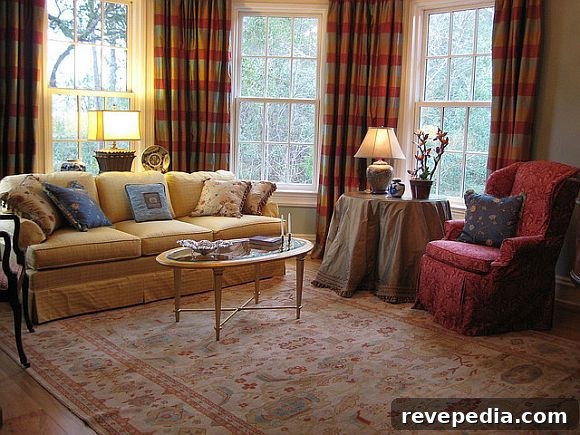
One surprising takeaway from the report is the prediction that the traditional living room may disappear or be absorbed into other spaces. How this plays out depends on what people consider a “living room.” Historically, living rooms were formal areas reserved for guests, often without televisions and furnished more elegantly than everyday family spaces.
The NAHB report states that “an overwhelming majority of respondents do not expect the living room to stay in its current room. Instead, more than half (52 percent) expect the living room to merge with other spaces in the home, while 30 percent expect it to vanish to save on square footage.”
The Great Room Expands Its Role
As the traditional living room recedes, the great room is increasingly serving multiple purposes. Originally a casual combination of kitchen, dining, and family areas, the modern great room has evolved into a versatile hub that accommodates entertaining, relaxing, working, and occasionally sleeping. This change reflects how families live today: prioritizing flexibility and open-plan interaction over formal separation.
Furniture choices are critical to making large, open spaces both functional and comfortable. Modular sectionals that can be rearranged for different events, nesting coffee tables that adapt to varied needs, and media units with concealed storage all help minimize clutter while maximizing usability. Space-saving furniture such as sofa beds enable the great room to act as an occasional guest space without dedicating a separate room to that purpose.
Designers also use furnishings to create distinct zones within a single, open area. Area rugs can delineate lounging from dining; low bookshelves or open shelving can act as subtle dividers without blocking sightlines; expandable dining tables accommodate both daily use and larger gatherings. In homes that prioritize openness and efficiency over excess square footage, the great room is not merely larger physically — it bears greater responsibility, performing the functions of several rooms through thoughtful layout and multipurpose furnishings.
Do You Value a Separate Living Room?
Do you prefer keeping a dedicated living room even if it requires more square footage, or do you welcome the trend toward integrated, multifunctional spaces? Some homeowners cherish a separate formal living room for hosting and display, while others favor flexibility and efficient use of space aligned with modern lifestyles and economic considerations.
Share your perspective: would you miss a traditional living room, or do you view the shift toward great rooms and open plans as a natural and practical evolution in home design?
Photo: Flickr.com/photos/kerryanndame/3442539526/