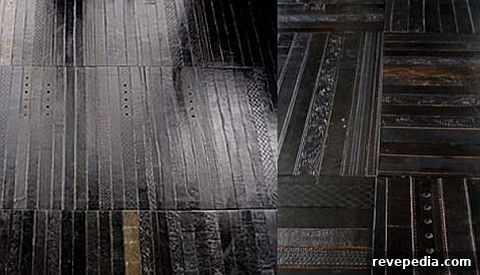
File this under “what’s next?” — you may be familiar with reclaimed wood floors, but designer Inghua Ting and her brand Ting London have taken reuse to a new level by turning vintage leather belts into floor tiles.
The concept begins with a careful selection process. A team of in-house artisans inspects thousands of donated and sourced belts to identify those with the right color, texture, and structural integrity. Because the standards are exacting, only about one in four belts makes the cut. Accepted pieces are then cleaned, treated, and fashioned into tiles using techniques that preserve the leather’s character while preparing it for regular foot traffic.
Some observers have raised questions about durability and sustainability. Leather is a natural material, and its long-term performance depends on treatment and maintenance. According to reporting by Wendy Cole in the Chicago Tribune, summarized by industry source 3rings, these belt tiles behave more like wood than ceramic: they will show wear over time, but that wear can be part of the appeal. Properly finished leather tiles develop a patina as they age, adding depth and antique charm rather than detracting from the surface.
Cost is an important consideration. At roughly $75 per square foot, leather tiles are a premium option compared with many conventional flooring materials. That price reflects the labor-intensive selection and fabrication process and the bespoke nature of the product. For homeowners willing to invest, the tiles offer a unique, conversation-starting surface that can complement rustic, vintage, or eclectic interiors.
Maintenance is straightforward. Routine care typically involves periodic waxing to preserve finish and moisture resistance and occasional cleaning with a damp mop or a leather-safe cleaner. With proper upkeep, the tiles are built to tolerate moderate to heavy use while retaining a rich, aged appearance rather than looking worn out.
Because the tiles are made from reclaimed leather, they also support reuse of existing materials. The overall sustainability profile depends on sourcing practices, tanning and finishing chemicals, and the longevity of the finished installation. When belts are diverted from landfill and repurposed into durable flooring, the practice aligns with circular-design principles—especially when production avoids harmful chemical treatments and prioritizes responsible supply chains.
Design-wise, leather belt tiles offer variety. Different belt leathers, dyes, stitch patterns, buckles removed and hardware reclaimed or recycled, produce a mosaic of tones and textures that can be arranged for subtle uniformity or bold contrast. Installations can be tailored to room size and style: smaller areas or accent zones benefit from the tactile warmth of leather, while larger installations emphasize its visual and textural richness.
Practical considerations include susceptibility to moisture and scratching. Leather is not inherently waterproof, so installations are best suited for dry interior spaces such as living rooms, studies, bedrooms, and certain commercial environments. In areas where spills or humidity are common—bathrooms, kitchens, or basements—additional sealing and ventilation strategies are required to protect the material.
For homeowners intrigued by the idea of reclaimed-material flooring but hesitant about leather, there are alternatives that reuse other waste streams—reclaimed wood, salvaged tiles, recycled rubber, and repurposed plastics among them. Each material carries its own balance of cost, durability, maintenance needs, and aesthetic character.
Would you choose leather belt tiles for your home? If not, what reclaimed material would you prefer to see transformed into flooring?