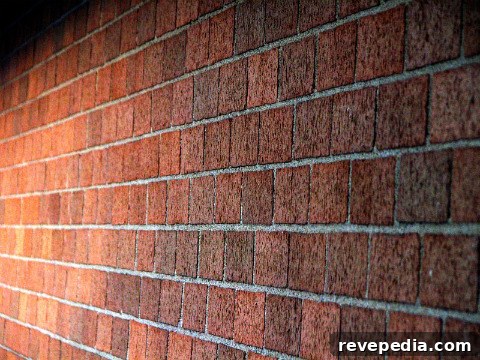
Perhaps you own an older house with a deteriorating brick facade, or maybe the mason who worked on your new build cut corners. Whatever the cause, the mortar between bricks will eventually need attention. When the cemented joints start to pop out, crumble, or fall apart, it’s usually time for repointing — a repair that restores the mortar joints and stabilizes the wall.
Repointing can be labor-intensive and, if you hire a professional, potentially costly even for a small area. The process generally requires removing some of the old mortar, then applying new mortar to create a smooth, durable finish. It’s a meticulous task, but entirely possible for a determined DIYer with the right tools and patience.
Before starting a repointing project, consider the time and safety involved. You’ll need appropriate tools and protective gear, and you should plan to work in small sections to maintain quality. For removing damaged mortar joints, gather the following:
- 4 1/2″ angle grinder
- Diamond blade
- Protective face shield
- Dust mask or respirator
Always begin at the top of the wall so dust from grinding won’t settle on newly applied mortar below. Work in manageable sections, tackling the horizontal joints first and then the vertical ones. Grind out approximately 1/2″ to 3/4″ of the deteriorated mortar, keeping the grinder clear of the brick faces to avoid chipping. After grinding, brush the joints clean and mist them with water to remove residual dust and improve mortar adhesion.
Once the old mortar is removed, you’ll be ready to apply fresh mortar. For this stage, you’ll need:
- Pointing trowel
- Bucket or wheelbarrow for mixing
- Access to water
- Mixing tools (hoe or mortar mixer)
- Brick jointer for finishing
Mix the mortar to a thick, slightly dry consistency — it should hold on the trowel without sagging. Mortar that’s too wet will smear across the brick and create a sloppy finish. Pack the mortar firmly into the joints, then tool them with a brick jointer to form a consistent concave profile, which helps shed water and gives a neat, professional look. Some people prefer a flush finish, but achieving an even appearance with flush joints can be more challenging.
Take your time to keep lines straight and mortar colors consistent, and clean any excess mortar from the brick faces before it fully sets. Properly finished repointing restores the wall’s appearance and structural integrity, and doing the work yourself can be rewarding — you’ll save money and gain well-earned bragging rights. If the task feels beyond your comfort level or the wall shows signs of serious structural problems, consult a professional mason for an assessment and repair.
Photo courtesy of sxc/cbcs