

Miss playing golf? Build a backyard putting green and keep your short game sharp. With a little planning and a weekend or two of work, you can create a durable, playable green that helps you practice chipping, putting, and course-like shots at home. You can even work on club selection and distance control—bring your bag and try different setups to fine-tune your strokes.
This guide walks through the essential steps to install a simple, long-lasting backyard putting green. Follow each stage to avoid common mistakes and to get consistent, realistic ball roll.
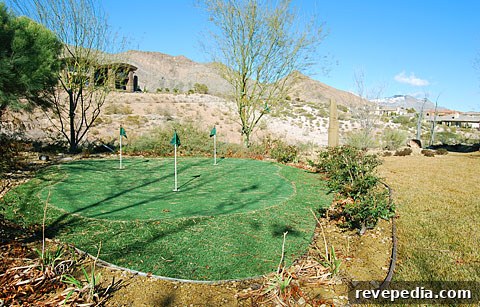
Choose the Location
- Select a level or gently sloped area of your yard that is convenient to access from other lawn spaces.
- Use a string, garden hose, or extension cord to outline the shape and size you want. If your turf rolls are 12 feet wide, plan widths in 12-foot increments (12, 24, 36 feet) unless you intend to cut and seam rolls.
- Turf length can be trimmed as needed; most turf is sold in 5-foot increments. Laying out the shape helps visualize the finished green.
- Consult any diagrams or brochures you have to confirm sizes and design details.
- After mapping the area, try practicing a few chips and putts to evaluate whether you prefer a larger or differently shaped green.
- Mark the outer perimeter with spray paint. This line will guide where to place your sub-base material.
- Ensure the green is approachable from surrounding lawn areas so you can practice chipping and pitching to it.
Remove Grass or Sod
- Whether installing in-ground or above-ground, use a sod cutter or shovel to remove turf within the painted perimeter.
- Clear away loose debris and roots once the sod is removed so you have a clean surface to work on.
Prepare the Ground
- Compact the exposed soil with a plate compactor to create a stable foundation for the crushed-stone sub-base.
- Install a weed barrier or stabilization cloth over the compacted soil. This prevents the sub-base from sinking into the native ground and keeps weeds from growing up through the green.
Add the Border
Install an edging or border around the entire perimeter where the stone base will sit. The edge contains the base material during compaction and prevents it from migrating out of the installation area. If you use block edging or a retaining wall, the weight will also help hold the base in place.
Add the Base
- Spread crushed stone or another recommended sub-base material evenly across the area. Use a yard rake to create a consistent layer.
- Move large amounts with a shovel and smooth the surface with the flat side of a rake to remove high spots and redistribute material.
Remember: drainage should run off the surface of the green, not through it. Water flowing through the turf would eventually erode the packed sub-base. Grade the sub-base with a slight slope—about a 1-inch drop for every 10 to 12 feet—to encourage surface drainage.
Compact the Base
Proper compaction is critical. If the sub-base is not compacted well, it will settle unevenly over time and create bumps or dips that affect ball roll.
Lightly mist the base with water using a hose nozzle—do not saturate. Compact the area thoroughly with a plate compactor, making several passes over the entire surface to ensure solid, uniform compaction.
Use a rake or shovel to smooth any small bumps or dips, and screed the surface with a straight 2 x 4 to level it. If you find low spots, add base material, shape with a rake, and re-compact. Your goal is a flat, solid surface with the contours you want.
- Adding contours or undulations is straightforward: add base material, shape it with a rake, and compact.
- Keep in mind that a 1-inch rise over 1 to 2 feet will create a noticeable break once turf is installed.
Too much slope will make putts run fast and may cause balls to roll off the green. Test the grade by putting a golf ball on the compacted sub-base; the ball will break the same way after the turf is installed. Aim for a minimum compacted sub-base depth of 4 inches.
Make final adjustments to slopes and contours now—once turf and infill are in place, altering the sub-base is difficult. If you change the sub-base, re-compact before moving on.
Tips courtesy of MyGolfSpy