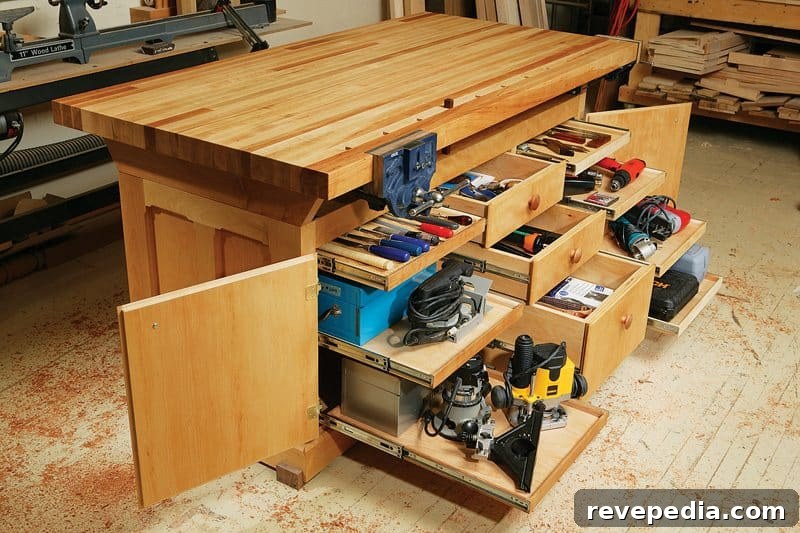
A workbench is an indispensable element of any garage or workshop. Whether you are a professional tradesperson or a committed DIYer, a custom workbench improves productivity, organization, and comfort. This article explains why a custom workbench is worth the effort and walks you through planning, designing, and building one that fits your needs and space.
Why Choose a Custom Workbench
A custom workbench offers advantages that off-the-shelf options cannot match. The primary benefit is tailoring: you can design the bench around the kinds of projects you do, the tools you use most often, and the limitations of your garage. Customization lets you optimize dimension, storage, and workflow for maximum efficiency.
Ergonomics are another key reason to build custom. Setting the correct bench height and organizing frequently used tools within easy reach reduces fatigue and strain on your back, shoulders, and wrists. A well-planned bench improves comfort and helps you work longer and with greater precision.
Key Benefits at a Glance
A custom workbench delivers several tangible benefits: ample, dedicated workspace for safe, precise work; tailored storage that keeps tools and parts organized; and the option to integrate electrical outlets, tool mounts, vises, and dust management. Beyond function, a custom bench can match your aesthetic preferences—choice of wood, finish, and accents—so your workspace is both practical and inspiring.
Assess Your Needs First
Before you start designing, evaluate what kinds of projects you most commonly perform. Are you focused on woodworking, metalworking, electronics, or general home repairs? The answers determine the bench’s size, surface material, storage needs, and whether you need reinforced sections for heavy machinery. Take inventory of frequently used tools to inform layout and accessibility.
Planning Your Workbench
Good planning makes building a custom workbench straightforward and ensures the finished piece meets your expectations. Key planning steps include choosing the best location, measuring the available area, and selecting durable, appropriate materials. You should also plan integrated storage, power, and lighting to create a functional, efficient workspace.
Choosing the Best Location
Pick a spot that supports workflow, lighting, and accessibility. A location near natural light and electrical outlets is ideal, but also think about ventilation if you’ll be working with finishes or generating dust. Place the bench so you can move easily between cutting, assembly, and finishing zones. Positioning the bench to facilitate material flow will save time and reduce clutter.
Measuring and Visualizing the Space
Accurate measurements are essential. Record length, width, and height constraints, plus clearance for doors, cabinets, and tool movement. Consider making a scaled drawing or simple mock-up to visualize how the bench fits and how storage and tool access will work. This step helps identify potential problems before construction begins.
Selecting Durable Materials
Choose materials that balance durability, cost, and appearance. Common choices include hardwoods like maple or beech for the top—because they resist wear and provide a stable surface—and sturdy plywood or solid timber for the base. Reinforce joints with metal brackets and use quality fasteners. For heavy-duty uses, incorporate additional support members or a thicker top to resist sagging.
Design Considerations
With planning complete, refine your design choices: the overall style, storage solutions, and how you will integrate power tools and electrical outlets. Think through how each feature contributes to your workflow and long-term needs to ensure the bench is both practical and pleasant to use.
Workbench Styles
Choose a style that matches your work habits and space. Traditional woodworking benches are heavy and stable, ideal for detailed handwork. Modular benches offer flexibility: adjustable storage, add-ons, and reconfiguration options as your needs change. Portable benches are useful if you need mobility or have limited space, but they sacrifice some rigidity and permanent storage capacity.
Integrated Storage Options
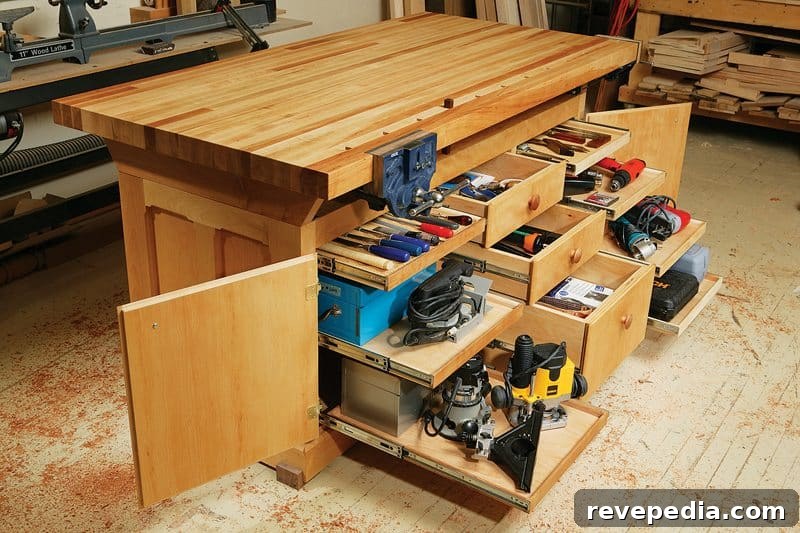
A well-designed bench integrates storage to keep tools organized and accessible. Options include built-in drawers, under-bench cabinets, shelving, pegboards, and overhead storage. Plan for a mix of open and closed storage so you can both display frequently used tools and protect delicate items. Thoughtful storage reduces time spent hunting for tools and keeps the work surface clear.
Power and Equipment Planning
If you use power tools regularly, integrate power solutions into the bench: recessed power strips, outlets on the legs or backsplash, and cable management channels. Design dedicated stations for heavy equipment, with reinforced surfaces and proper dust collection routing where needed. Position frequently used tools ergonomically to minimize reaching and improve safety.
Building the Bench
With plans and materials ready, proceed to construction. Take your time to prepare materials, assemble accurately, and finish the bench for long-term durability and appearance.
Preparation
Organize tools and materials before starting. Inspect lumber for defects, mill or sand surfaces as needed, and pre-drill holes to avoid splitting. Preparing components in advance speeds assembly and reduces mistakes.
Assembly Tips
Assemble the base first, ensuring it is square, level, and robust. Use strong joints and adequate fasteners; add cross-bracing where heavy loads are expected. Attach the top securely and verify the overall bench is stable and true. Periodically check measurements during assembly to prevent cumulative errors.
Finishing Touches
Finish the surface with a protective coating appropriate for your work—oil, varnish, or polyurethane—to resist stains and wear. Install storage hardware, vises, stops, and power fixtures. Personalize details like a backsplash, tool racks, or branded accents to make the bench your own. Final adjustments should focus on ergonomics and ease of use.
Building a custom workbench is a rewarding project that yields a practical, long-lasting workspace tailored to your needs. By evaluating your requirements, planning carefully, choosing the right materials, and executing the build with attention to detail, you’ll create a bench that enhances efficiency, comfort, and enjoyment in every project. Prepare to transform your garage into a smarter, more capable workshop and tackle future projects with confidence.