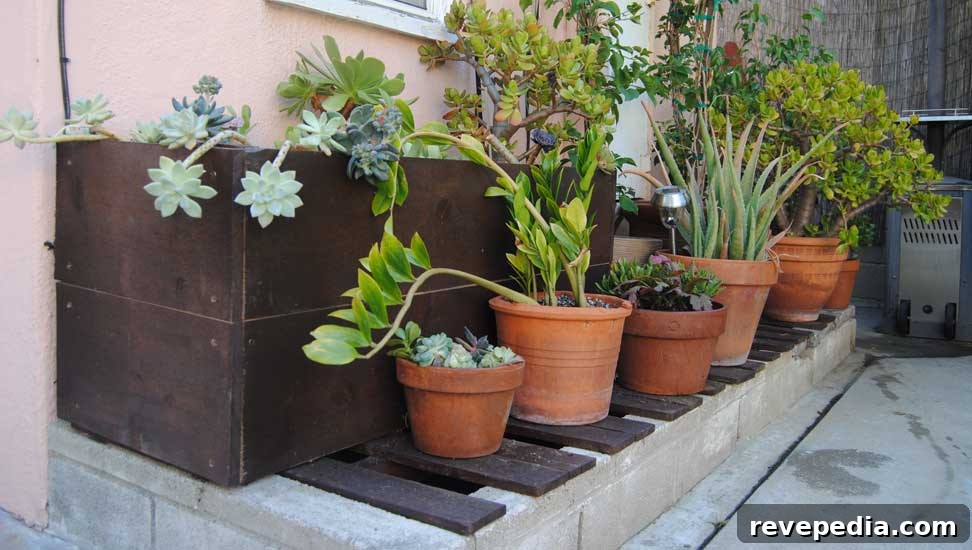
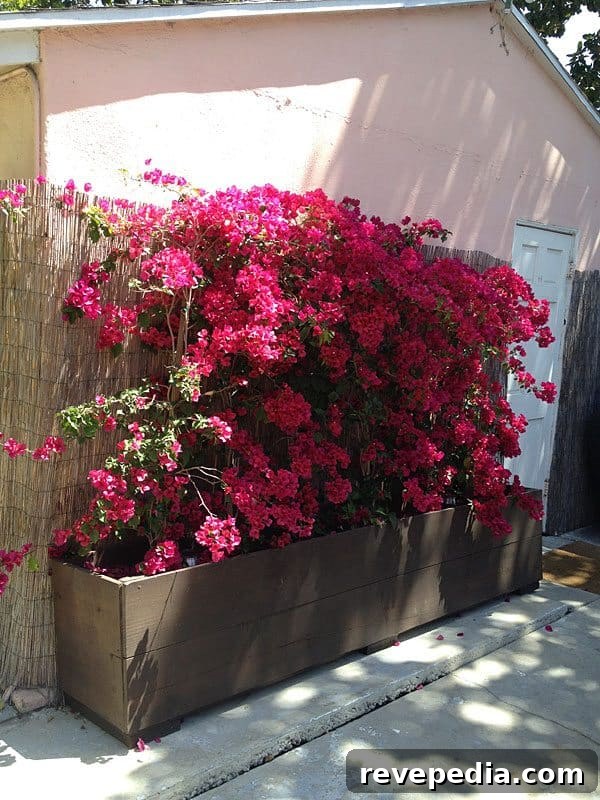
For our backyard makeover, we decided to build custom planter boxes to showcase bougainvillea. These vibrant plants thrive in Southern California and would bring the color we wanted. With leftover lumber from a previous project and a few extra 2×4s and 10″ pine boards, we had everything we needed.
We built two planters: one 8 feet long and the other 4 feet long. Both were 20 inches high, achieved by stacking two 10″ boards. The goal was a straightforward, clean design—nothing complicated, since we aren’t expert woodworkers and didn’t want to spend too much time on detailed joinery.
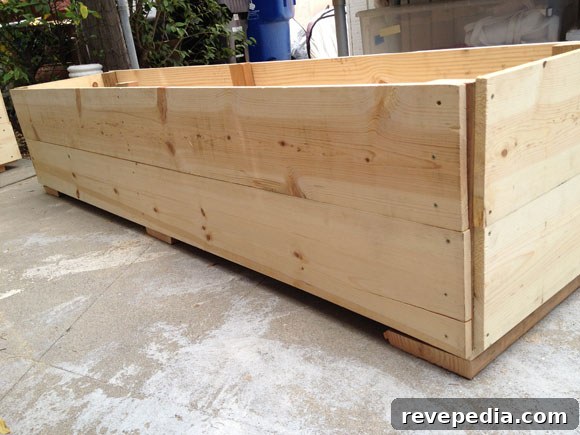
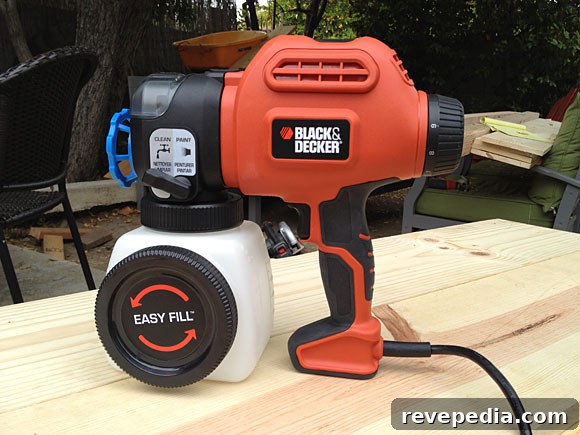
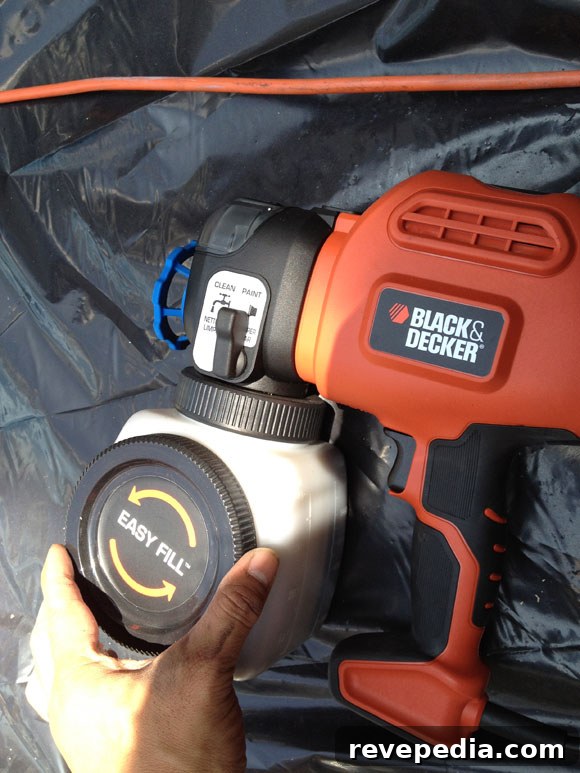
For tools we used a DeWALT jigsaw for cutting and a Black & Decker spray paint gun for finishing. We chose a semi-transparent dark stain from Valspar so the wood grain would still show and to coordinate with our new outdoor furniture.
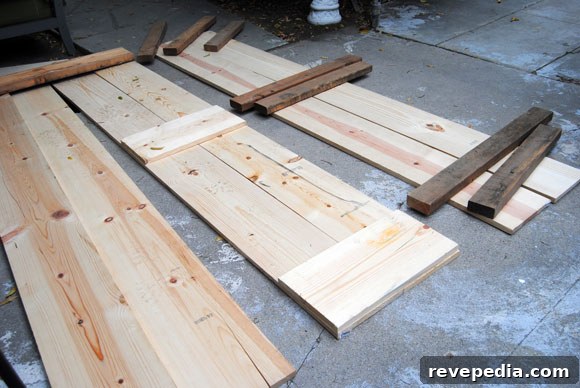
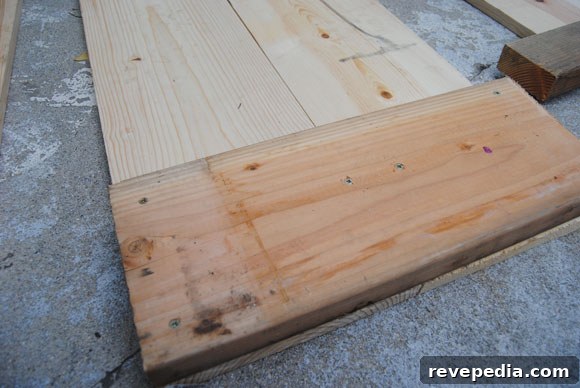
We began by assembling the base: three 20″ by 10″ boards were screwed together to form the bottom. Flipped over, we attached six 2×4 supports to the base using 2½” deck screws. These supports formed the frame for the planter sides and provided structural strength.
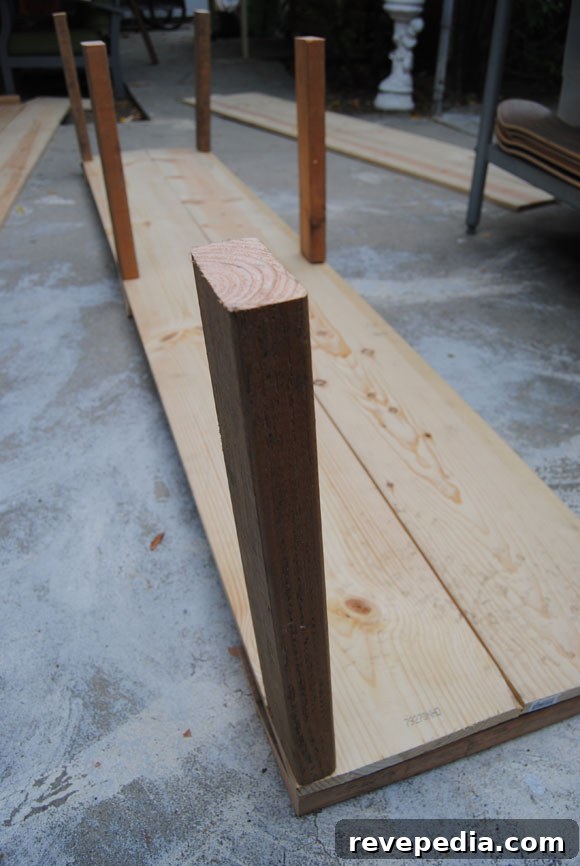
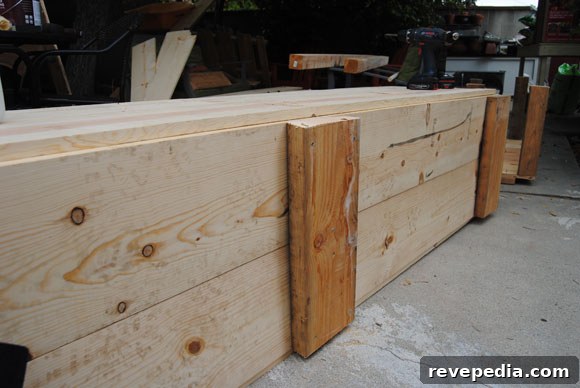
Working from the bottom up, we nailed the side boards to the 2×4 supports until the box reached its full height. Once assembled, we finished the exterior with the Black & Decker spray gun. The sprayer’s easy-fill feature made refilling quick and less messy, and cleanup was simple—just a few sprays of water and it was ready to store.
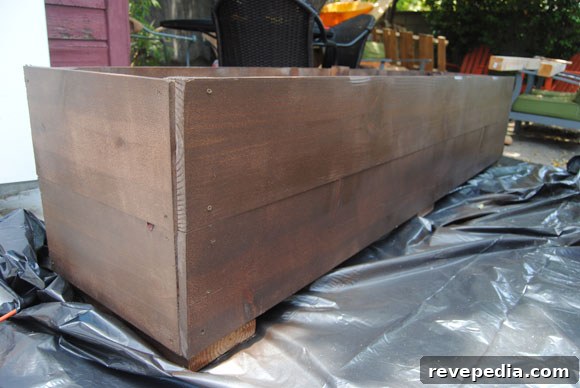
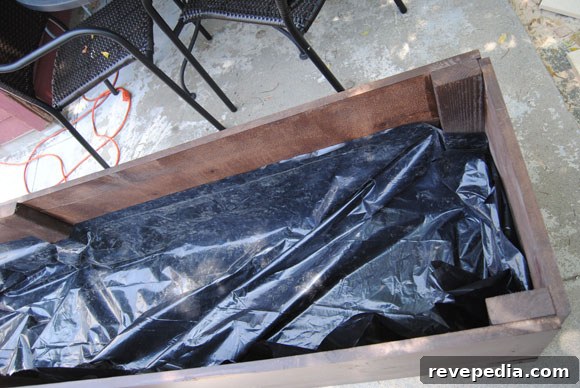
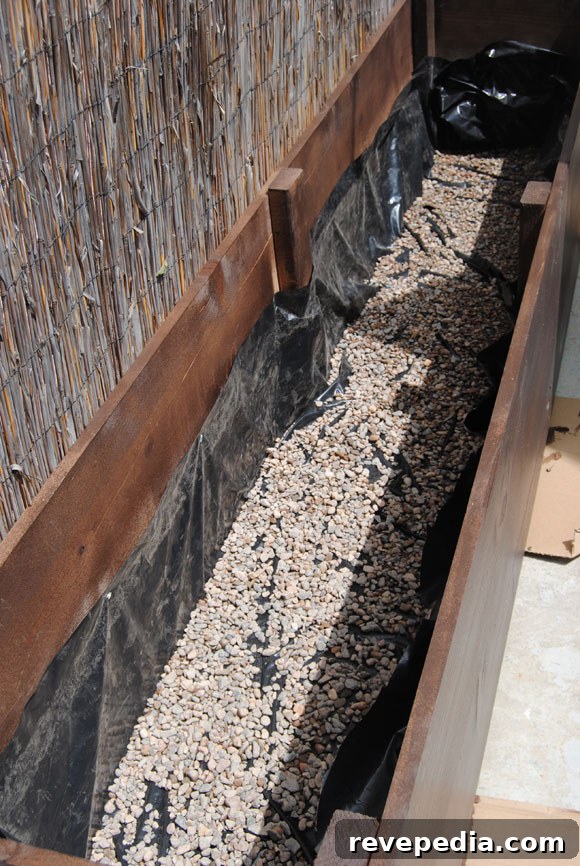
After the paint cured, we lined the inside bottom with a plastic sheet to protect the wood. We drilled several 1″ holes through the bottom for drainage. Next, we added a light layer of pea gravel to further aid drainage and topped that with a soil mix of peat moss, garden soil, and vermiculite for good water retention and aeration.
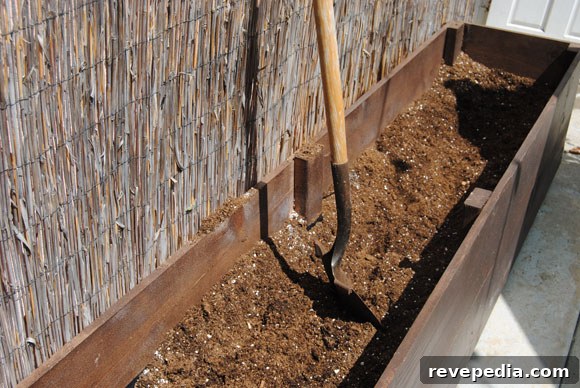
We planted the bougainvillea and within two weeks they began to thrive, producing bright red buds—the exact pop of color we hoped for. The planters performed well, offering both drainage and enough depth for the roots to establish.
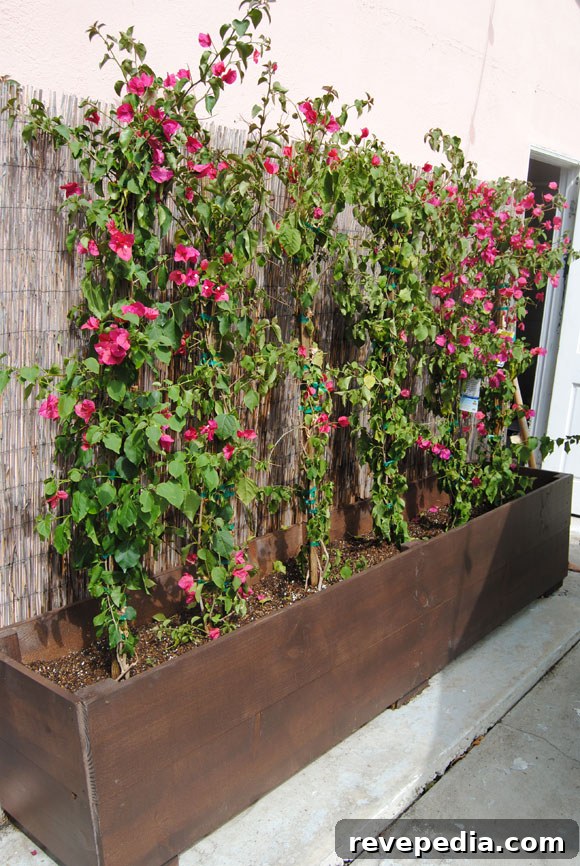
Here are the plants a few weeks later, filling the boxes with color and texture. The simple design and modest effort delivered a big visual impact for our backyard.
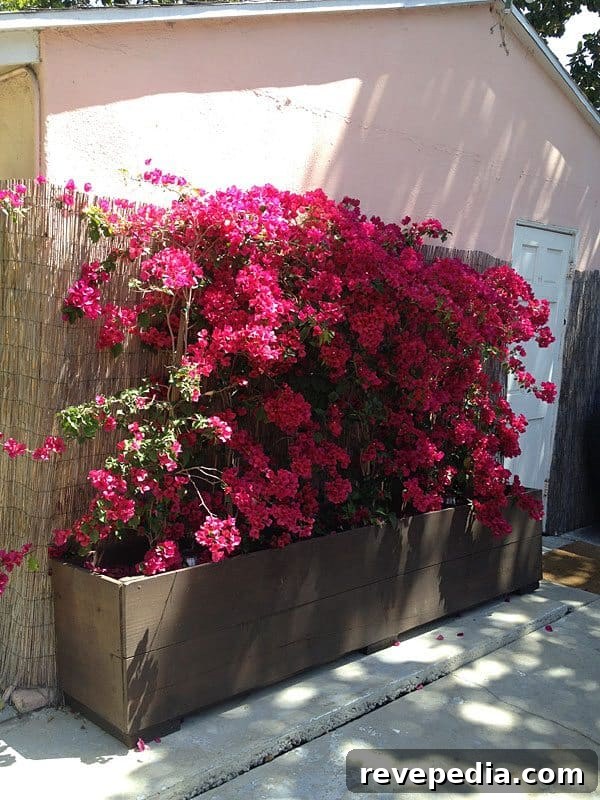
If you have a bare spot that needs a planter, consider designing and building one yourself. With basic tools, common lumber, and a straightforward plan, it’s an achievable weekend project that can dramatically improve your outdoor space.