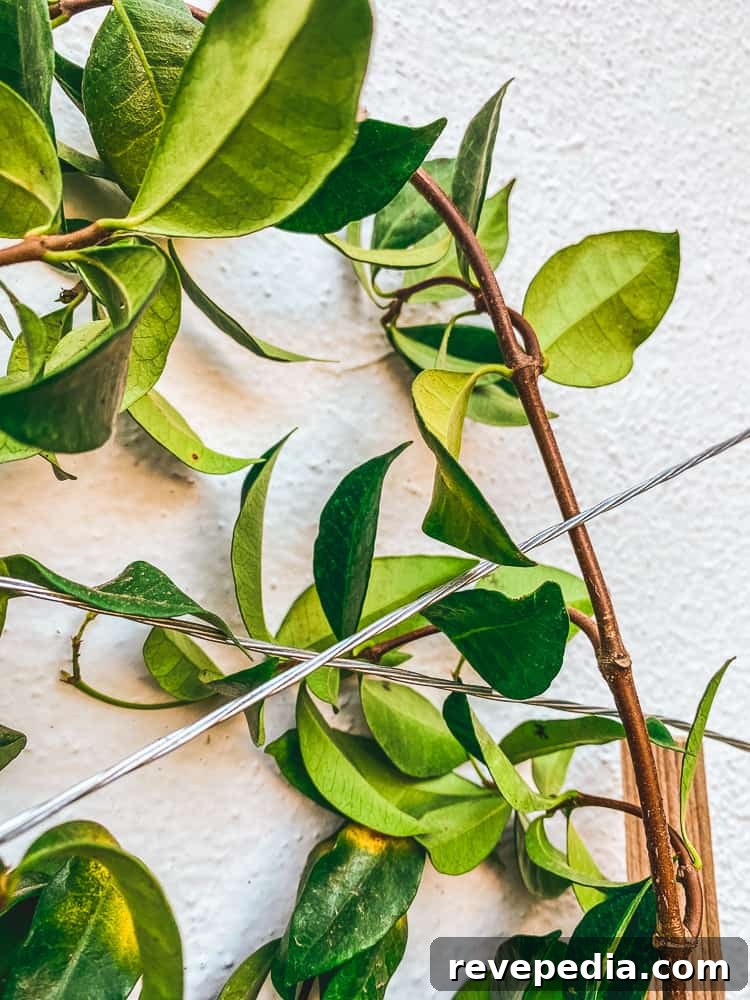
An easy and attractive way to train your plants up a wall is to build a wire trellis. Below is a clear, practical guide showing how we made a discreet, lightweight trellis using only a few common hardware items and a drill.
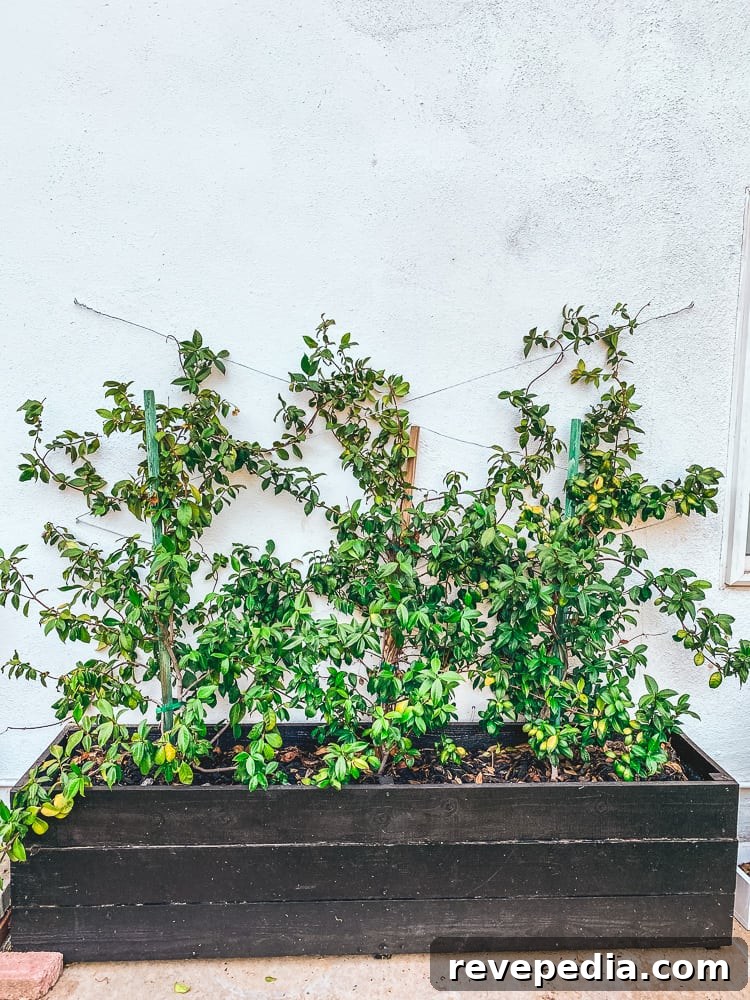
We recently planted three jasmine vines in our raised planter box. Positioned against the backyard wall, they’re thriving—getting just the right amount of sun without suffering heat damage.
The vines were spreading in all directions, so we wanted a simple way to guide them to grow flat against the wall. A heavy wooden frame felt too bulky for the space, so we took inspiration from sleek wire trellises we’d seen around town and built a similar version ourselves.
Tools and Materials
This project uses minimal materials, all of which are easy to find at a typical home improvement store. Choose materials rated for outdoor use so the trellis holds up to weather.
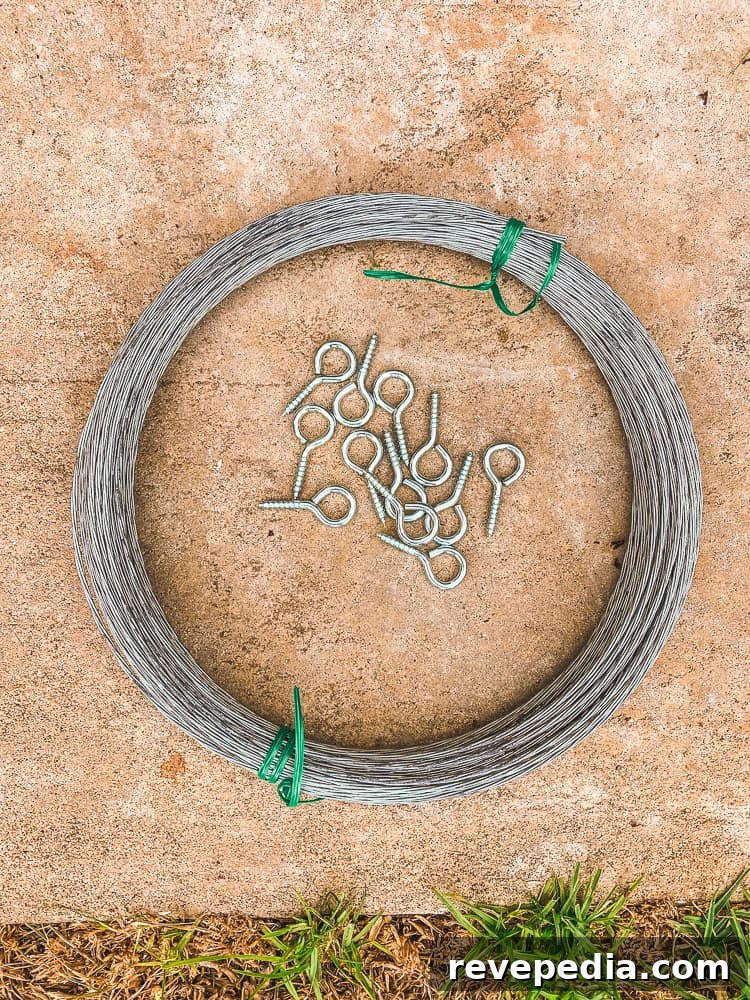
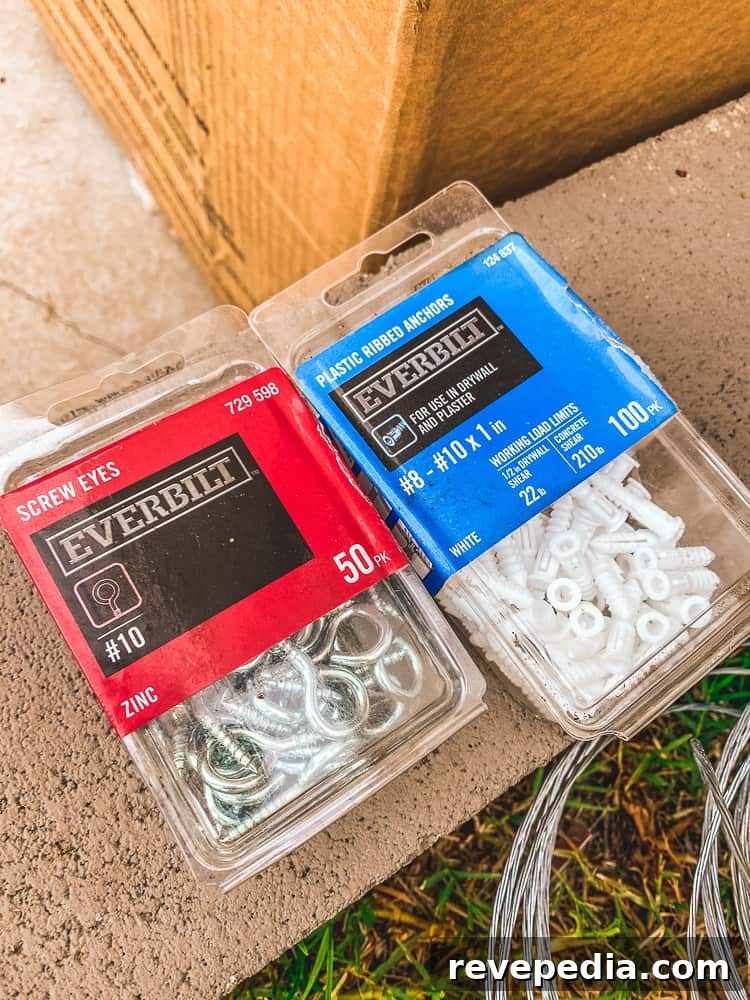
- #10 zinc screw eyes
- #10 plastic anchors, 1 inch
- 14-gauge galvanized steel wire (weather-resistant)
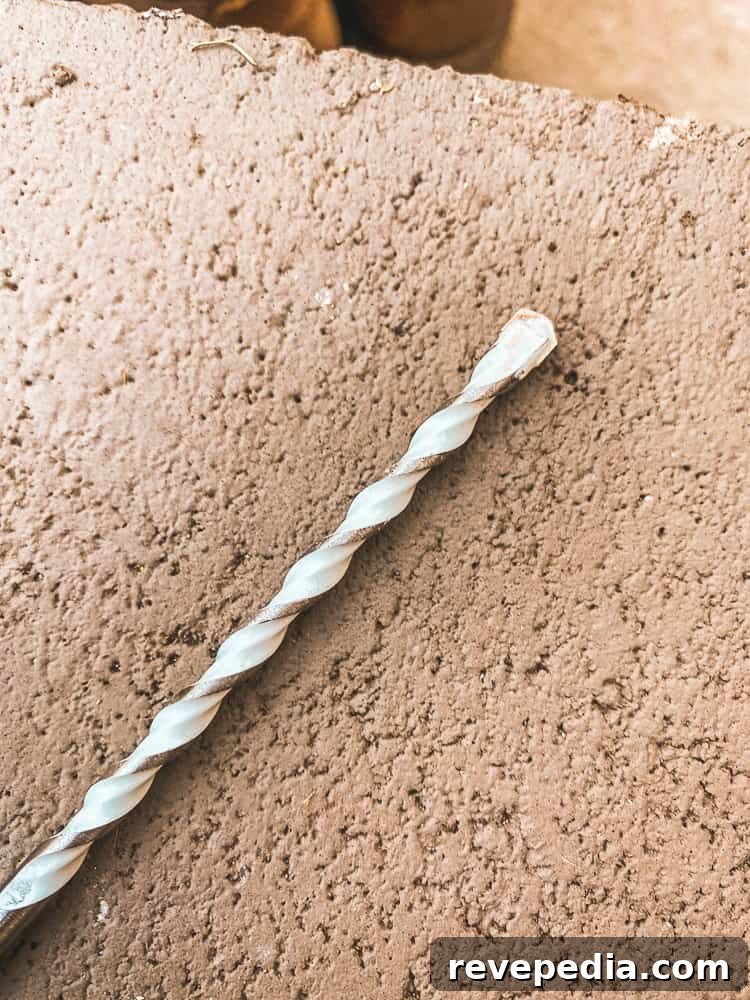
- Masonry drill bit for brick or plaster walls (if needed)
- Cordless drill
- Wire cutters
Trellis Design
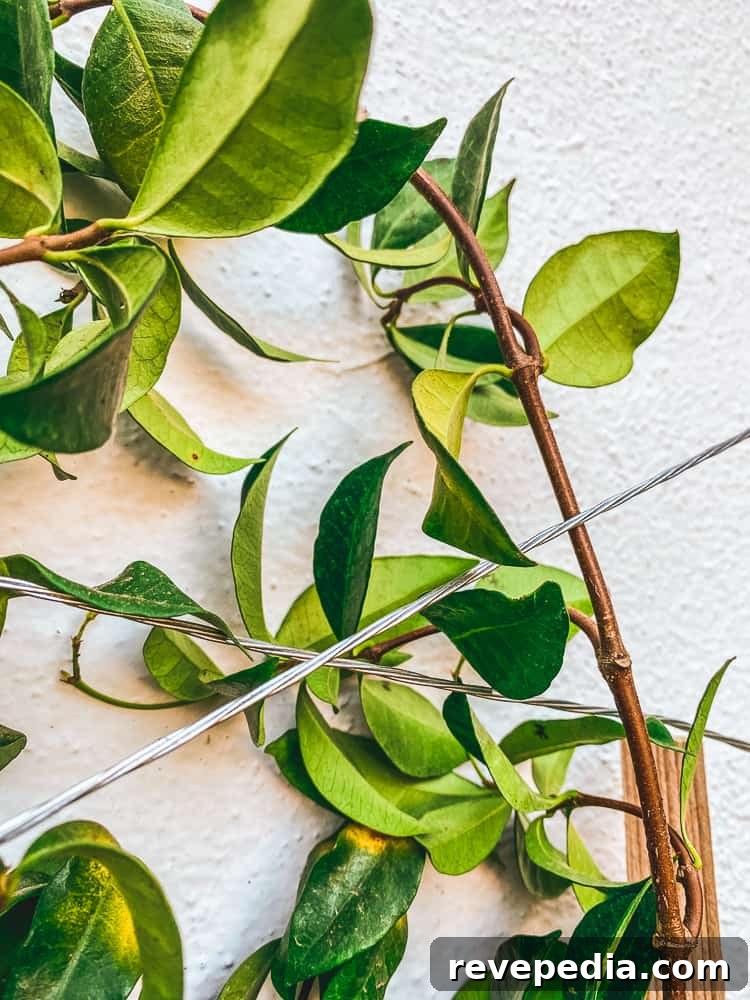
One of the best parts of a wire trellis is how customizable it is. For our jasmine we chose a criss-cross pattern sized to the planter box width and spaced vertically every two feet. That layout gives plenty of attachment points to weave and train branches while remaining visually light.
The criss-cross can be doubled by adding center screw eyes if you want denser support, but running the wire across in one pass was sufficient for our modest vines and keeps the look simple and elegant.
How to Make a Wire Trellis
1. Mark anchor positions: Measure and mark where the screw eyes will go, spacing them vertically every two feet up to the desired height. We stopped at four feet to match the height of our jasmine.
2. Drill pilot holes: Use an appropriate drill bit for your wall—masonry for plaster or brick. Drill a pilot hole slightly smaller than the plastic anchor so the anchor fits snugly without deforming.
3. Insert anchors and screw in screw eyes: Lightly tap the plastic anchors into the holes until seated, then hand-screw the zinc screw eyes into the anchors. They should turn in easily and feel secure.
4. Run the wire: Secure one end of the galvanized wire around the bottom screw eye and run it in a diagonal up to the top eye on the opposite side to form the first diagonal. Repeat on the other side to create the criss-cross pattern. Tie off the wire at the top, leaving a little slack so you can ease branches into place and make small adjustments.
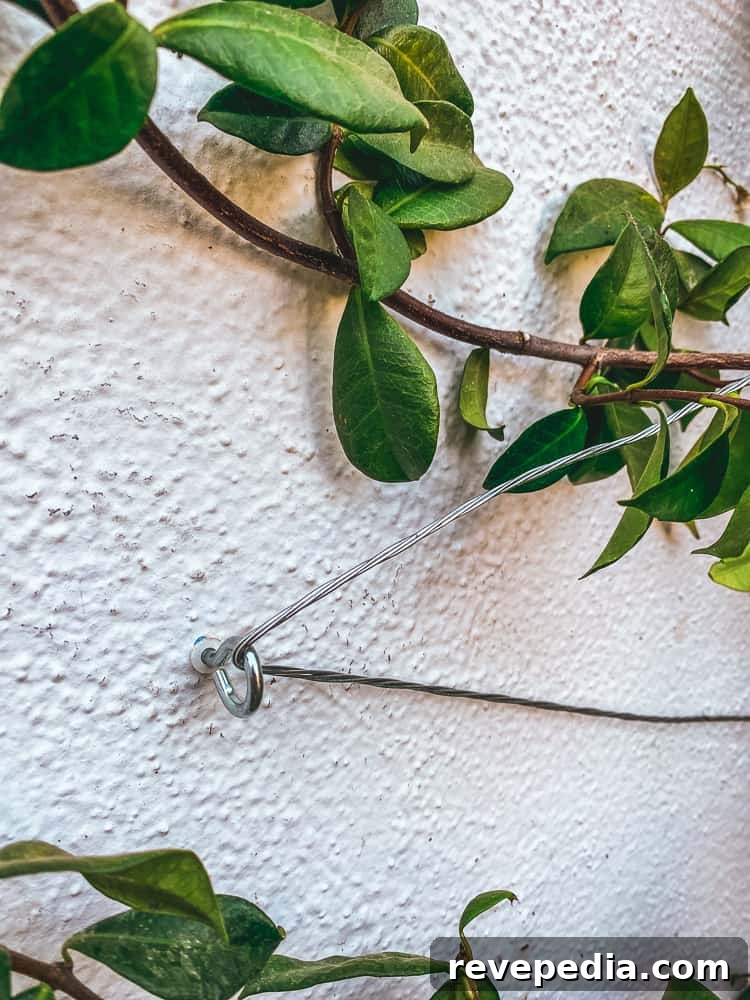
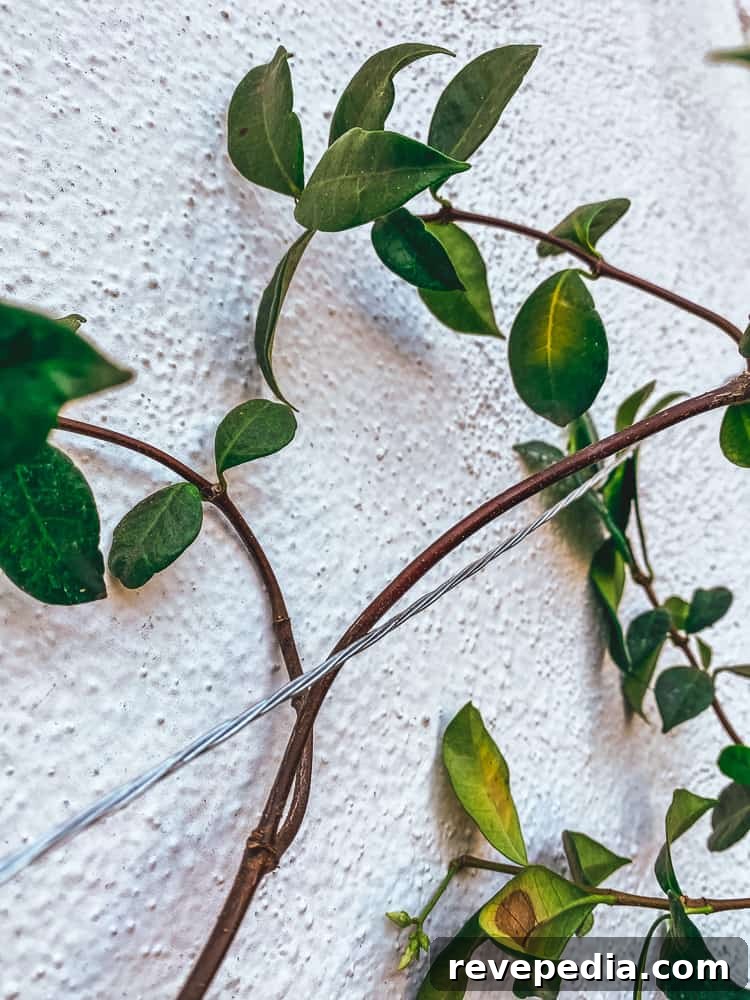
5. Train the plants: Gently guide the longer branches behind and through alternate wires, weaving them into the pattern. Avoid forcing stems or tying too tightly; the goal is to encourage the plant to grow naturally along the support.
Within a few weeks you should see the vines begin to move toward and cling to the wires. To speed the process, lightly prune the front-facing growth so the plant focuses energy toward the wall-facing side.
This uncomplicated trellis took less than 30 minutes to install and provides an attractive, low-profile structure for our jasmine to climb. It’s easy to expand later if the plants need more support or if you want a denser pattern.