
A workbench determines how efficiently and comfortably you complete projects in the garage. Whether you’re repairing, assembling, or fabricating parts, the bench’s construction and layout affect precision, safety, and workflow. The right workbench keeps essential tools within reach, reduces fatigue, and helps you stay focused on the task.
Define Your Work First
Start by identifying the type of work you’ll do most often. For heavy mechanical jobs, choose a heavy-duty work table with storage, a strong frame and surfaces that tolerate oil, brake fluid and solvents. For woodworking, prioritize a thick top that absorbs vibration and grips clamps. For electronics or detailed assembly, a smooth, clean surface with bright lighting and accessible power outlets is best.
If your garage hosts a mix of activities, consider a durable steel frame with a replaceable top. That combination will stand up to heavy use and allow you to swap the work surface when it becomes damaged or too worn for fine work.
Set the Correct Size and Height
Match the bench size to your available wall and floor space while leaving enough room to move around and store tool chests, carts or long parts. A cramped bench forces awkward positions that increase the risk of mistakes and injury.
Height matters: for most standing tasks the top should sit at roughly wrist level when your arms are relaxed. Heavier work often benefits from a slightly lower surface so you can apply force comfortably, while precise, fine tasks are easier on a somewhat higher bench. If multiple people will use the bench, an adjustable-height frame is a practical option.

Frame Strength and Materials
The frame must keep its shape under load and when using vises, presses or heavy clamps. Welded steel frames are the stiffest and most durable. Bolt-together frames can work if assembled correctly and periodically checked for tightness.
Surface material affects performance: hardwood tops absorb vibration and can be resurfaced by sanding; bamboo resists moisture and remains stable over time; steel tops stand up to welding and spills but transmit vibration and can mar softer parts. For most garage tasks, a solid steel frame paired with a hardwood or composite top is a reliable, versatile choice.
Load Capacity and Stability
Manufacturers publish load ratings, but those numbers usually reflect static weight. Real shop work generates dynamic forces from hammering, pressing, twisting and levering. A bench that supports a heavy engine block in static tests may flex or wobble under the additional forces created when you break a frozen bolt loose.
Increase stability with wide feet, adjustable leveling mounts and secure floor contact. Anchoring the bench to the wall is a small step that pays off when you grind, press, or perform other heavy tasks: it reduces wobble and makes precision jobs far easier.
Smart Storage Solutions
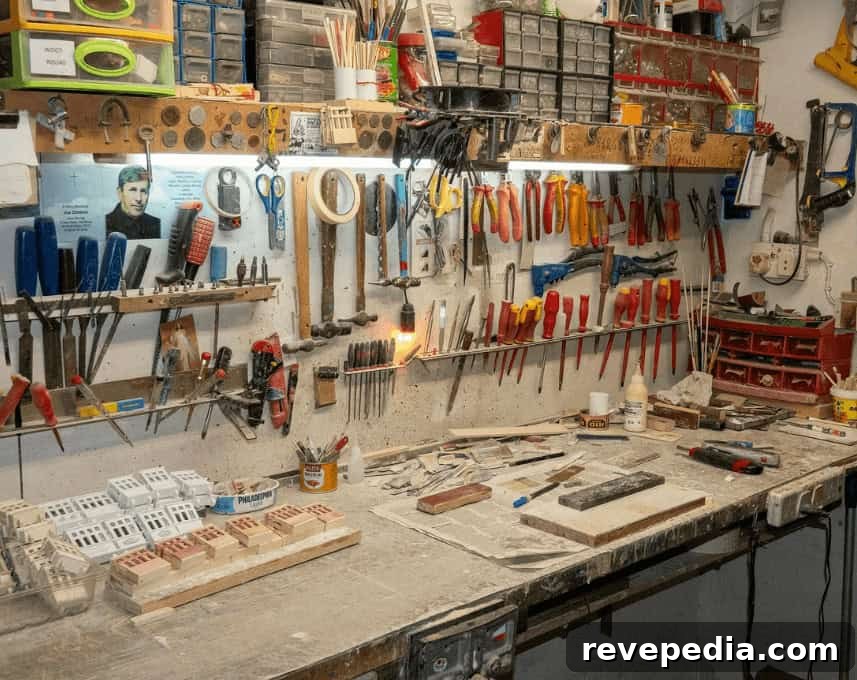
Good storage keeps tools organized and accessible. Shallow drawers are ideal for sockets, small hand tools and measuring instruments; larger drawers or shelves store power tools and cases. Pegboards or back panels keep frequently used tools at eye level, speeding retrieval during projects.
Avoid designs that intrude on your working position. Cabinets or drawers that extend too far forward can force you to crouch or overreach. Maintain toe space and room to stand close to the bench so you can work comfortably and safely.
Power and Lighting
Convenient outlets prevent long cord runs and reduce trip hazards. Mount a power strip or a row of outlets along the rear edge of the bench so the work surface remains uncluttered and tools can remain plugged in while you work.
Task lighting is essential. An adjustable LED lamp attached to the frame provides focused illumination for measuring, cutting and wiring, minimizing errors and reducing eye strain.
Fixed or Mobile Installation
Fixed benches offer maximum rigidity and are ideal if your shop layout is permanent and you perform heavy lifting. Anchoring a fixed bench to the wall and floor provides the most stable working platform.
Mobile benches are useful in small or flexible spaces. Choose locking, heavy-duty casters so the bench won’t drift during use. A common configuration is a large, stable main bench for heavy work plus a smaller mobile cart for tasks that need to travel around the garage.
Common Workbench Types Comparison
| Workbench Type | Best Use | Strengths | Limitations |
| Hardwood top on steel frame | General repair, woodworking | Good vibration control, serviceable surface | Sensitive to fluids and welding heat |
| All-steel bench | Automotive and metal work | High load capacity, fluid resistance | Transmits vibration, marks soft materials |
| Adjustable-height bench | Shared workspaces | Ergonomic for multiple users | Slightly less rigid, higher cost |
| Mobile workbench | Small garages | Flexible positioning | Reduced stability under heavy load |
| Storage-integrated bench | Tool-dense workflows | Organized layout | Less legroom if poorly designed |
Each bench style serves a particular purpose. Choosing the type that matches your primary workload produces better results and longer-term satisfaction than picking based on looks alone.
Cost and Service Life
A quality workbench should last for years. Cheap designs with flimsy legs, weak fasteners and particleboard tops wear out quickly. Replacing or repairing a failed bench costs more and disrupts work more than investing in a solid bench up front.
Opt for a robust frame, a thick top and reliable hardware. You can add accessories and storage later, but a well-built basic bench handles heavy use without constant maintenance.
The Best Place to Install the Workbench
Position the bench close to your primary tools and power sources while leaving room for large projects and long materials. Good placement reduces unnecessary walking and keeps you focused on the work.
Organize storage so commonly used tools are within easy reach. That minimizes interruptions, prevents unnecessary reaching or turning, and cuts down on dropped fasteners and lost time.
Conclusion
The best workbench fits how you work: the right height, solid construction, stable anchoring and sensible storage. Choose materials and features that suit the primary tasks you perform, install it thoughtfully, and you’ll have a durable, comfortable workspace that improves efficiency and accuracy for years to come.