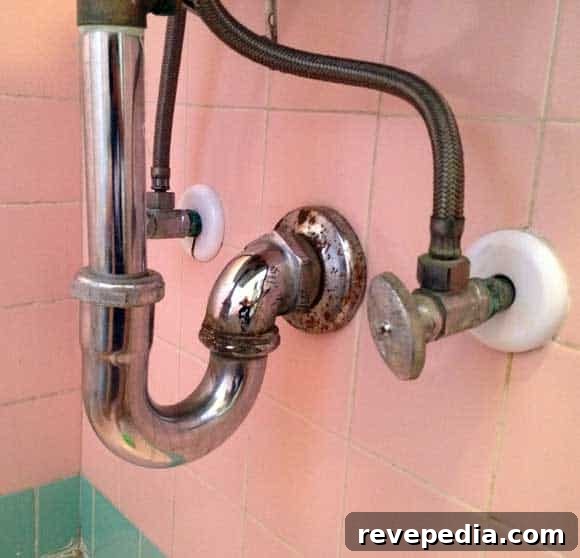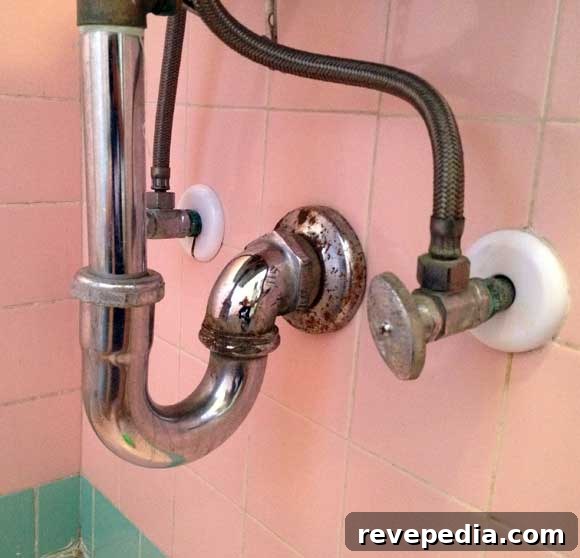
Our bathroom sink had been draining slowly for several months. We tried drain cleaner and a Zip-It tool, but nothing solved the problem. The next step was to remove the P-trap to see what was causing the blockage.
The house was built in the 1950s, and the P-trap was clearly original galvanized steel. As soon as I began to loosen the nut, the entire assembly pulled away from the wall. The threaded stub on the wall had corroded and sheared off, revealing the cause of the clog.
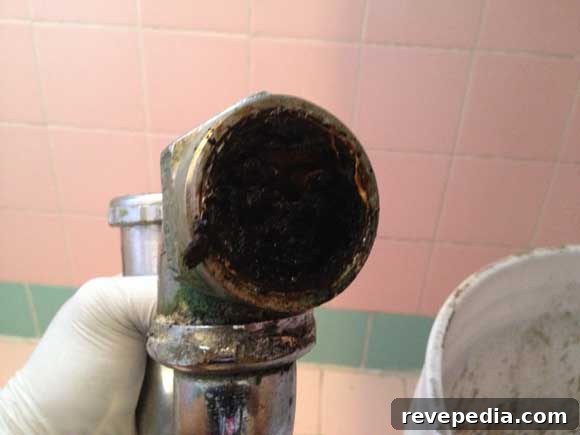
Inside the pipe there was a thick build-up of black gunk and sediment, leaving only a narrow channel for wastewater to pass. The trap itself was relatively clear, but this downstream obstruction was restricting flow and creating the slow drain.
Once I cleared the blockage, I discovered another problem: the P-trap would not align with the drain outlet. The corrosion had eaten away roughly half an inch of the wall pipe threads. When I attached a new steel elbow and new trap, the pieces no longer lined up with the drain below.
After a few trips to the home center, I decided to cut back the bottom section of the drain pipe and install a flexible extender (the white connector in the photo). I also replaced the old galvanized fittings with modern black ABS pipe and used a rubber adapter to connect the corroded wall stub to the new ABS fitting.
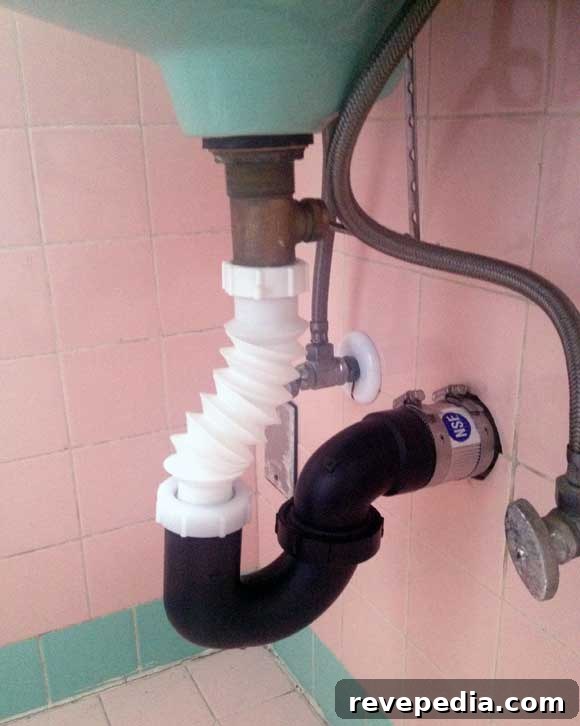
The repair isn’t as visually neat as the original galvanized assembly, but it functions well and should last for some time. Flexible extenders can trap debris more easily than rigid piping, so they require occasional cleaning, but they’re removable and make alignment fixes straightforward. Most importantly, the sink now drains freely and the slow-drain problem is resolved.
Have you ever replaced or repaired a P-trap? What issues did you encounter and how did you fix them?