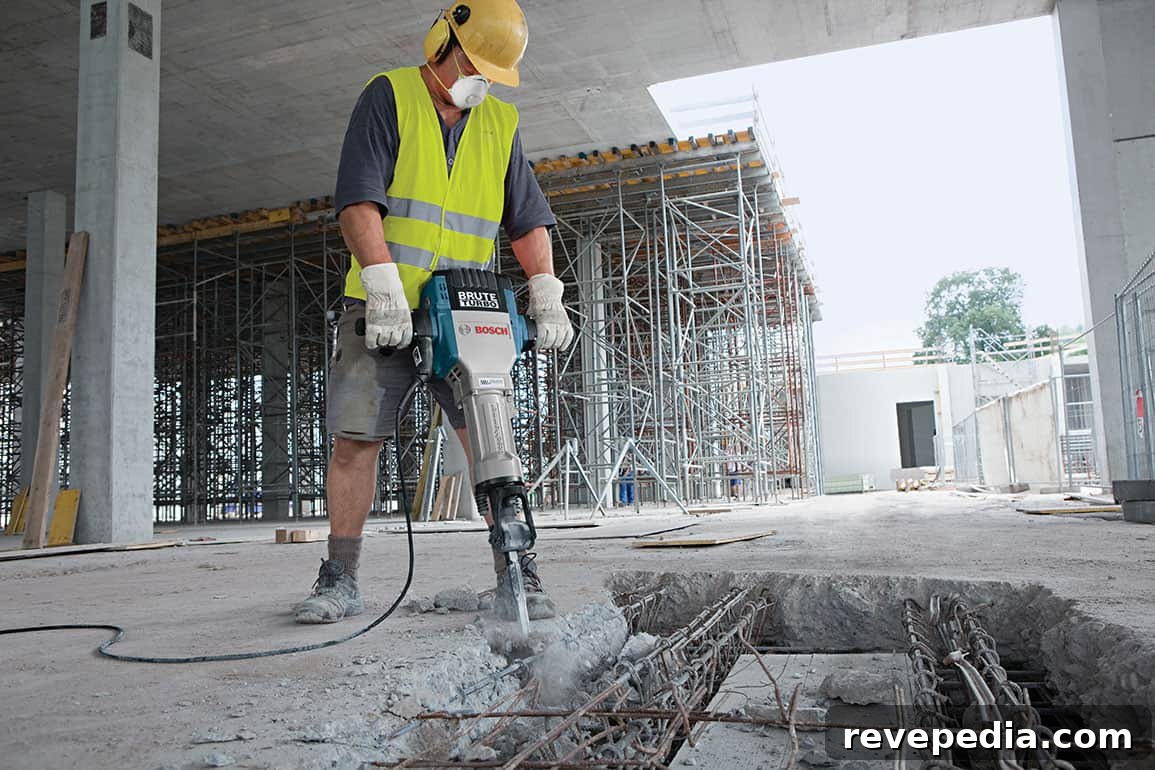
Bosch has introduced a significant advancement in tool tracking by integrating GPS technology into its latest breaker hammer. This move marks a shift from conventional Bluetooth-only systems, and the GPS option is also being offered as a retrofit for existing breaker hammer models.
Until now, Bluetooth trackers from manufacturers such as Milwaukee have dominated the market. Bluetooth systems work well for close-range tracking on-site, but they fall short when tools are moved off-site or out of Bluetooth range. With Bosch’s GPS-enabled breaker hammer, jobsite managers can monitor the tool’s location in real time and track movements anywhere, at any time, providing a clear advantage when a tool goes missing or is taken off-site.
In addition to the GPS offering, Bosch is expanding its presence in the tool-tracking ecosystem by launching a Bluetooth-based management system called Bluehound later this year. Bluehound appears positioned to compete directly with Milwaukee’s One-Key, offering Bluetooth tracking and tool-management features for Bosch’s lineup.
This GPS capability could have broader implications across Bosch’s tool range. If the technology is successfully integrated and proven reliable, it’s likely Bosch will extend GPS or enhanced tracking options to other product lines, including 18V and 12V cordless tools. That expansion would give Bosch a competitive edge in tool security and fleet management.
Overall, Bosch’s introduction of GPS tracking for breaker hammers—and the planned rollout of Bluetooth management—signals a notable development for contractors and tool owners who need stronger loss prevention and location visibility. As the technology matures and becomes more widely available, it could change expectations for tool tracking across the industry.