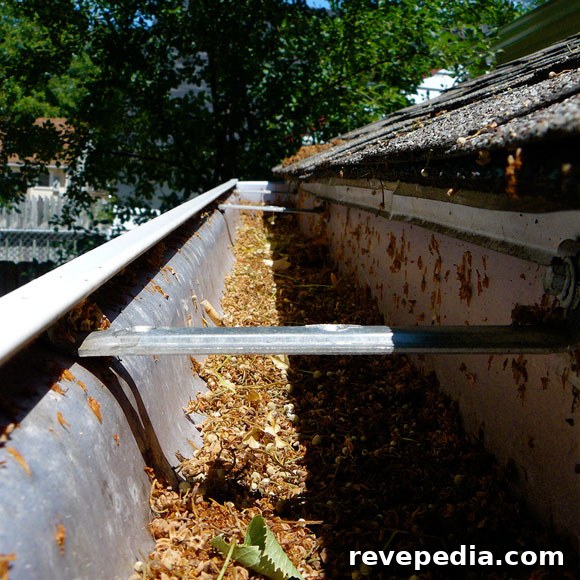
Cleaning your gutters is an essential part of home maintenance. When gutters become clogged with leaves, twigs and other debris, water can back up onto the roof and contribute to ice dams in cold weather. That trapped water can damage shingles, fascia, and the foundation over time, so keeping gutters clear ensures proper drainage and protects your home’s overall condition.
Gutters should generally be cleaned at least twice a year, more often if you have deciduous trees nearby that shed leaves directly into the channels. The following steps describe a safe, effective approach to gutter cleaning and basic upkeep.
1. Remove Debris
Place a ladder on a stable, level surface and check for any overhead hazards such as power lines or low branches before climbing. Work from the farthest section of the gutter and move toward the downspout so loosened debris naturally flows toward the exit. Use your hands (with gloves), a small scoop or a garden trowel to remove leaves, twigs and accumulated sludge. Put debris into a bucket or onto a tarp for easy disposal.
2. Flush the Gutters
After the bulk of the debris is removed, use a garden hose fitted with a spray nozzle set to a jet or high-pressure setting to flush the remaining grit and small particles toward the downspout. Start at the end opposite the downspout and work toward it so water carries any remaining material out. This also helps identify slow spots and confirms that downspouts are clear.
3. Inspect for Damage
Once cleaned, visually inspect the gutters for signs of holes, separation at seams, rust, sagging sections, loose brackets or other damage. Small holes and minor leaks can often be repaired with gutter patch kits or sealant available at hardware stores. For sections that are severely corroded, bent or broken, consider replacing the affected pieces or calling a professional if the repair is beyond a simple patch.
4. Install Guards or Leaf Traps
To reduce how frequently you need to clean, consider installing gutter guards, screens or leaf traps that keep larger debris from entering the channel while allowing water to pass. There are many styles and brands on the market; choose one compatible with your gutter material and roof slope. While no system eliminates maintenance entirely, guards can significantly cut down on clogging and the need for frequent cleanings.
Practical Tips and Safety
– Wear waterproof gloves to protect your hands from sharp edges and wet debris, and use a trowel or small scoop to make removal easier and cleaner.
– Always follow ladder safety: set it on a firm, level base, avoid overreaching, and have a helper steady the ladder when possible. Consider using a gutter scoop tool or hiring a professional if you are uncomfortable working at height.
– After flushing, check that water flows freely from the downspout; if it does not, clear any clogs at the bottom or use a plumber’s snake for stubborn blockages.
Keeping your gutters clean and well maintained is a relatively small investment of time that prevents larger, more costly repairs later. Regular inspections and simple upgrades like guards can preserve your roof, siding and foundation by ensuring proper water management year-round.
photo: cursedthing