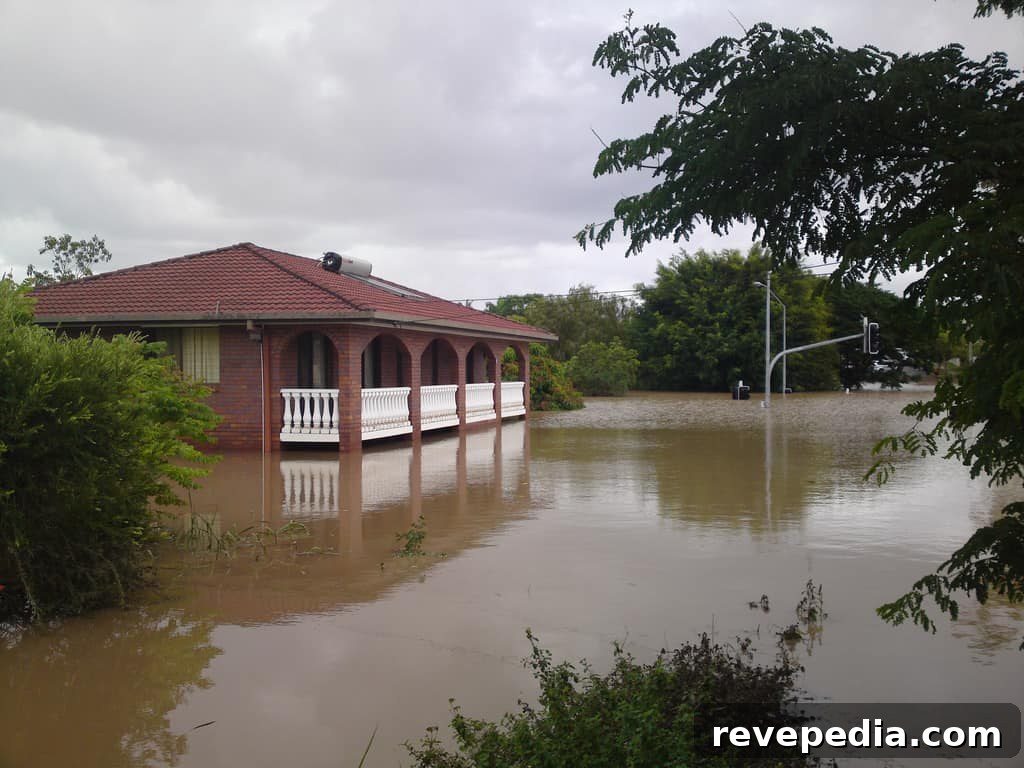
Flooding is impacting communities across the country as heavy rains and hurricanes leave homes and neighborhoods badly damaged. This guide explains how to assess and respond to water damage after a flood in your home, with practical, safety-first steps to minimize loss and help the recovery process.
- Check for Danger
- Identify the Source
- Stop the Source
- Prevent Further Damage
- Set-up for Successful Drying
- What to Salvage
- Salvaging After Category 3 Water Damage
- Salvaging After Category 1 and 2 Water Damage
- Guidelines for Salvaging Materials
- Flood Insurance
Floodwaters—from a few inches to several feet—can cause severe damage, but not everything is inevitably lost. The most important first step is to check for danger and protect yourself before attempting to recover possessions or begin repairs.
Check for Danger
Safety is the top priority. Do not turn a flood problem into a life-threatening incident. Before entering a damaged area, make sure it is safe to do so. The primary hazard is electricity. Look for damaged light fixtures, ceiling fans, or appliances that may have been affected by the flood or by structural failures related to the flood.
For example, if a second-floor bathroom overflowed and the first-floor ceiling collapsed, fixtures attached to that ceiling could have been dislodged and exposed wiring may be present. If you see any risk of electrical shock—loose wires, exposed conductors, or damaged service panels—turn off power to the building at the main breaker and resolve the hazard safely before continuing your assessment.
Identify the Source
Water damage is classified into three categories based on the contamination level of the source:
- Category 1 – Clean water from a potable source, such as an overflowing sink, bathtub, or a broken water supply line. This type of water presents the lowest risk of contamination or respiratory hazards.
- Category 2 – “Gray” water, which is not potable and may contain soaps, detergents or food particles. Examples include dishwasher or washing-machine discharge. It can cause staining and requires cleaning and sanitation.
- Category 3 – “Black” water, which is heavily contaminated and may contain sewage, harmful bacteria, or chemicals. This water is unsafe to touch, ingest, or inhale and must be handled by professionals with proper protective equipment and immunizations. Sources include sewer backups, floodwater that flowed across soil or contaminated surfaces, and chemical spills.
Stop the Source
If you determine the water is Category 1 or 2, stop the flow if it is safe to do so. If the water is Category 3, wait for professionals because of contamination risk. Know where your home’s main water shut-off valve is and test it periodically so you can stop water quickly if a supply line or fixture fails. If a fixture or appliance has its own shut-off valve upstream, turn that off instead of shutting off water to the entire house.
If you see a continuous sewage backup from a drain, the problem may be in your sewer line or in the municipal sewer system. Report this immediately to your city’s wastewater department so they can respond and stop the sewage flow.
Prevent Further Damage
- Furnishings – Move wet furniture and items off damp floors as soon as it’s safe. This is especially important for wood furniture or pieces with stained finishes that can bleed onto carpets. Composite wood products like MDF swell and are usually ruined by water exposure.
- Wall Coverings – After moving furnishings, inspect walls. If water has wicked into drywall, plaster, or behind baseboards and wainscoting, remove the baseboard or coverings to allow drying. Moisture trapped behind trim impedes drying and encourages mold, which can begin growing on porous materials within 48–72 hours. If you encounter mold, stop demolition and hire a professional; disturbing mold can release spores and worsen health risks for occupants.
- Flooring – Address flooring once furnishings and wall coverings are handled. Carpet and padding soaked by Category 1 water can sometimes be cleaned and salvaged. Padding contaminated by Category 2 water should be discarded, while the carpet itself may be sanitized. Flooring exposed to Category 3 water should be removed immediately and the subfloor or slab treated with antimicrobial agents—this work should be done by trained professionals.
Set-up for Successful Drying
Drying a water-damaged structure is a technical process that benefits from professional equipment and knowledge. For moderate to heavy damage, hire a reputable restoration company. For lighter damage, follow these tips after completing safety checks and source control:
Place floor fans around the room perimeter about 12 feet apart and point airflow in a clockwise direction to create circulating air movement that pushes moist air toward the edges. Position a dehumidifier on the perimeter to capture moisture; run its condensate line to a drain or out of the building—placing the condensate in a bucket inside the room will simply reintroduce moisture and slow drying.
If carpet was affected by a Category 1 event, you can pull it away from the tack strip and try to blow air underneath to speed drying. Light damage may dry overnight with aggressive airflow and dehumidification. When in doubt, call a professional restoration company—experienced technicians have specialized equipment and training to restore properties safely and efficiently.
What to Salvage
Category 3 water is treated as the most hazardous because it may contain sewage or toxic chemicals. Even if water appears clean—such as in a toilet bowl prior to overflow—the source creates contamination risk and should be considered Category 3. In these cases, porous materials should be removed and discarded using appropriate protective equipment.
Salvaging After Category 3 Water Damage
After Category 3 contamination, remove and discard porous materials such as drywall, insulation, carpet, carpet padding, baseboards, rugs, upholstered furnishings, and other absorbent items. Non-porous materials—tile, concrete, metal, and plumbing fixtures—can be thoroughly cleaned and disinfected with appropriate biocidal cleaners. Follow the product labeling for safe and effective use.
If an item is uniquely valuable—an irreplaceable antique rug or heirloom—you may consider hiring a specialist in textile or artifact restoration. For most household items, however, disposal is the safest option for protecting your family’s health.
Salvaging After Category 1 and 2 Water Damage
For Category 1 and 2 incidents, salvage decisions depend on how much the materials were damaged rather than simply the contamination source. Focus on whether materials can be fully dried and restored without posing ongoing health or structural risks.
Guidelines for Salvaging Materials
- Carpet – Replace carpet padding; you may be able to salvage the carpet itself if cleaned and dried quickly. Category 2 water can cause staining, so evaluate whether cleaning is likely to restore the carpet.
- Wood Flooring – Solid wood floors may be salvageable by experienced restoration professionals, often at significant cost. Engineered wood flooring is more likely to be permanently damaged and may need replacement. Assessments vary, so consult a restoration expert.
- Baseboard – If removed and dried promptly, natural wood baseboards may be saved. Engineered materials like MDF typically swell and cannot be restored after moisture exposure.
- Cabinets – Cabinets can sometimes be salvaged, but drying underneath them is difficult. Remove standing water, take off toe-kicks or base trim, and create airflow under cabinets by drilling small holes or using specialized equipment. If the drywall behind cabinets is saturated, removing the cabinets may be necessary to prevent mold.
- Drywall and Plaster – Early intervention improves salvage chances. If drywall paper is damp but the gypsum core has not softened, it may be dried and saved. If the gypsum is crumbly or mushy, replacement is required.
- Insulation – Batt insulation should be removed and replaced if it becomes wet; it holds moisture and encourages mold unless completely dried. Flooding above the wall sill plate typically requires removing and replacing both drywall and insulation.
- Wallpaper – Usually must be replaced after water exposure.
- Rugs – Professional cleaning can often restore rugs; weigh the cost of cleaning against the rug’s value.
- Sheet Vinyl – Sheet vinyl commonly delaminates or discolors after water exposure and is often more practical to replace.
- Furniture – Many furnishings can be saved if moved off the floor quickly and dried. The sooner you act, the better the odds of successful restoration.
Flood Insurance
Flood insurance in the United States is provided through the National Flood Insurance Program (NFIP), a federal program that offers consistent coverage and rates nationwide. The NFIP’s availability depends on congressional authorization, so coverage stability can fluctuate with legislative changes.
NFIP coverage extends to properties in the U.S., Puerto Rico, and the Virgin Islands, and authorized agents can write policies nationwide. Flood insurance policies are separate from standard homeowners or renters insurance and are designed to cover flood-related damage to buildings and contents.
To determine whether your property lies in a special flood hazard area, refer to the Federal Emergency Management Agency’s flood maps. Many claims come from properties outside mapped high-risk zones. If you aren’t in a designated high-risk zone, flood insurance premiums are often relatively affordable; an authorized agent can provide an exact quote for your situation.
Recovering from flood-related water damage is challenging but possible. Insurance can cover larger losses and replace many items, though sentimental and irreplaceable belongings may be lost. Take recovery step by step—there is no need to do everything at once—and consult professionals when hazards or contamination are present. With careful planning and the right help, you can restore your home and return to normal over time.