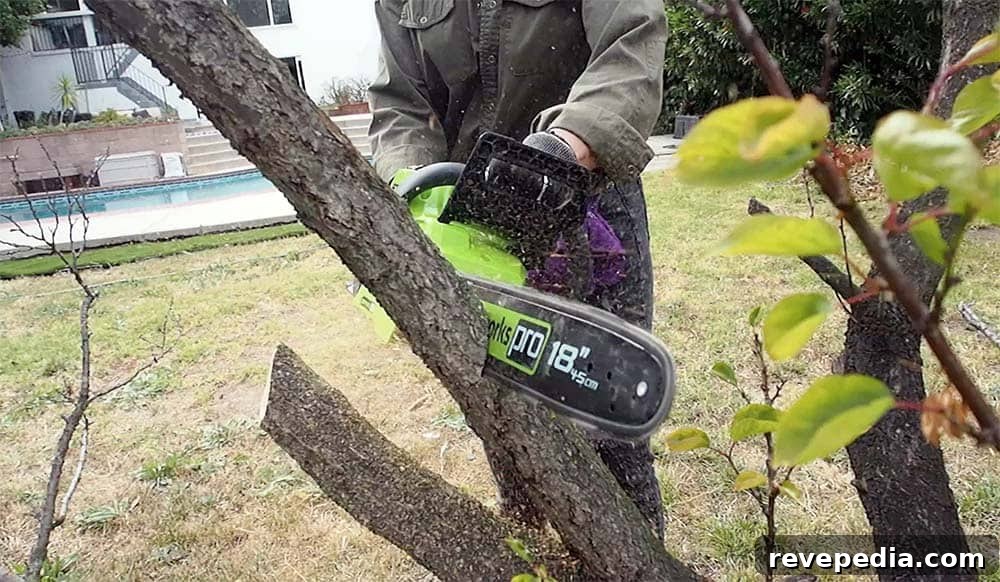
One of our main spring projects was removing a diseased apricot tree from the backyard. While an ax or hatchet was an option, an electric chainsaw proved to be the better, safer choice for this task.
After repeated attempts at watering, fertilizing, and pruning, the tree needed to come down. It reached about 8 feet at its tallest, with the trunk measuring roughly 2 feet in diameter at its widest point.
We used a Greenworks 60V chainsaw designed for homeowners who want a comfortable tool for weekend projects but also durable enough for occasional heavier work. This model handles trees of this size very well.
Although the name can sound intimidating, an electric chainsaw is straightforward to use. Like other cordless outdoor power tools, you insert a charged battery and pull the trigger. That said, there are a few important safety and maintenance steps to follow before and during use.
Personal Safety Equipment
For light tasks such as limbing and clearing small brush, wear sturdy work gloves and eye protection. If you’ll be using the saw for extended periods, performing awkward cuts, or tackling denser material, add chainsaw chaps, hearing protection, and a face shield for better protection.
Chain Maintenance
Along with a fully charged battery, check the bar oil level and top it up if necessary. Bar oil lubricates the chain, reducing wear and allowing the chain to run smoothly on the bar. On the Greenworks saw the oil reservoir has a translucent cap so you can quickly check the oil level without removing it.
Chains stretch with use, so inspect for slack before starting. Pull the chain from the top: it should lift easily but remain snug. Lift from the bottom and release — the chain should snap back into place. If it sags or feels loose, adjust the tension with the tool supplied with the saw.
How to Use a Chainsaw
For larger trees you typically make a felling cut at the trunk and then limb the tree, but for this smaller apricot we removed the branches first and set them aside, then cut the larger limbs and trunk into firewood-sized sections.
Before starting, engage the chain brake by pulling it toward you. This safety feature helps stop the chain quickly in the event of kickback. Depress the safety button, then pull the trigger to start the saw. Always let the chain reach full speed before contacting wood. Avoid letting the chain strike the ground — dirt and rocks can be thrown, and the chain can be damaged immediately.
When cutting a branch, use light, steady pressure and let the chain and the weight of the saw do the work. There’s no need to saw back and forth or push down excessively. A sharp chain and a steady approach make clean, efficient cuts.
Go Electric
The Greenworks 60V cordless saw delivers more than enough power for typical homeowner tasks. Replacing a gas saw with a cordless model removes fumes, reduces noise, eliminates gas-and-oil mixing, and cuts down on startup and maintenance hassles. Electric models are easier to start reliably and generally require less upkeep.
Another benefit of this Greenworks saw is compatibility with their 60V battery system, which powers other tools like string trimmers and blowers using the same battery platform.
Greenworks tools are sold at many retailers.
This post is sponsored by Greenworks; all opinions are those of Timothy Dahl of Charles & Hudson.