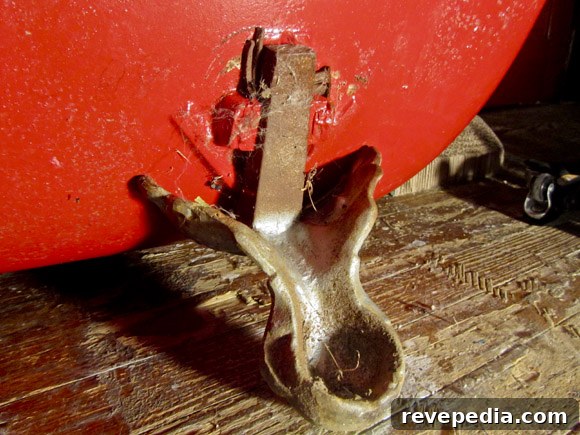
The first step in our tub refinishing project was thorough preparation. We dismantled the tub as much as possible so each problem could be handled on its own without risking damage to other parts. After three years in storage and prior use as garden decor, the tub had accumulated a thick layer of grime, so we gave it an aggressive cleaning to remove dirt, rust, and old residue.
We decided to remove the claw feet first. Carefully tipping the tub onto its side allowed access to the feet on the opposite side. To our surprise, the feet weren’t attached with modern nuts and bolts; instead, old bent carpentry nails had been used. Our new ratchet set proved useless for that task, so we borrowed a Dremel 4000 XPR with a metal cutting wheel and used it to cut through the rusty nails. The process made a bit of noise, but it was quick and effective, freeing the feet without further damaging the tub’s exterior.
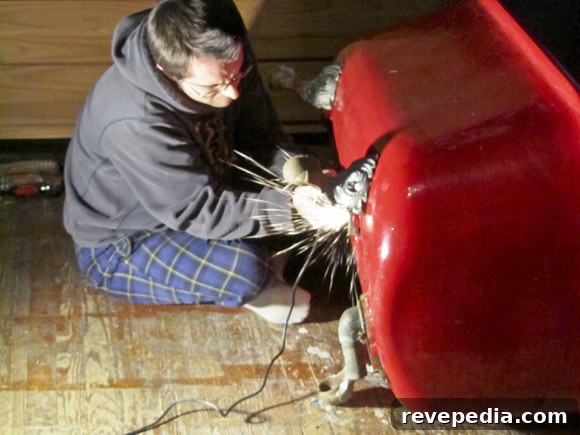
Once the feet were removed, we set them aside and inspected the underside and the surrounding areas. Removing the feet revealed surface tears in the old porcelain and areas with heavy scarring from previous installations and removals. We dry-dusted, scrubbed, and degreased every inch so repairs and refinishing materials would adhere properly. Any loose particles, cobwebs, or dried caulk were scraped away and vacuumed out of the work zone.
With the tub clean and the feet detached, we checked the drain and overflow components. Where possible, hardware was carefully pried off and set aside to prevent damage during the refinishing process. Old pipe fittings that were corroded beyond reuse were noted for replacement. We used pliers and gentle leverage to separate parts rather than force them, preventing additional scarring to the tub’s lip and mounting areas.
Next came a closer look at the porcelain surface itself. The three years outside and previous wear had left a variety of blemishes—minor chips, surface etching, and discoloration. Each defect was marked and documented so that the repair steps could be prioritized. Small chips received a fine sanding and a bonding putty suitable for porcelain; larger gouges were filled in layers and sanded smooth once cured. We avoided aggressive sanding over the entire surface at this stage to prevent unnecessary removal of sound material.
After repairs, we performed a final cleaning pass using a solvent recommended for porcelain and a lint-free cloth. This removed any remaining oils, sanding dust, and particulate matter. Proper surface cleanliness is essential to get a uniform finish when applying primer and topcoats, so we took our time here rather than rush into the next phase.
Before moving the tub back into its upright position, we double-checked that all cut metal shavings were cleared away and that the floor and surrounding fixtures were protected. We rolled in protective padding and made sure the tub could be lifted without scraping or nicking the repaired surfaces. The detached feet were kept close at hand and labeled so we could refit or replace them after the refinishing was complete.
Throughout the prep work, safety was a priority. We wore eye protection, gloves, and respirators when cutting metal, sanding, and working with solvents. The Dremel produces hot sparks and metal filings, so we worked in short bursts and kept a fire extinguisher nearby. Proper ventilation was maintained to minimize inhalation of dust and fumes.
In summary, careful disassembly, thorough cleaning, and methodical repair are the foundation of any successful tub refinishing job. Removing the awkward, rusted fasteners and taking time to prepare the surface saved time later and improved the final look. With the tub cleaned, the feet removed, and repairs completed, we were ready to move on to priming and re-glazing for a refreshed, durable finish.