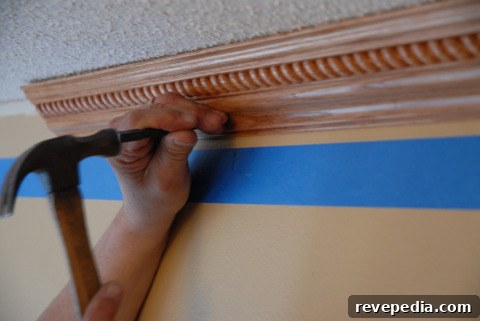
Crown molding makes a strong visual statement. A single trim addition can dramatically change the look and feel of a room. But can you install crown molding on a cathedral ceiling, and is the effort worthwhile?
Precision Cutting Is Key
The sloped surfaces of cathedral ceilings create a different intersection between wall and ceiling than a standard 90-degree corner. Crown molding is typically cut for a right-angle junction, whereas cathedral ceilings form an obtuse angle that requires special attention.
However, this is a solvable challenge. Use a 360-degree adjustable protractor or angle finder to determine the exact slope where the molding will meet the ceiling. Accurate measurements are essential to ensure clean joints.
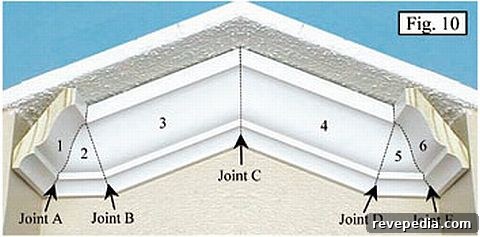
When working on a cathedral ceiling, you will often need an extra, triangular-cut piece to bridge the change in slope. The sloped section usually requires a connector trim that is cut into a triangular shape so it fits snugly between the two angled cuts. Refer to the diagram and note the connecting piece labeled #2.
After fitting that connector, continue installing molding up the slope and down the opposite angle, finishing where the adjacent wall molding meets in another similar connector piece.
Tools You’ll Need
For a successful installation on cathedral ceilings, a compound miter saw and a brad nailer are highly recommended. You will also need a stable ladder or scaffolding to work safely at height.
A compound miter saw offers more precise angle control and lets you lay molding flat while cutting, which improves accuracy and consistency. A basic miter saw with a fence can work, but it’s generally more difficult to achieve the complex angled cuts needed for cathedral ceilings.
Does It Add Value?
Cathedral ceilings are striking on their own, but well-executed crown molding enhances the architectural drama and finishes the space with intentional detail. The right trim can emphasize the ceiling’s height and angles, giving the room a more refined and finished appearance.
If you enjoy DIY projects and are comfortable with precise measuring and cutting, crown molding on a cathedral ceiling is worth the effort. Take your time to measure carefully, set accurate angles, and test-fit pieces before final nailing—measure twice, cut once.
photo 1 courtesy of flickr/tsuacctnt
photo 2 courtesy of Wayne Drake – author of Crown Molding & Trim: Install It Like a Pro!