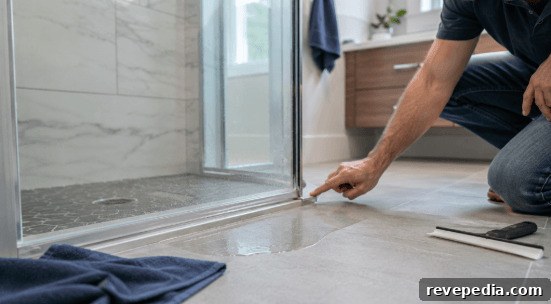
Bathroom problems rarely appear suddenly.
At first it might be a small puddle outside the shower door. You wipe it up, and the next day it’s back. Or the bottom edge of the glass begins to yellow, caulk develops dark spots, or the drain runs a little slower than before.
Those small signs usually mean water is sitting where it shouldn’t or finding gaps that should be sealed.
Many homeowners think bathroom maintenance is just cleaning the mirror, toilet, and countertop. But the details that protect a bathroom are often less visible: shower seals, caulk lines, drainage, tile edges, and hidden leaks.
Below are seven checks that can help you catch problems before they turn into mold, swollen cabinetry, or costly repairs.
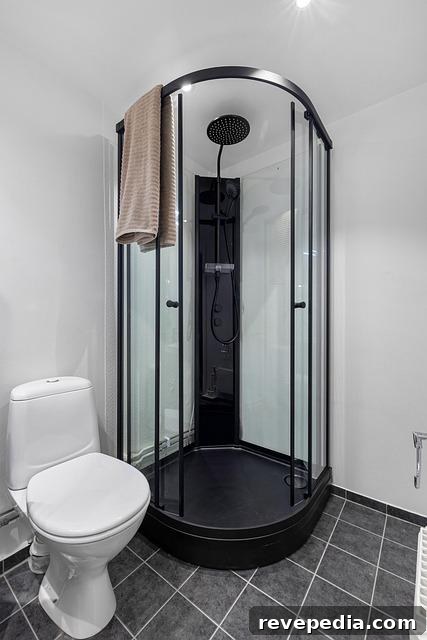
1. Inspect the shower door seals
If water keeps appearing outside the shower, start by examining the bottom and side edges of the door.
Shower door seals are fitted along the bottom of the glass, the closing edge, or the fixed panel to keep water inside. Daily exposure to hot water, soap residue, hard water minerals, and cleaning products can cause seals to harden, yellow, become brittle, or crack.
Run your fingers along the clear seal. If it feels flexible and sits neatly against the tray, floor, or adjacent glass, it is probably fine. If it’s curled, loose, blackened, yellowed, or stiff, it may not seal properly.
Many people try to fix a leaking shower door with silicone caulk, but caulk doesn’t work well on moving door edges. Because the door moves, caulk will eventually pull away, can prevent the door from closing correctly, and is difficult to remove from glass later.
For glass enclosures, replaceable shower door seals are usually a better option than caulk for moving edges. Seals move with the door and can be replaced without scraping off old silicone.
When replacing a seal, don’t measure length alone. You also need to know the glass thickness, seal profile, and gap size. Different types of shower door seals are designed for different positions—bottom seals, side seals, magnetic seals, and bulb-style seals—so their channels, fins, and water-deflecting edges are not interchangeable.
Fin length matters. If the fin is too long it can drag, make noise, stiffen door movement, and wear out faster; if it’s too short it won’t cover the gap. The right seal blocks water without affecting how the door operates.
2. Inspect and replace caulk where needed
Caulk belongs on fixed joints: around bathtubs, shower trays, inside corners, vanity tops, and where fixed glass meets a wall. Its job is to keep water out of walls, cabinets, and flooring.
Dark spots on caulk can look like dirt, but if mold has penetrated the material, cleaning will only help for a short time. Also check for lifting or separation: if caulk has pulled away from the wall, tray, tub, or glass, water may already be getting behind it.
Do not apply new caulk over old caulk. Old caulk often holds soap scum, mold, hard water deposits, and cleaner residue, which prevent proper bonding. Remove the old caulk, clean the surface, let it dry fully, and then apply a bathroom-grade, mold-resistant caulk.
A simple guideline: use caulk for fixed gaps and seals for moving shower door edges.
3. Clear the drain before it slows down
Slow shower drains usually build up over time. Hair, soap residue, shampoo, conditioner, and body oils collect at the drain and inside the pipe. At first water drains a few seconds slower; later it may pool around your feet.
The easiest habit is to remove visible hair after each shower. Roll it into a small ball with your hand or a tissue and throw it in the trash instead of rinsing it down the drain. Once hair enters the pipe it binds with soap scum and oils and becomes much harder to remove.
For routine maintenance, remove the drain cover and clear visible debris. A drain hook, a soft brush, and hot water are often better for light buildup than harsh chemical cleaners, which can be tough on pipes, metal finishes, and nearby sealing materials.
If the drain remains slow or smells bad after basic cleaning, the issue may be deeper in the line and require a plumber or a mechanical snake to clear it.
4. Check the shower door track
For framed shower doors, inspect the bottom track.
Many framed doors allow a little water into the track and then drain it back into the shower through small weep holes. If those holes become blocked by hard water, soap scum, hair, or cleaner residue, water can collect in the track and spill over the outside edge.
That can look like a leaking shower door even when the real problem is a blocked track.
Dry the track, spray a little water against the inside of the door, and watch where it goes. If water pools in the channel or spills outward, clean the weep holes and track with a soft brush, cotton swab, or toothpick. Avoid scraping hard with metal tools that can damage the finish.
5. Examine grout and tile edges
Tile itself is water-resistant, but grout is not a permanent waterproof barrier.
Focus on the lower shower walls, inside corners, the joint where the floor meets the wall, and the shower entry—areas that receive the most water and are most likely to crack, loosen, or wear away.
If grout looks dark, it may be stained or continuously damp. Lightly scrape it with your fingernail; if powder comes away or you see gaps, repair is likely needed.
Also inspect thresholds, trim pieces, corners, and areas around fixed glass panels. Water doesn’t need a large opening to cause damage—a narrow gap is enough.

6. Watch for hard-water deposits
Cloudy white buildup on glass may seem cosmetic, but it makes maintenance harder over time.
Hard-water mineral deposits collect near the bottom of the glass, around seals, inside tracks, and around hardware. Over time these deposits make seals harder to clean and can block track drainage holes.
Use a squeegee after each shower, especially near the bottom of the glass and around seals. It takes only a few seconds and helps reduce mineral buildup and mildew.
Use a soft cloth and mild cleaner for routine cleaning and avoid abrasive pads on glass or metal hardware. If a seal has turned black, cracked, or hardened, cleaning is no longer sufficient—the seal is worn and should be replaced.
7. Check the toilet, faucet, and vanity cabinet
Some leaks are obvious, but others are quiet: a slow drip under the sink, moisture around the toilet base, or a vanity cabinet floor that starts to swell.
Open the vanity cabinet once a month and inspect the drain pipe, hot and cold supply lines, shutoff valves, and cabinet base. Watch for water marks, musty smells, staining, bubbling, or soft spots in the wood or laminate.
Check around the toilet base as well. If the floor is often damp, wipe it dry and watch whether moisture returns. If it does, a seal or plumbing issue may be present.
These hidden areas are often noticed too late, after water has already damaged cabinets, flooring, or wall corners.
Take two minutes after your next shower
After your next shower, spend two minutes checking the bottom of the door, door edges, caulk lines, drain, and lower glass.
If there is water outside the shower, trace where it came from.
If a seal is hard, yellowed, or cracked, don’t rely on cleaning alone.
If caulk is moldy or lifting, don’t simply cover it with more caulk—remove and replace it properly.
If the drain is slow, stop sending hair down the pipe.
If a framed door track holds water, check and clear the weep holes.
Most expensive bathroom repairs begin small: a worn seal, failing caulk, slow drain, blocked track, or a hidden drip. Catch those signs early and they’re usually simple and inexpensive to fix.