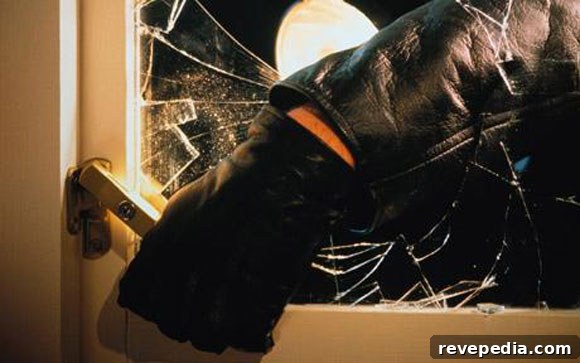
You may have heard the phrase “casing the joint,” which refers to inspecting a building, home, or business before committing a robbery. Opportunistic thieves often act on impulse; professional criminals plan ahead. By implementing sensible security measures, you can deter the impulsive offender and make your property a less attractive target for experienced burglars.
After attending a neighborhood watch meeting and speaking with local law enforcement, we compiled practical, tested tips for protecting your home or business.
Barriers to Burglary
Burglary is frequently a crime of opportunity. Make access difficult and risky for intruders, and you significantly reduce the likelihood that they will attempt a break-in.
Your first line of defense
Burglars seek concealment. They use fences, overgrown shrubs, and other cover to approach unseen. The goal is to keep trespassers off your property while maintaining clear sightlines from the street and neighboring properties. Choose picket or chain-link fencing and keep hedges trimmed to waist height to reduce hiding places.
On the outside looking in
Most burglars try doors and windows first. Secure these entry points well and you’ll likely discourage a break-in.
Doors
• Locks: Use quality deadbolt locks with at least a 1″ throw bolt and a hardened, saw-resistant steel insert. Fasten the strike plate with 4″ screws that penetrate the framing. Double-cylinder deadbolts, which require a key on both sides, prevent an intruder from breaking adjacent glass and turning the lock from inside, but they can also hinder a quick exit in an emergency — check local codes and guidance from fire or law enforcement officials. Make sure the lock cylinder has a steel guard or a rotating, tapered collar to resist wrenching.
• Hinges: For outward-swinging doors, exposed hinge pins can be removed to take the door off its frame. To prevent this, remove the center screw from each hinge side and replace it with a headless metal pin or screw so that when the door closes the pin engages the opposite side and keeps the door secured even if the hinge pins are removed.
• Padlocks: For overhead, receiving, or garage doors, choose case-hardened padlocks with a robust shackle (about 3/8″) and a mechanism that prevents key release until the lock is fully closed. Padlocks are only as strong as the hasp and mounting; secure hasps to a metal backing plate and conceal the mounting hardware when the lock is closed.
• Door construction: Replace hollow-core doors with solid-core models or reinforce existing doors with steel facing. Reinforce weak frames with steel or concrete and protect glass with interior polycarbonate sheets or steel bars. Polycarbonate should extend beyond the glass perimeter and be properly fastened to the frame.
Windows
Protect windows with grates, security grills, or bars, or affix clear polycarbonate sheeting to the interior. The sheet should overlap the glass perimeter and be fastened securely with bolts spaced closely (for example, every three inches). Unbreakable or laminated safety glass is an option when budget allows.
Other entrances
Skylights, ventilation ducts, and fire escapes are often overlooked access points. Protect skylights and ducts with metal grates or bars. Design fire escape access so the first stair is out of easy reach from the ground, and equip access doors or windows with emergency-release hardware so occupants can escape quickly. Keep keys for locked windows or doors nearby but secure.
Key control
Locks are only as secure as the people who control the keys. Follow simple key-control practices:
• Mark keys with a coded label rather than an obvious description (e.g., back door, office).
• Engrave “Do Not Duplicate” on keys when possible.
• Limit key access to trusted personnel and maintain a key log for issuance and return.
• Re-key locks when an employee who had key access leaves employment.
Guards
For businesses in higher-risk areas, consider pooling resources with neighboring properties to hire uniformed security personnel from a reputable company. Check references and ensure security staff know your employees, hours, and policies for handling shoplifting and internal theft.
Lighting
Good exterior lighting is a proven deterrent. Illuminate doorways, windows, parking areas, alleys, and other dark spots. If street or lot lighting is inadequate, work with neighboring property owners or local government to improve illumination or share the cost of additional lighting.
Alarms
Evaluate whether an alarm system makes sense for your property based on the value of assets and local risk factors. If you install an alarm, make its presence known with visible signage to discourage would-be intruders. Essential features include:
• Battery backup to ensure operation during power outages
• Fire-sensing capability
• A feedback or monitoring device to verify system status
For a tailored assessment, request a premises security survey from local law enforcement or consult a qualified security professional.
Operation Identification
Mark valuable items with an identifying number—local law enforcement programs often recommend using a state driver’s license prefix (for example “CA” in California) followed by the number. Place Operation ID decals on windows and doors to signal that items can be traced. Maintain a current inventory of merchandise, office equipment, and personal property; store a copy of the inventory off-site or in a safe-deposit box.
Operational habits and what to do if you detect a break-in
Locks and alarms work only when used. Establish consistent closing procedures that include locking doors and windows and activating alarms. Arrange displays and counters to maximize visibility: well-lit, open floor plans with low counters and uncluttered windows make it easier for employees, customers, and passersby to notice suspicious activity.
Position safes and cash registers where activity is visible from the street. When closing, remove cash from registers and leave drawers open so a burglar is less tempted to force them. Anchor safes in concrete and use combination locks. Secure interior doors and integrate them with the alarm system if local fire codes permit.
If you suspect a burglary:
• Do not enter the premises — the intruder may still be inside.
• Do not open your business for customers or employees until police arrive, as doing so may disturb evidence.
• Call the police immediately and follow their instructions.