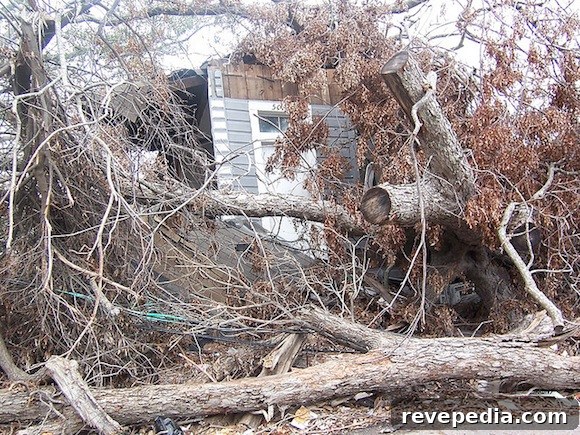
Falling trees are alarming and can pose serious safety risks to your property and the people who live in it. While you can’t predict every storm or gust of wind, you can assess the trees on your property and identify which ones present a higher risk.
Jennifer Stell created a helpful tree-safety slideshow that outlines 13 warning signs of potentially hazardous trees. Key signs to watch for include:
- Large dead branches. Even in calm weather, sizable dead limbs can break and fall. If you see extensive dead areas in a tree’s crown, arrange for those limbs to be removed.
- Mushrooms or fungal growth. Fungi at the base of a tree or appearing on the trunk and branches often indicate internal decay. These signs can mean the tree’s structure is compromised and removal may be necessary.
- Twin or co-dominant trunks. Trees with two main trunks that grow closely together frequently have weak attachments between them. Under wind, ice, or heavy snow, these trunks can split apart, increasing the chance the tree will fall.
Old trees. Age alone doesn’t automatically make a tree unsafe. Many mature trees remain healthy and structurally sound for decades. If you’re unsure about an aging tree’s condition, enlist a certified arborist to evaluate its structural integrity and estimate its remaining lifespan. With that professional assessment, you can determine whether pruning, bracing, or removal is the best option.
Regular inspections can catch problems early. Look for signs such as leaning trunks, large cavities, bark splitting, significant dead wood, root damage, or soil heaving around the base. If a tree is close to your home, driveway, or high-use areas, prioritize inspection and remediation to reduce risk.
If you discover concerning symptoms in any tree on your property, contact a licensed arborist or tree-care professional. They can perform a thorough evaluation, recommend appropriate actions, and safely complete any necessary pruning or removal. Prompt attention to hazardous trees protects property, reduces liability, and helps keep your household safe.
Do you have any trees that worry you? If so, consider scheduling an arborist inspection to decide whether removal or corrective care is the best course of action.
Photo: Flickr.com/granick