Last year I bought my dream truck, a 2020 Ram 2500, and I’ve been upgrading it quickly to suit my needs. I’ve added a Retrax bed cover and installed ceramic window tint. The main reason for the purchase was to tow a new travel trailer so weekend trips would be more comfortable and convenient.
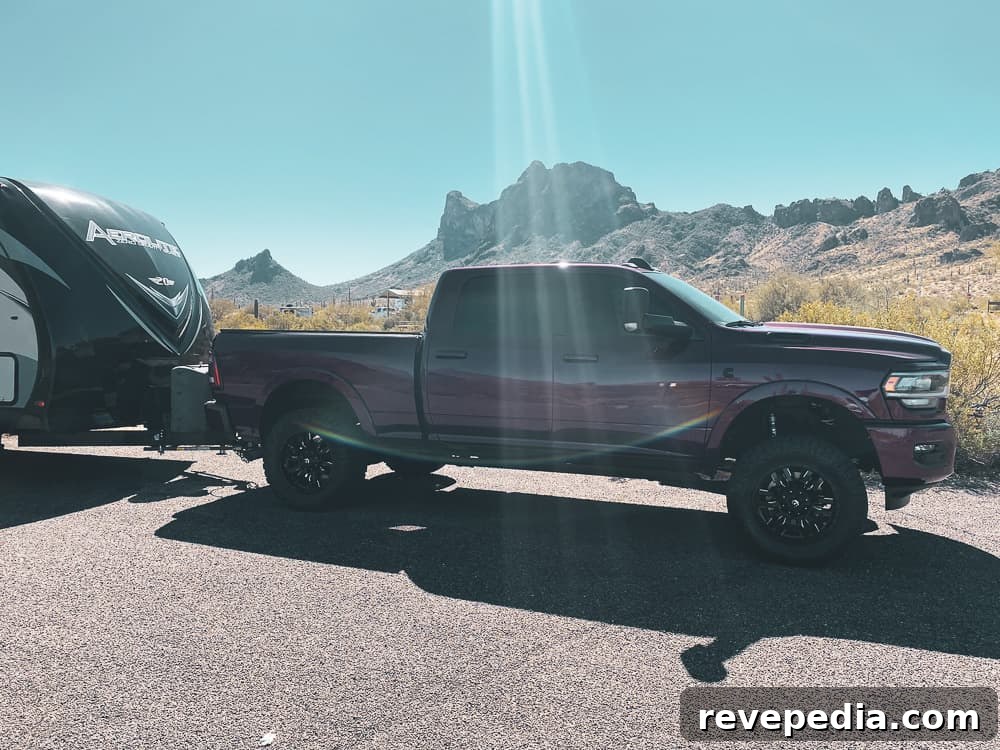
After taking the trailer out a few times, it became clear the truck needed more rear support. The rear was sagging under load; even with a weight-distribution hitch and sway bars, the setup wasn’t enough to fully stabilize the rig.
Air Lift LoadLifter 7500 XL
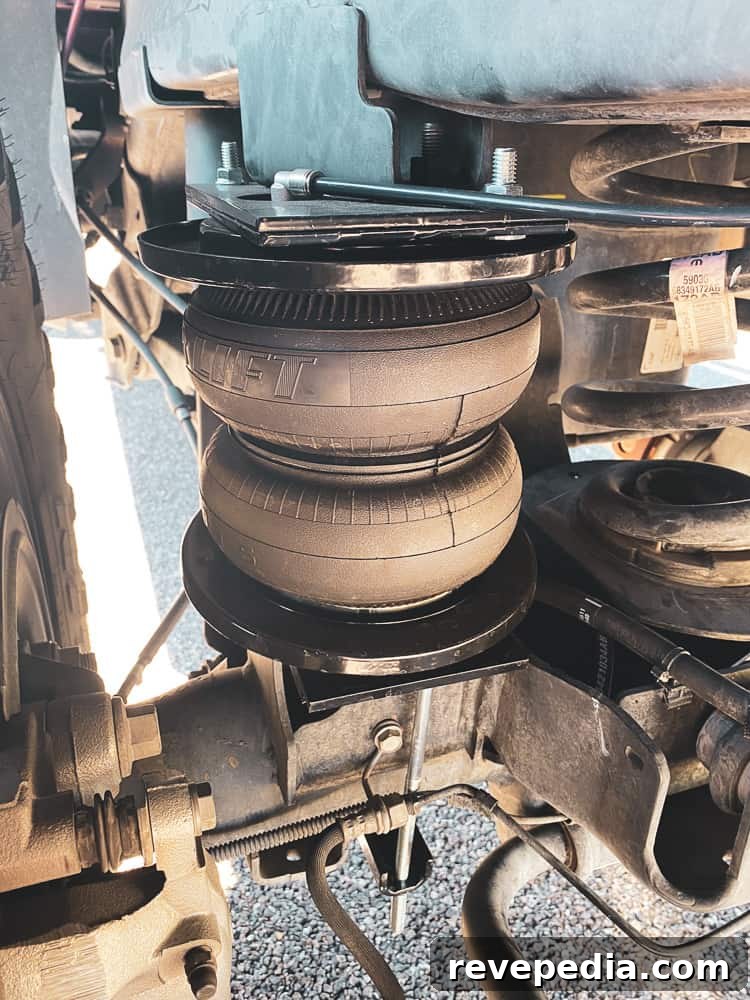
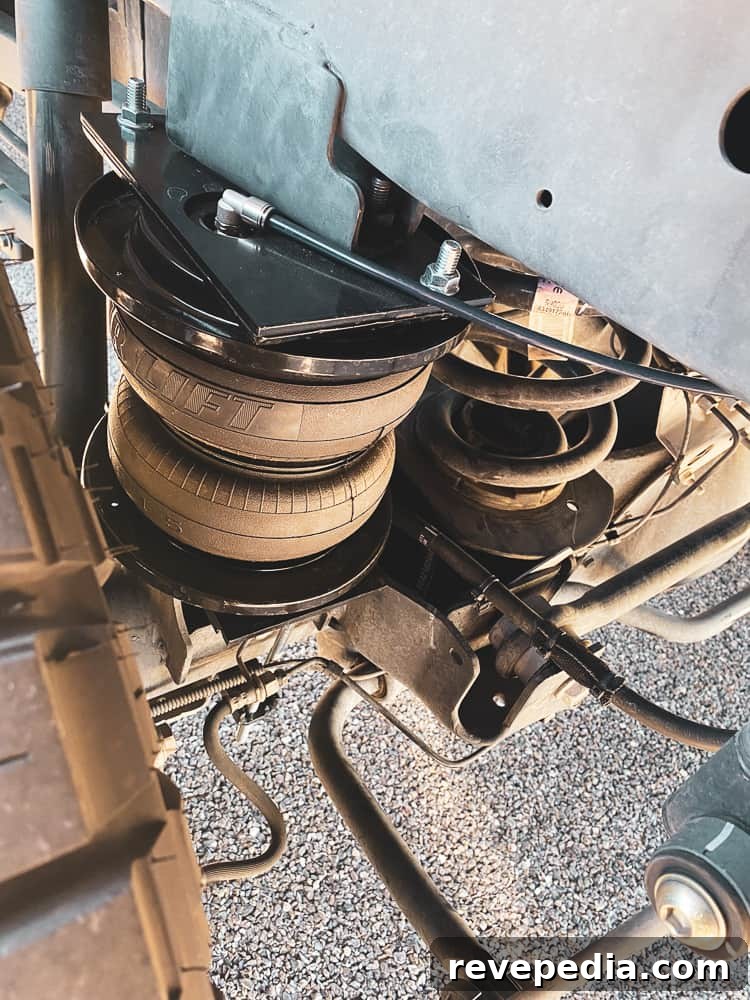
To address the sagging and improve load-leveling, I installed the Air Lift LoadLifter 7500 XL air spring kit. I opted for this model to maximize capacity in case I switch from a bumper-pull trailer to a fifth wheel later on. It may offer more capacity than I currently need, but having the extra margin provides peace of mind and flexibility.
One key difference between the 7500 XL and the LoadLifter 5000 is that the 5000 includes an internal bounce bumper to prevent bottoming out, while the 7500 XL relies entirely on air springs for support. Pairing the bags with Air Lift’s WirelessONE compressor simplifies on-the-fly adjustments and makes finding the optimal ride quick and convenient.
The WirelessONE remote supports two saved presets, and the mobile app allows three. The system offers a precise PSI range adjustable in single-pound increments from 5 to 100, so you can fine-tune the ride. Since installation I’ve driven roughly 1,000 miles with the system, including a couple of fully loaded camping trips.
The difference in ride quality was immediate. With the weight-distribution hitch connected, the bucking while towing was essentially eliminated, and even without the hitch attached the rear bucking was significantly reduced. When the truck is unloaded, the rear feels a bit firmer, but that’s an expected trade-off for the improved stability while towing.
WirelessONE Compressor
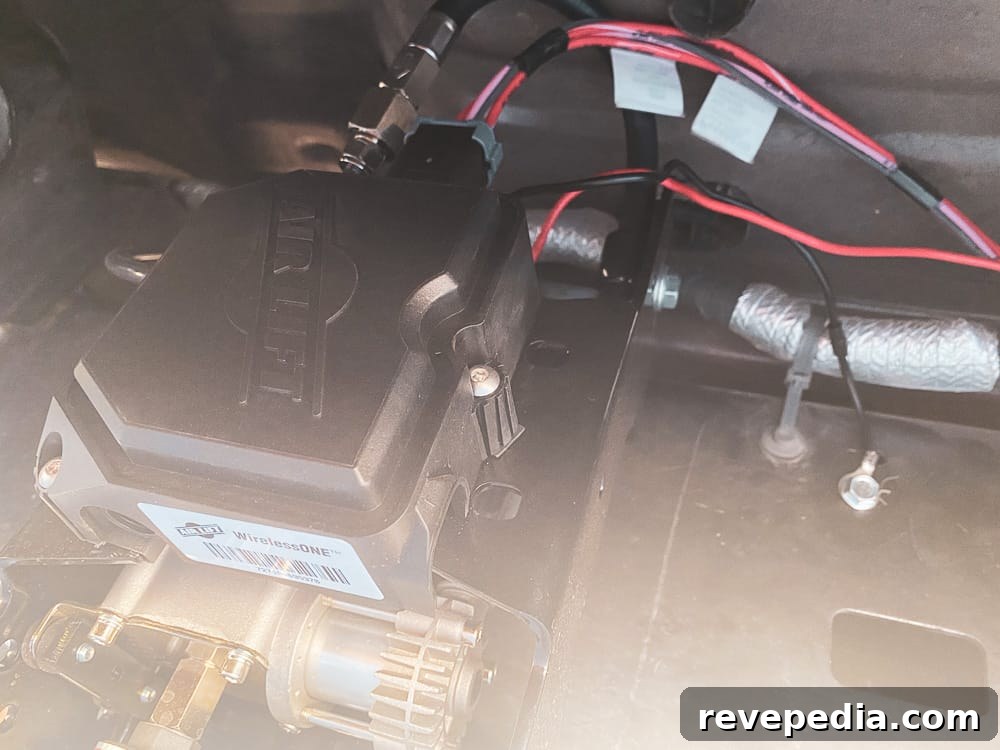
The WirelessONE compressor makes inflating and deflating the air springs fast and convenient. Once your presets are programmed, adjusting pressure is a one-touch operation. You can inflate manually with a cordless compressor if you prefer, but the onboard compressor’s simplicity and ease of use make it a worthwhile addition.
It’s convenient to pull up at storage, inflate the bags before hitching up, and head out without worrying about forgetting to prep the suspension. While camping, I can easily adjust pressure when exploring off the trailer, without hauling an extra compressor or constantly checking PSI with a separate gauge.
Air Lift Installation
Air Lift provides clear, detailed instructions and photos, which made the installation straightforward. There are also many helpful installation videos online that walk through the process step by step. I’m not a professional mechanic—just an average handyman—but after reviewing the instructions and videos I felt confident tackling the job.
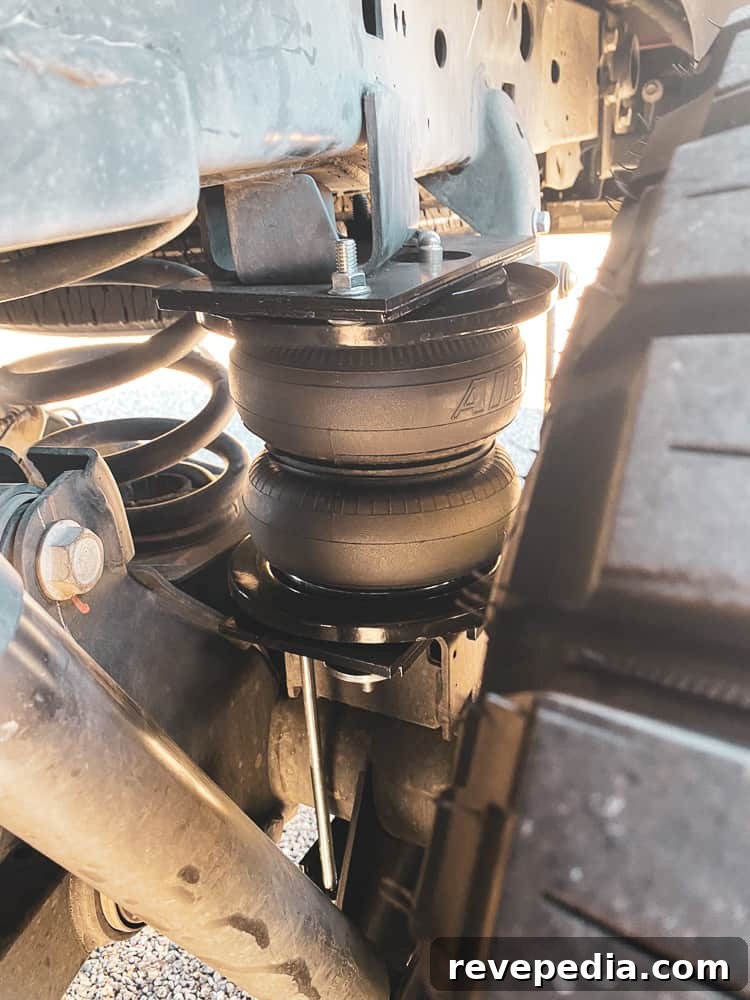
The tools required are basic: a socket set, tube cutter, torque wrench, hex sockets, and possibly a drill with a 5/16″ bit. This kit was installed on a 2020 RAM 2500 with a front leveling kit and 35″ x 12.5″ tires. Because the truck already sits high, my hope was to avoid removing the rear wheels or using a jack—unfortunately I only achieved one of those goals.
The kit is largely bolt-on; I only had to drill one hole to ground the compressor. Air Lift recommends removing the wheels to install the bags, but I managed to install them with the wheels in place—removing them would have made the job easier.
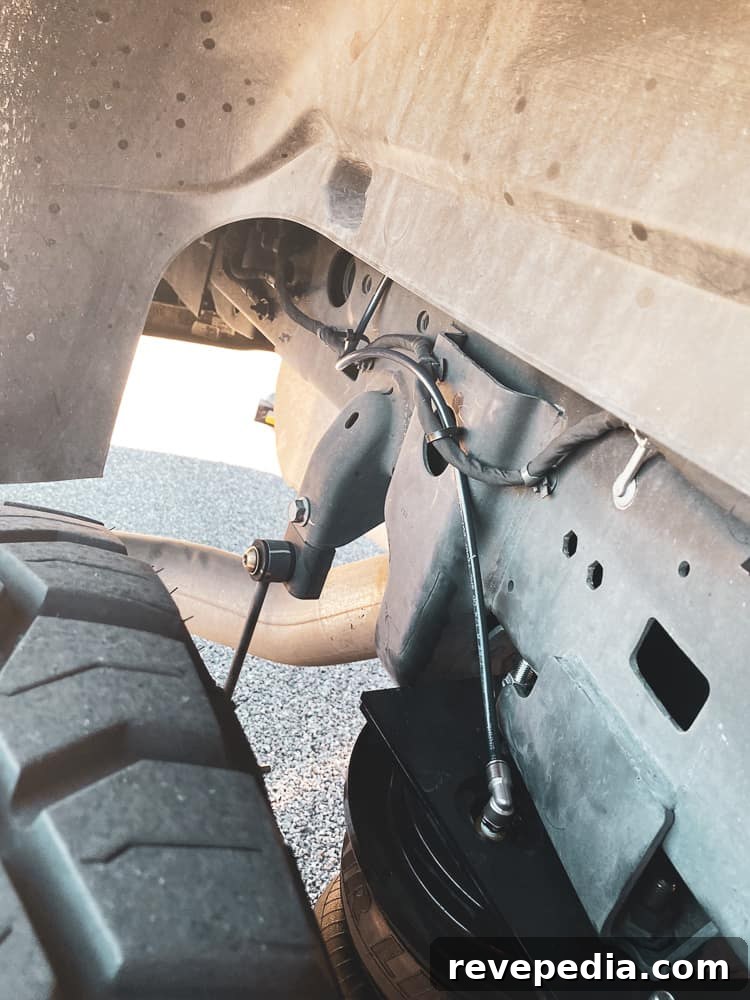
I did need to raise the rear slightly with a jack to make room for the bags. After that, I could work under the truck to route the air lines and mount the compressor. The air lines were tucked above the spare tire, and I added a manual inflation valve at the back of the truck as a backup in case the compressor ever fails.
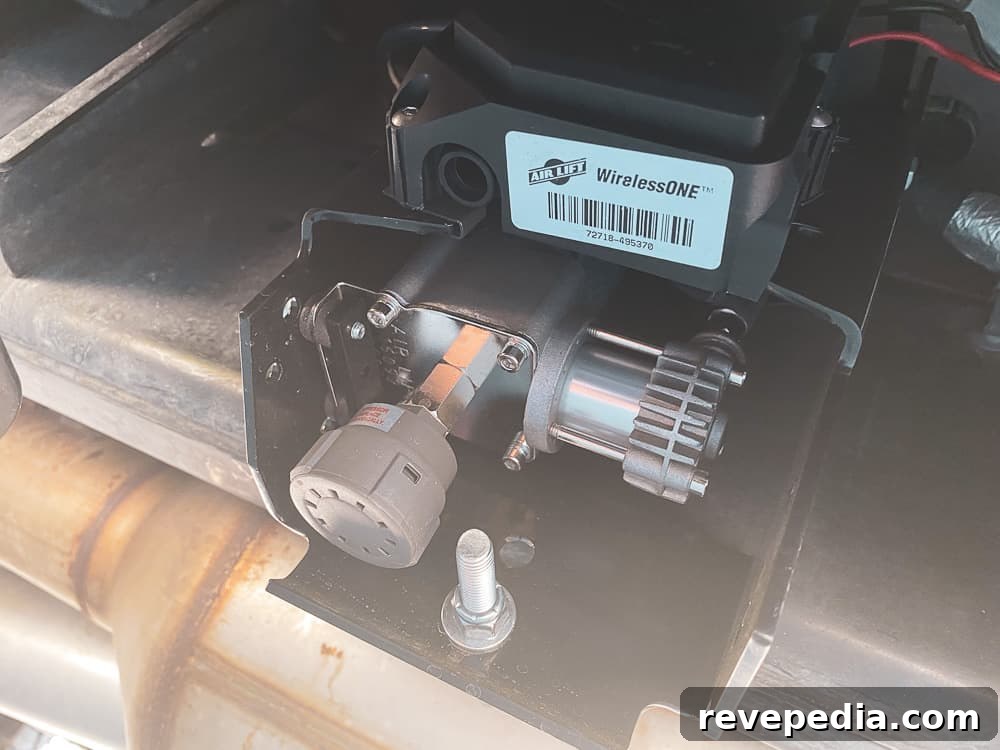
The WirelessONE unit mounts easily using the included EZ mount U-bolt that secures to the frame. The trickiest part of my installation was drilling a hole to attach the ground wire to the frame. Air Lift supplies a self-tapping screw, but due to limited clearance between the frame and body I needed to drill a pilot hole. Once grounded, the remaining wiring was straightforward.
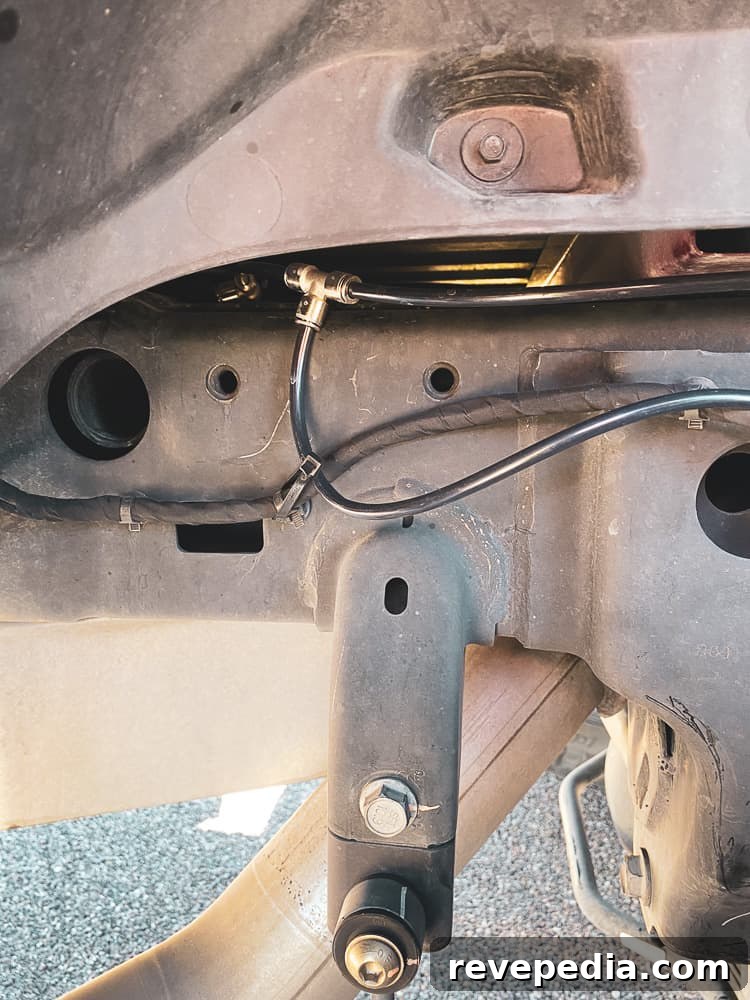
The WirelessONE installation instructions were clear and easy to follow. I spent most of a Sunday completing the entire install. I could have moved faster, but I took my time to route the lines neatly and secure wiring so everything looks tidy and is well protected.
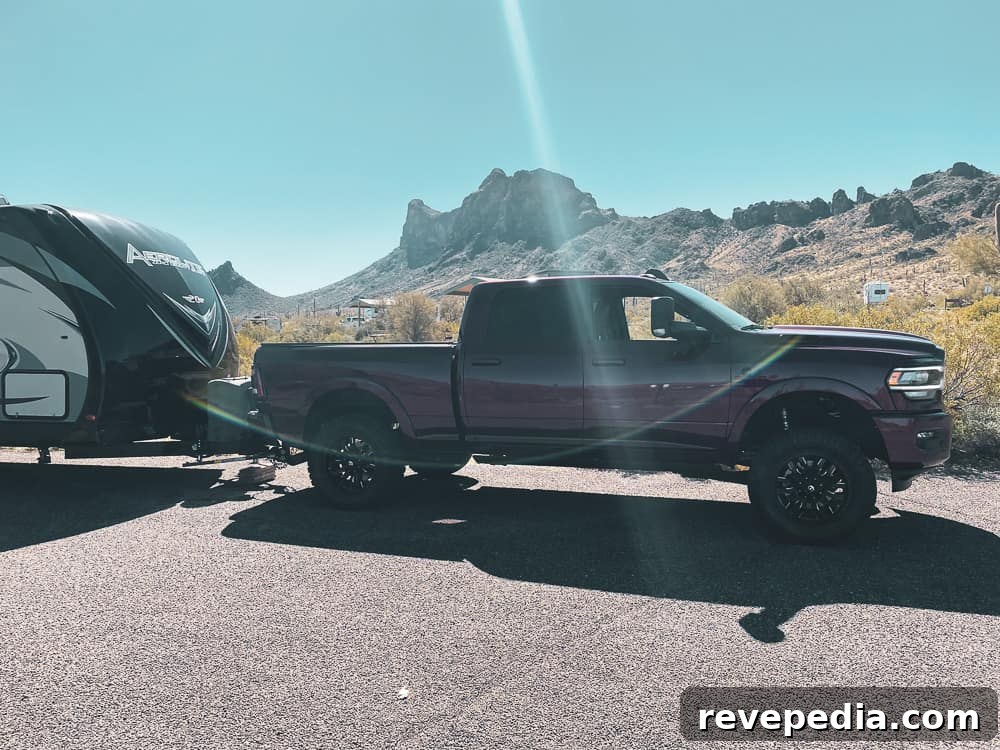
Final Thoughts
I’m very impressed with how much the LoadLifter 7500 XL and WirelessONE improved stability and ride quality. The system is easy to use, performs well, and the installation was manageable for a competent DIYer.
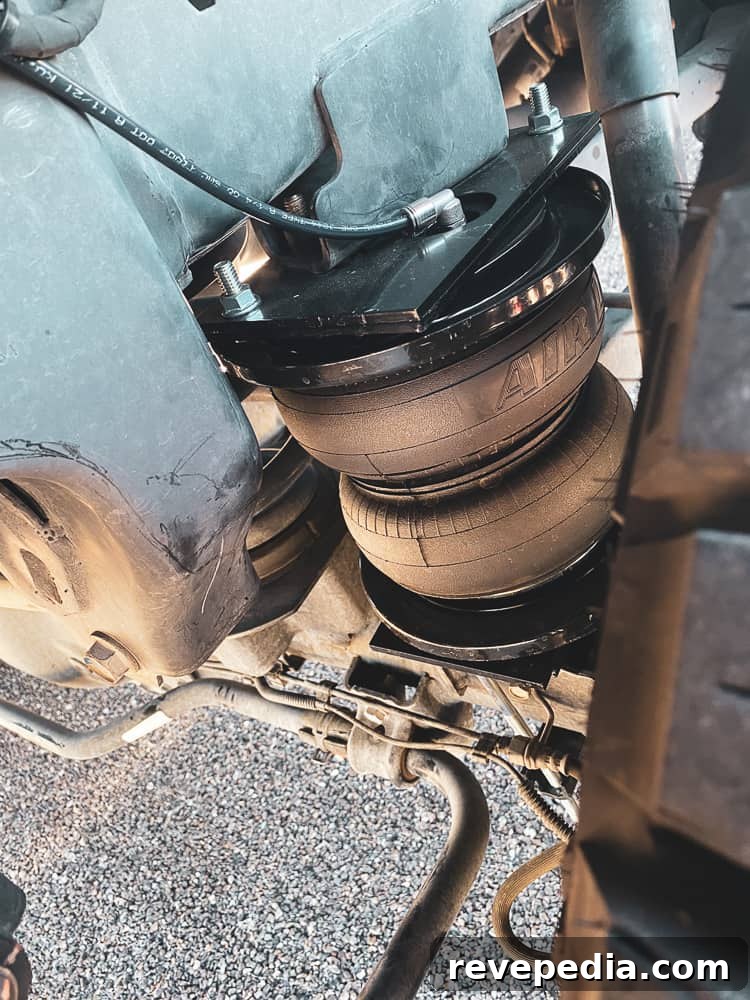
The air springs and WirelessONE compressor are a valuable upgrade for any tow vehicle; it’s the first modification I would make to future tow rigs. While the WirelessONE adds convenience and I highly recommend it, the airbags function independently and are effective without the compressor if budget dictates a phased upgrade.
If you need to prioritize costs, you can install the airbags first and add the WirelessONE compressor later. If your budget allows, however, I recommend purchasing the complete kit for the best combination of performance and convenience.