We’ve lived with a small kitchen for 15 years, and I genuinely love it. Everything is within arm’s reach, which makes daily cooking and cleanup quicker and more efficient. I’m done using the oven to store pots and pans or stacking items on top of the refrigerator, but beyond those compromises, a compact kitchen has many advantages.
Making a small kitchen work requires a few practical strategies. Over the years, and now with a toddler in the house, these solutions have adapted. Here are the approaches that have helped us maximize every inch of our tiny kitchen—practical, unglamorous, and effective.
Use Your Oven
When the oven isn’t in use, it functions like a large cabinet with built-in racks. We store heavy cookware such as cast-iron pans and enameled Dutch ovens there. Important safety note: do not store flammable items, plastics, or anything with rubber handles in the oven—turning it on with those items inside is dangerous. This method is convenient, but use it wisely and sparingly.
Install a Custom Elfa Drawer System
We fitted a custom Elfa-style drawer system into narrow gaps and awkward spaces. The look is utilitarian, but the functionality is excellent. These drawer trays slide on tracks, creating organized storage for items that would otherwise be tucked away and forgotten. They make use of vertical space and keep small items accessible.
Add Extra Refrigerator Shelves and Trays
Supplemental shelves and pull-out trays help organize the fridge’s full height and depth. Sliding trays let you access items in the back without rearranging everything, while additional shelves allow you to stack and separate items to use otherwise wasted vertical space. It’s a small change that dramatically improves visibility and accessibility.
Use Hooks and Magnetic Strips
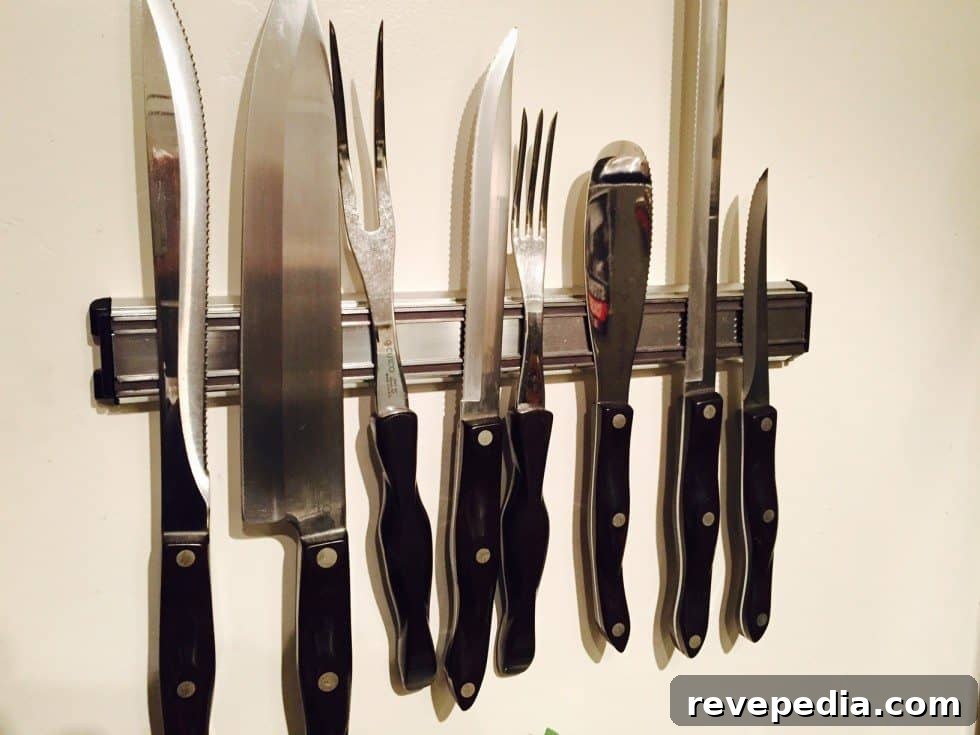
Freeing up counter space is essential. Replace bulky knife blocks with magnetic knife strips mounted to the wall, and hang measuring spoons and cups on small hooks. If you have the ceiling height, consider hanging pots and pans overhead to clear cabinet space. These solutions keep frequently used items accessible while preserving work surface.
Improve Lighting
Small kitchens suffer from shadows because the light sources are limited and often blocked while you’re working. Install under-cabinet lighting to illuminate work surfaces directly, and add task or accent lighting where needed. Layered lighting—beyond just an overhead fixture—makes cooking safer and more pleasant.
Store Non-Essentials Elsewhere
Reserve prime kitchen storage for everyday items. Store special-occasion china, fine glassware, and infrequently used pieces outside the kitchen—either in a closet or a cabinet elsewhere in the home. Keeping those items out of your immediate kitchen space prevents clutter and makes everyday items easier to find.
Edit Your Appliances
Be ruthless about which appliances stay on the countertop. If a toaster oven is used once a month, get rid of it or store it elsewhere. Choose compact, multi-use appliances: a small blender or immersion blender instead of a full-size machine, or an Aeropress for coffee rather than a large drip brewer. Streamlined appliances free up counter and storage space and often perform better for everyday tasks.
These strategies apply to kitchens of any size when the goal is smarter organization and more usable space. With deliberate editing and a few well-chosen storage solutions, a small kitchen can be efficient, tidy, and enjoyable to use every day.