The seated mowers you see at your home center with two handles facing each other are zero-turn lawn mowers. As homeowners learn more about how they operate and how to use them, zero-turn mowers have become increasingly popular due to their speed, precision, and efficiency.
Conventional riding mowers resemble a small vehicle: a steering wheel, a driver’s seat, pedals, and sometimes a variety of comfort and convenience features. Typical upgrades for these machines include adjustable seats, armrests, tilt or telescoping steering columns, driving lights, DC power outlets, cup holders, and onboard storage. These extras make traditional riding mowers comfortable and user-friendly for long mowing sessions.
Zero-turn mowers focus less on creature comforts and more on performance. Their design emphasizes maneuverability and speed: zero-degree turn radiuses, tight control, and top speeds that can reach up to 9 mph make them a top choice when fast, efficient mowing is the goal. For homeowners with complex landscapes, obstacles, or large areas to maintain, a zero-turn can significantly reduce mowing time while improving edge-to-edge finish quality.
Controls and Operation
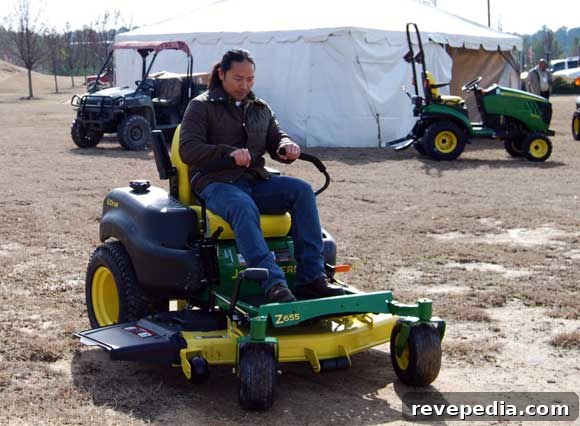
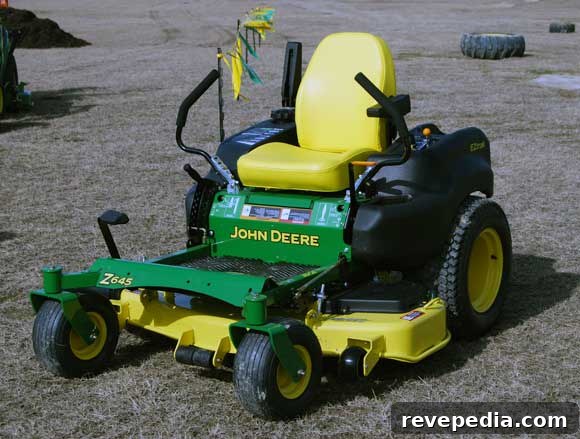
Most zero-turn mowers dispense with foot pedals; instead, speed and direction are managed through two independent control arms located at the operator’s sides. These levers typically wrap up beside the seat and move forward and backward to control each drive wheel. Because each wheel is driven independently, small differences in lever position allow extremely tight turns and precision maneuvers.
Higher-end models often include adjustable control arms and seats to accommodate a wide range of operators. For example, some series allow the control arms to be moved closer or farther from the driver, and seats commonly offer fore-and-aft and height adjustments to improve comfort and ergonomics during use. Proper seat and arm positioning helps ensure smooth control and reduces fatigue on longer mowing jobs.
To drive straight, push both control arms forward evenly and gradually; these machines can build speed quickly, so smooth, controlled inputs are important. To reverse, pull both control arms back equally. When both sides operate at the same speed in reverse, the mower will back up in a straight line. Learning to modulate the levers gradually leads to more predictable movement and safer operation.
Maneuverability: The Zero-Turn Advantage
The defining feature of a zero-turn mower is its ability to pivot sharply. By varying the position of the control arms relative to each other, you control the relative speed of each drive wheel. Pulling one arm back slightly while holding the other forward will reduce speed on that side and cause the mower to turn toward the slower wheel. If you pull the arms in opposite directions—one forward, one back—the machine can spin around its inner wheel, effectively achieving a zero-degree turn radius and allowing you to pivot in place around a tight obstacle.
This level of maneuverability makes zero-turn mowers particularly effective around trees, garden beds, walkways, and other landscape features. They reduce the need for trimming after mowing and can cut mowing time significantly on properties with many obstacles. For many homeowners and professional landscapers, the improved efficiency and finish quality justify choosing a zero-turn over a conventional riding mower.
Choosing the Right Mower
When evaluating mower options, consider your property size, landscape complexity, and comfort preferences. If your yard has many obstacles, narrow passages, or intricate edges, a zero-turn mower’s tight turning ability and speed will likely provide the best performance. For properties where long straight runs and passenger comfort are priorities, a traditional riding mower with more amenities may be a better fit.
Many manufacturers now offer both conventional and zero-turn models, making it easier to compare features, deck sizes, engine power, and ergonomics across similar price points. Test-driving models, if possible, helps determine which control layout feels most natural and which machine delivers the performance and comfort you need. Dealer showrooms, local retailers, and home centers often display several options side by side so you can assess real-world differences in fit and handling.
In summary, zero-turn mowers stand out for their speed, precise turning, and efficient mowing capability, especially on properties with obstacles or complex layouts. While they may offer fewer comfort extras than many traditional riding mowers, their time-saving performance and superior maneuverability make them a compelling option for many homeowners and landscape professionals alike.