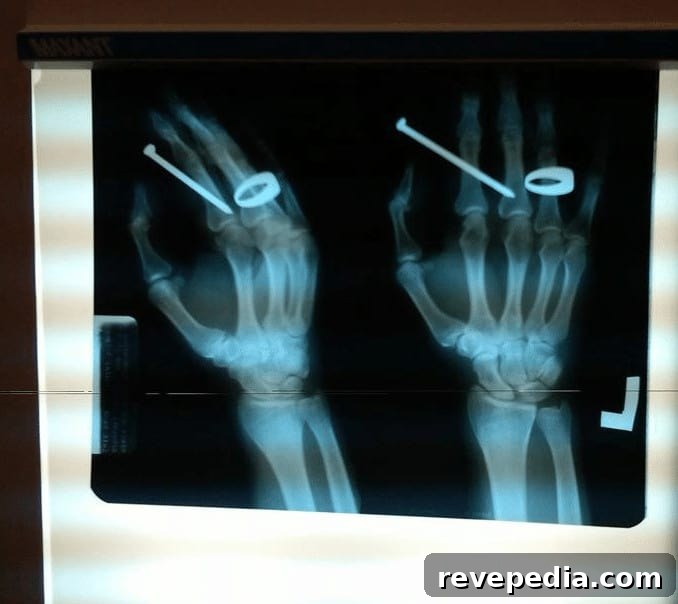
Hopefully these photos make you more cautious when using a nail gun, no matter how much experience you have. Nail guns are powerful tools that can cause serious injury in an instant, so practicing safe habits and respecting their risks is essential.
Even experienced users can become complacent; accidents often happen when someone assumes a routine task is harmless. Keep the tool pointed away from your body and others, disconnect the power source before clearing jams or making adjustments, and never bypass safety features. Use the correct nails and pressure settings for the material you’re working with, and maintain a firm, balanced stance while operating the tool.
Personal protective equipment is a must. Always wear safety glasses to guard against flying debris and ear protection if the model is loud. Consider gloves to protect your hands from punctures and cuts, but ensure they don’t interfere with your grip or trigger control. If you’re working overhead or in awkward positions, take extra precautions to prevent loss of balance or accidental discharge.
Training and familiarity with the specific model you’re using will reduce risk. Read the manufacturer’s manual, understand the safety mechanisms, and practice on scrap material until you’re confident in the tool’s behavior. If you’re teaching someone else, demonstrate safe techniques and supervise until they show consistent, correct use.
When a nail gun misfires or jams, follow the manufacturer’s recommended clearing procedure—typically disconnecting the power, removing the magazine, and clearing the obstruction with the tool pointed in a safe direction. Never try to force a jammed nail out with your hand or by pulling the trigger while the muzzle is pointed toward yourself or others.
Inspect and maintain your nail gun regularly. Check for worn or damaged parts, loose fasteners, and air or battery leaks. Keep the tool clean and store it in a safe place where children or untrained people cannot access it. Replace worn components and use only manufacturer-approved replacement parts.
Be mindful of your work environment. Secure loose materials, keep bystanders at a safe distance, and ensure adequate lighting so you can see the work surface clearly. Avoid using a nail gun when tired or under the influence of substances that impair judgment or coordination.
Ultimately, the goal is to make safe operation second nature. Respect the potential danger of a nail gun, take reasonable precautions, and prioritize safety over speed. Those photos are a reminder that an instant of carelessness can lead to lasting consequences—so stay alert, follow best practices, and protect yourself and others while working with these powerful tools.