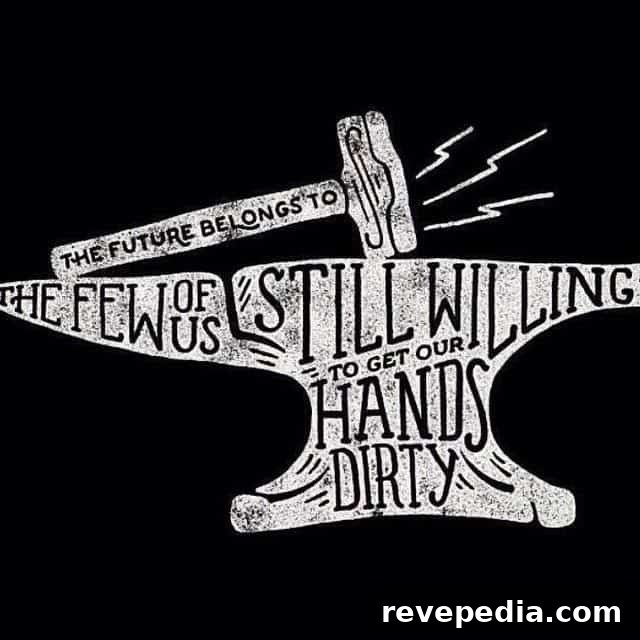
The future belongs to those who are willing to work hard and get their hands dirty. In a world that increasingly values convenience and automation, progress still depends on people who take initiative, solve problems, and embrace the effort required to build something meaningful.
Being willing to get your hands dirty means more than just physical labor. It describes a mindset: curiosity, resilience, and the readiness to learn through doing. Whether in technology, craftsmanship, community projects, or entrepreneurship, the most significant advances often come from individuals who dive into challenges, iterate on solutions, and persist through setbacks.
Practical experience cultivates skills that can’t be learned solely through theory. When you take on real work—tinkering with tools, coding and debugging, planting and tending, designing and testing—you develop an intuitive understanding of systems, materials, and people. That hands-on knowledge helps you anticipate problems, adapt quickly, and produce results that are both durable and meaningful.
Moreover, rolling up your sleeves builds character. It fosters discipline, humility, and a sense of ownership. People who engage directly with their craft learn to value craftsmanship over shortcuts, to respect the process, and to appreciate incremental progress. Those traits attract collaborators and mentors, create trust with customers, and form the backbone of sustainable success.
In the context of innovation, hands-on involvement accelerates learning cycles. Prototypes get built, tested, and refined faster when driven by people who aren’t afraid to experiment. Failure becomes a source of insight rather than shame, and lessons learned through direct effort compound into expertise. Organizations that encourage this approach tend to be more resilient and creative, because they empower teams to try, fail, and improve quickly.
On a societal level, valuing hands-on work preserves a diversity of skills that modern economies need. Skilled trades, artisanal crafts, and practical problem-solving complement high-level planning and strategy. Communities that honor both thought and action are better equipped to address complex challenges—from infrastructure and manufacturing to education and environmental stewardship.
For anyone looking to make an impact, the invitation is simple: engage directly, start small, and keep improving. Take on projects that force you to learn by doing, seek mentorship from experienced practitioners, and prioritize feedback over perfection. Over time, the competence and credibility you build through hands-on effort will open opportunities that theory alone cannot.
Ultimately, the future will favor those who combine vision with labor—the thinkers who also act, and the doers who also plan. Embracing the grind doesn’t mean rejecting innovation; it means grounding ambition in practical steps and relentless execution. That blend of aspiration and work ethic is what turns ideas into lasting value.