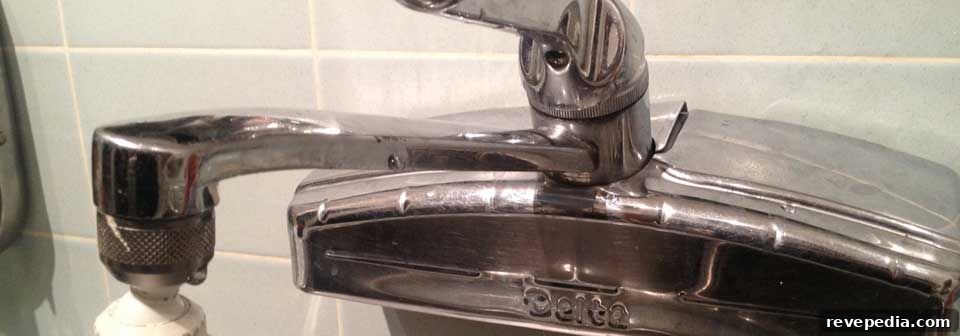
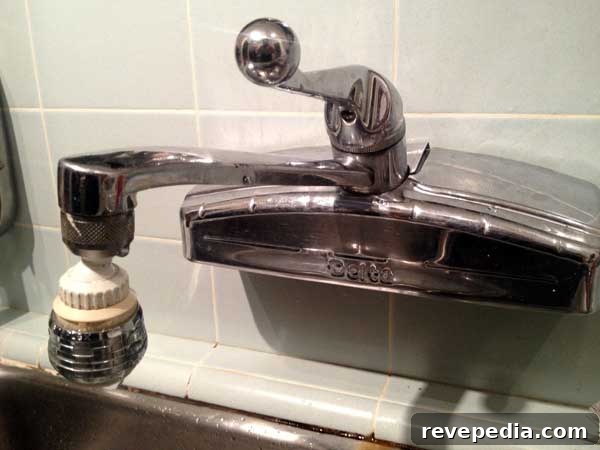
We have an old wall-mounted Delta kitchen faucet that began to drip last month. The faucet is likely original to the house, built in the 1950s. Fortunately, our local hardware store stocks replacement seats and springs for pre-1976 Delta faucets, so a simple parts swap restored the faucet without replacing the entire fixture.
Replacing the seats and springs stops water from leaking past the seals. If you can remove the faucet components, the job takes about 10–15 minutes and will save you the ongoing cost and annoyance of a dripping faucet.
Follow these steps to replace the seats and springs in an older Delta faucet.
Preparation
– Turn off the hot and cold water supply to the faucet. There are usually two shutoff valves under the sink; turn them clockwise until they stop.
– Have an Allen wrench and a small container ready to hold screws and small parts.
Step-by-step Instructions
1. Partially loosen the set screw with an Allen wrench, then pull the handle straight off.
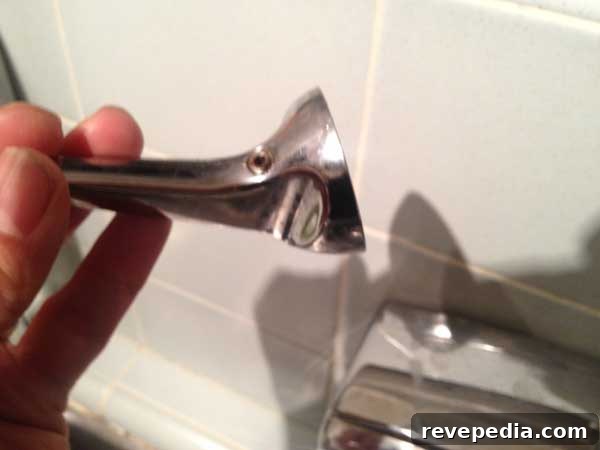
2. Unscrew and remove the cap assembly.
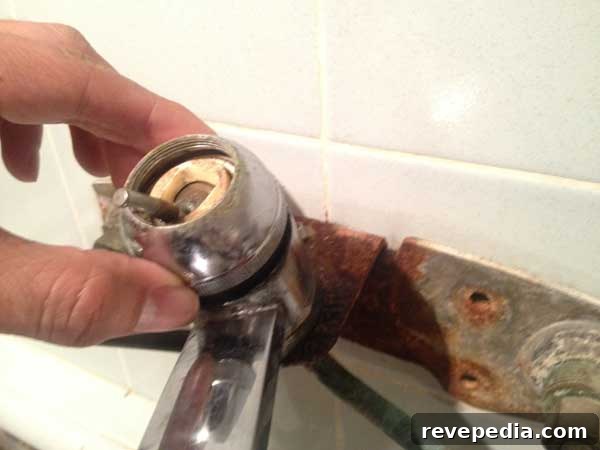
3. Remove the decorative collar if present to expose the internal parts.
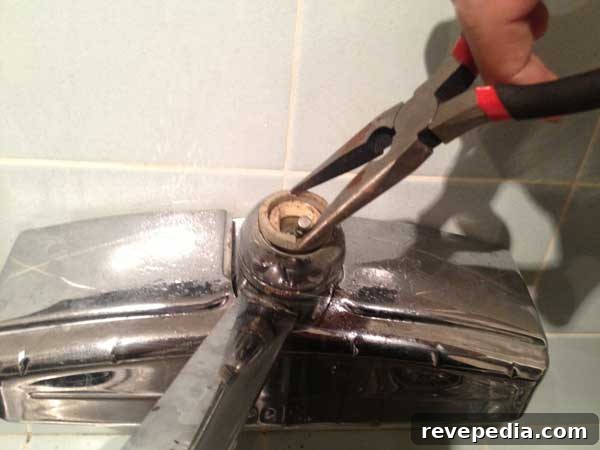
4. Pull up on the ball stem to remove the ball and cam assembly from the valve body.
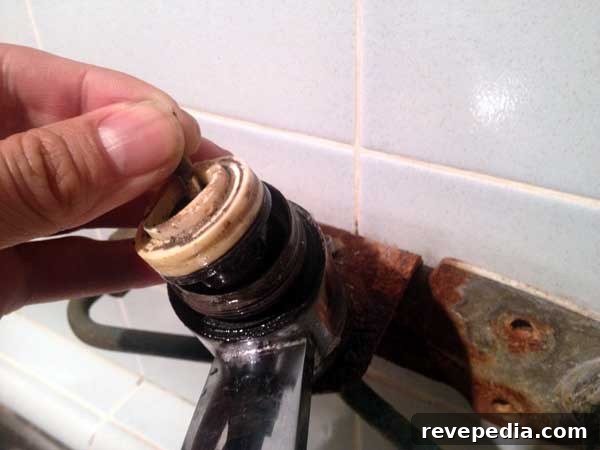
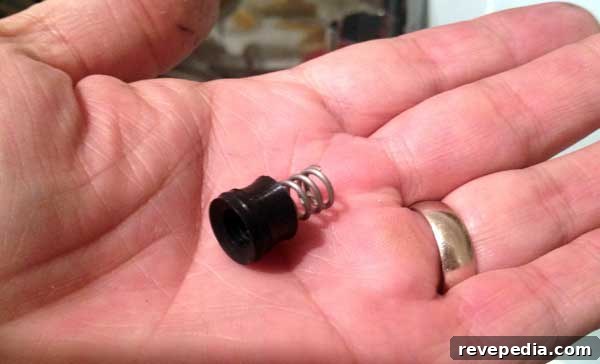
5. Remove the old rubber seats and springs from the two valve chambers and discard them. Install the new seats and springs in the same locations. Make sure the seats sit flush and the springs face the correct direction (usually with the spring toward the valve body).
6. Reassemble the faucet in reverse order. When reinstalling the ball, align the slot on the side of the ball over the locating pin inside the valve body. Ensure the lug on the cam fits into its slot in the body. Tighten the cap assembly securely, and replace the collar and handle.
7. Turn the water supply back on and operate the faucet to check for leaks. Run both hot and cold to confirm smooth operation and that the drip has stopped.
Notes and Tips
– If the valve still leaks after replacing seats and springs, inspect the ball and cam for wear or corrosion. These parts can sometimes be replaced or refurbished, depending on availability.
– Keep a small supply of common replacement parts on hand if you have older fixtures. Seats and springs are inexpensive and commonly solve drips in older Delta faucets.
– Work carefully to avoid scratching the finish. Use a cloth over any tools that contact visible surfaces.
Replacing the seats and springs is a quick, low-cost repair that restores function to many older Delta faucets and prevents the waste and irritation of a constant drip.