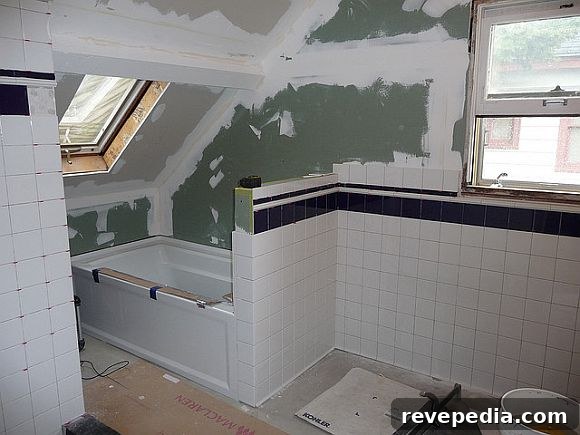
Removing tile is often as challenging as stripping wallpaper and is one of the tougher DIY tasks. If you’re replacing tile, the old pieces must come off first. That becomes more complicated when you want to salvage tiles for reuse in another project, since careful removal is required to avoid breakage.
How difficult the job will be depends largely on how the tiles were originally attached. Tiles set on standard drywall or backer board are usually easier to remove. Tiles bonded with a stronger adhesive or mortar may need to be broken into sections to extract them. Always plan for the more difficult scenario if you’re unsure how the tiles were installed.
Before you begin, put safety first. Wear protective eyewear, sturdy gloves and long sleeves to protect yourself from sharp tile shards. A dust mask is also recommended when scraping grout or cutting material to reduce inhalation of dust particles.
Supplies
2–3″ putty knife
Hammer
Utility knife
Grout removal tool (manual or powered)
Flat-head screwdriver
Optional: heat gun on a low setting, pry bar, dust mask, work gloves, safety glasses
Removal Tips
Use a grout removal tool to clear out the existing grout around the tile first. Removing grout reduces bonding between tiles and the substrate and makes it easier to pry tiles away. A powered grout tool speeds the job but use it carefully to avoid damaging the surrounding tile.
If grout and caulk have hardened, a heat gun on a low setting can soften them slightly and aid removal. Keep the heat moving and don’t overheat any one spot to avoid damaging the wall or creating a burn hazard.
Once grout is removed, slide the putty knife between the tile and the wall and pry gently. This test will show how firmly each tile is attached; some will pop free easily, others will resist and require more force or a different approach.
If the tile is firmly bonded, position the putty knife under one edge and tap the handle lightly with a hammer to drive the blade deeper beneath the tile. Work around the tile’s perimeter, easing it loose from all sides rather than levering from a single point to minimize substrate damage.
Try to preserve the drywall or backer board whenever possible. Significant damage to the substrate will require repair before new tile can be installed, adding time and cost to the project. When removal threatens the wall surface, consider removing smaller sections of tile or limiting force in favor of partial tile breakage that leaves substrate intact.
The first tile is usually the hardest to remove because you must find the right angle and leverage. After removing a few tiles, you’ll develop a rhythm and refine your technique, making the rest of the job faster and more predictable.
If you plan to reuse any tiles, handle them carefully, store them flat, and clean off residual adhesive with a putty knife and solvent recommended for the original adhesive. Salvaged tiles should be inspected for cracks or chips before reuse.
Have you removed tile yourself? Share any techniques or lessons learned that helped make the job faster or less damaging to the wall.
Photo: Flickr.com/lavenderstreak