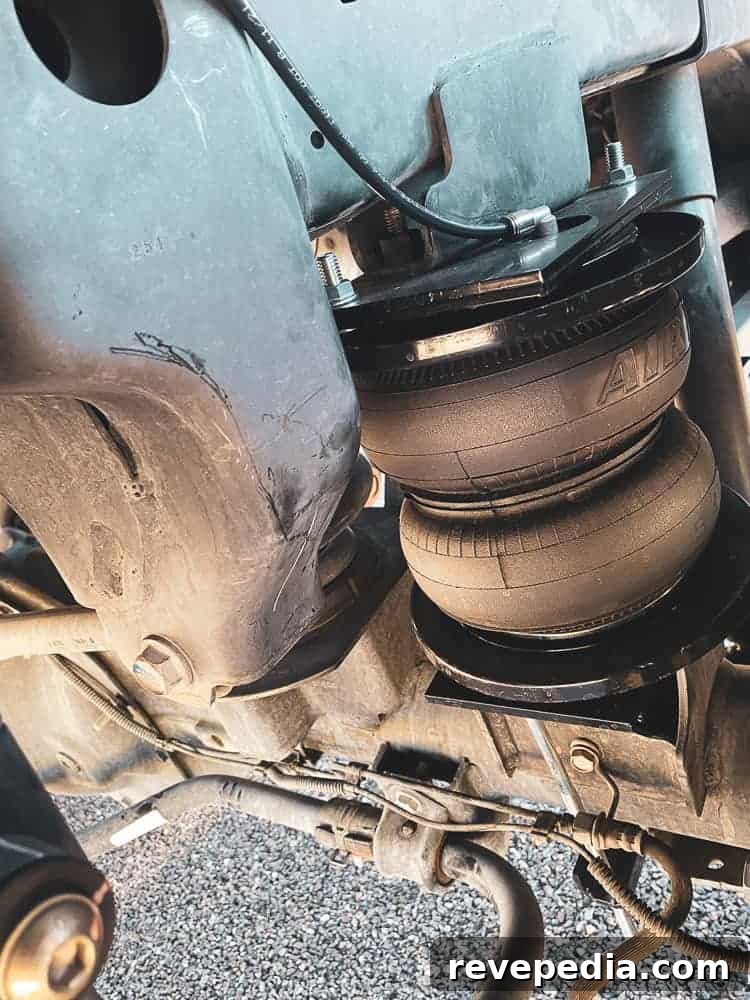
When towing, keeping your truck level is essential for safety, handling, and overall performance. Not every truck maintains its stance when carrying heavy loads or pulling a trailer, and that’s where suspension airbags can make a big difference. Airbags add adjustable support between the frame and suspension, helping restore proper ride height and balance under load.
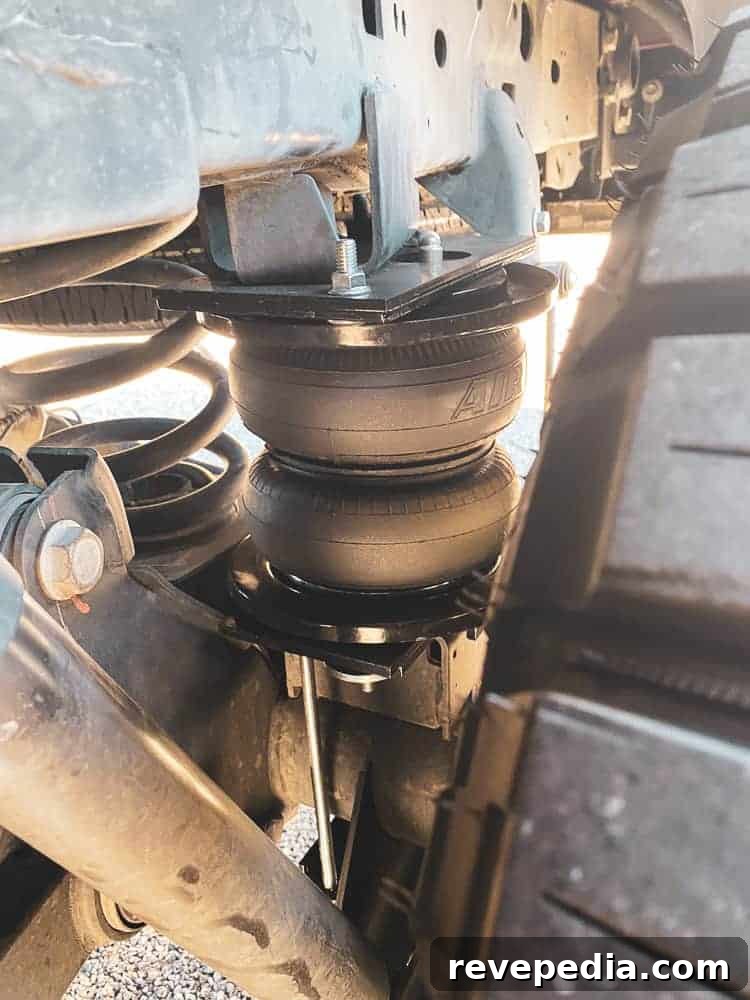
Summary:
• Airbags are durable rubber bladders mounted between the truck’s leaf springs and frame.
• Inflating the airbags adds a cushioning air spring that supports the truck under load.
• Pressure is adjustable, so you can tailor support for different trailer weights and cargo.
Airbags are an effective way to level your truck and improve towing performance. For example, a set of quality airbags installed on a 2020 Ram 2500 made towing a 30-foot trailer noticeably safer and more comfortable by keeping the truck level and stabilizing handling.
This article explains how airbags work, the benefits they provide, the main system types, and what’s involved in installing them.
How Airbags Work
Airbags are inflatable rubber bladders placed between the truck’s frame and its leaf springs (or other suspension components). When pressurized, they act like a controllable spring, supporting weight and maintaining ride height. Increasing air pressure raises the load-supporting force, helping to reduce rear sag and restore even weight distribution across the axles.
Because their pressure can be altered, airbags let you fine-tune how much support the suspension provides. That means you can dial in a level stance whether you’re carrying a light load or towing something heavy, and adjust on the fly for changing conditions.
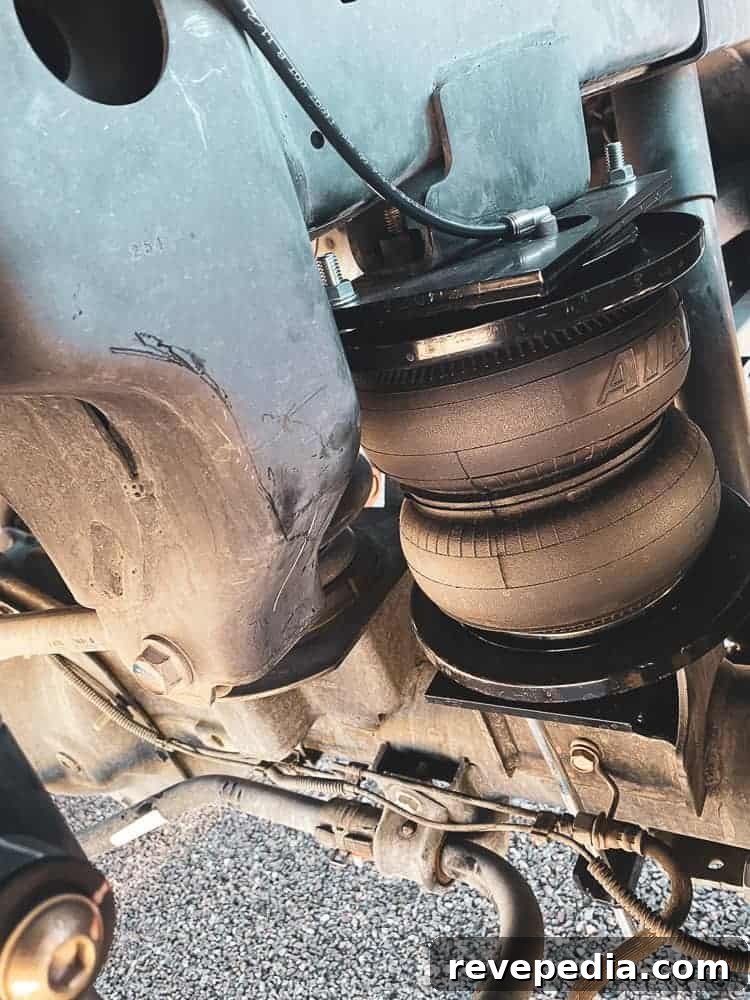
Why Add Airbags to Your Truck?
Loading a truck or hooking up a trailer often causes rear-end sag, which alters weight distribution and negatively affects handling, braking, and steering. A sagging rear can reduce front-wheel traction, increase braking distances, and make steering less predictable—especially at higher speeds or during emergency maneuvers.
Installing airbags restores the truck’s original ride height and improves weight balance across the vehicle. The result is better stability, safer handling, reduced wear on suspension components, and a more comfortable ride when towing or hauling heavy cargo.
Types of Airbag Suspension Systems
Airbag setups generally fall into two categories: standard systems and adjustable systems. Each serves a similar purpose but offers different levels of control.
Standard Airbag System: This typically replaces or augments bump stops or mounts within the existing suspension setup. The airbags provide additional support when inflated and smooth out ride harshness under load.
Adjustable Airbag System: Adjustable systems include onboard inflation hardware—manual valves, compressors, gauges, or electronic controllers—so you can precisely set pressure for specific loads and driving conditions. These systems are better for frequent towing or when load weights vary significantly.
Advantages of Airbags
Adding airbags brings several practical benefits:
- Improved Safety – A level truck handles, steers, and brakes more predictably, reducing the risk of accidents while towing.
- Increased Performance – Proper ride height reduces suspension strain, can improve fuel economy slightly, and helps you control the trailer more easily.
- Relatively Simple Installation – Many airbag kits bolt in with minimal modification to the suspension, and basic systems don’t require complex electronics.
- Cost-Effective – Compared with heavy-duty leaf springs or complete suspension overhauls, airbags are an affordable upgrade that yields noticeable improvements.
How to Install Airbags
Installing airbags is straightforward for someone with mechanical experience and the right tools. Typical steps include:
- Determine Your Truck’s Loaded Weight – Know the gross weight you’ll commonly carry or tow. This helps you choose airbags rated for that load capacity.
- Choose the Right Kit – Select airbags sized for your axle load and compatible with your truck model. Consider whether you want a basic kit or an adjustable system with a compressor and gauge.
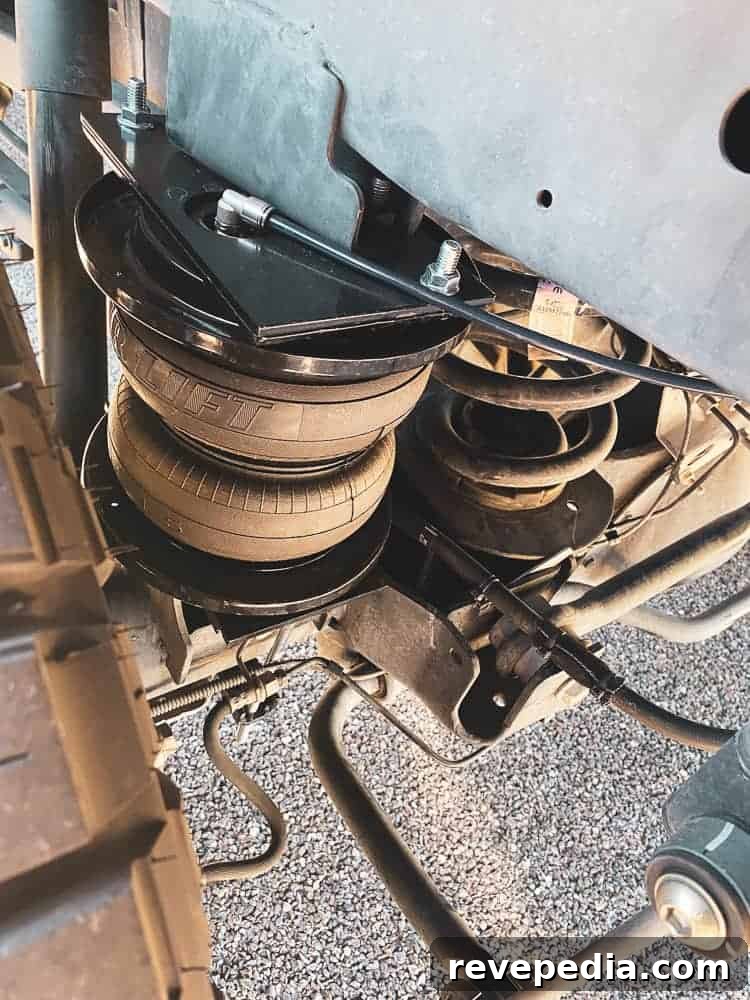
- Install the Airbags – Most kits require removing the factory bump stop or adding a bracket so the airbag sits between the frame and spring. Follow the manufacturer’s instructions to secure the airbags and route air lines safely.
- Set Up Inflation Hardware – Install a compressor, air lines, pressure switch, and an inflation valve or electronic controller if included. Ensure fittings are tight and protected from road debris.
- Adjust Air Pressure – Inflate to the recommended pressure for the load you’re carrying and fine-tune while checking ride height and handling. Test with your trailer or cargo to confirm proper balance.
Should I Install Airbags?
If you regularly tow trailers or haul heavy loads, airbags are a practical upgrade that improves safety, comfort, and vehicle performance. They’re especially useful for drivers who need a variable, on-demand solution that adapts to different loads without permanently stiffening the ride.
Installation does require some mechanical skill, but many owners complete the job in a few hours using a bolt-on kit. For more complex adjustable systems, professional installation ensures correct setup and reliable operation. If towing is part of your regular routine, airbags are a cost-effective way to keep your truck level and confident on the road.