Chances are your everyday SUV or crossover can tow a travel trailer comfortably. I spent two days in Yosemite as part of a Nissan event that demonstrated you don’t need a full-size pickup to begin trailering adventures. The goal was to show how a range of Nissan vehicles—trucks, SUVs, and vans—handle real towing tasks.
Of course, a full-size truck such as the Nissan Titan XD is the right choice for towing long trailers like a 23′ Airstream International Signature, but many SUVs carry towing capacities higher than owners expect. Nissan partnered with Airstream and Happier Camper to highlight what different models can tow. Over the course of the event I hitched an Airstream myself, practiced parking and maneuvering in an empty lot, and towed a trailer around Mariposa, California.
The towing pairings on display included:
TITAN PRO-4X – Airstream International Signature
Armada Platinum – Airstream Flying Cloud
NV Passenger – Airstream Basecamp X
Pathfinder Rock Creek – Airstream Nest
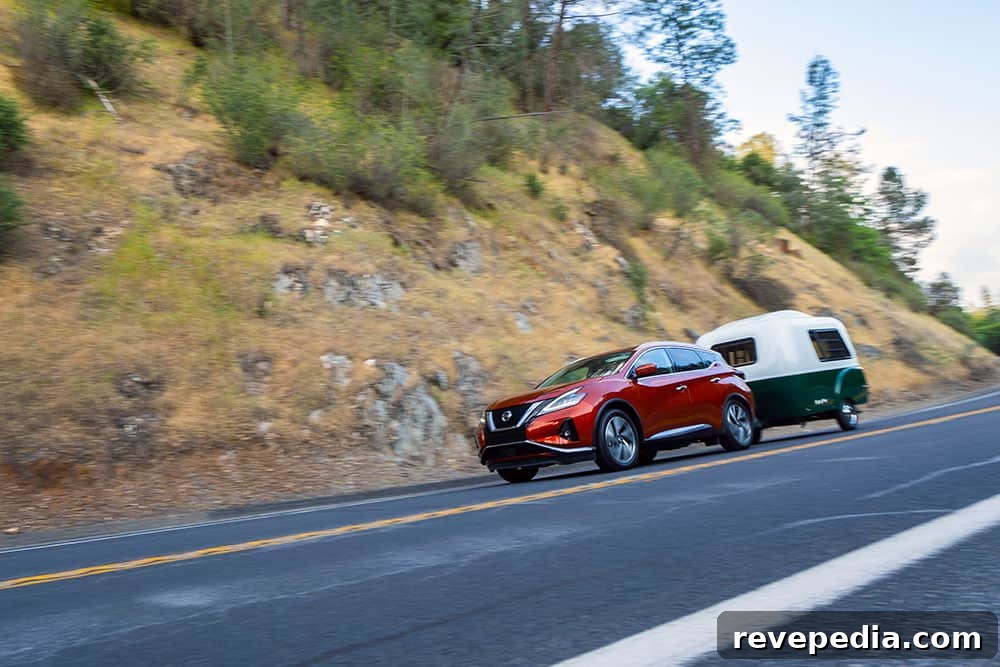
Murano Platinum – Happier Camper HC1
I was particularly interested in how the Murano Platinum handled towing. With a factory towing capacity of 1,500 lbs, the Murano towed the 10′ Happier Camper HC1, which weighs about 1,100 lbs, without trouble. The Murano’s 260-horsepower 3.5-liter V6 provided enough power to navigate the hills around Mariposa and climb toward Yosemite Valley while towing the small trailer.
Happier Camper demonstrates that stylish, well-designed trailers can sleep up to five people while staying light enough to be towed by a smaller SUV.
Across the fleet the Nissan vehicles performed reliably. The Titan and NV Passenger van stood out for their suspension setups and overall comfort during sustained towing over varied terrain.
If you prefer not to tow, many of these Nissans can be fitted with rooftop tents. For example, a smaller Rogue was equipped with a Tepui rooftop tent that felt solid and secure. Rooftop tents free up cargo space inside the vehicle and add flexibility for camping trips.
When choosing a travel trailer, consider these important factors:
Towing Capacity
Begin by checking your vehicle’s published towing capacity. Capacities vary by model year, engine, and drivetrain, so verify the specifications for your exact vehicle.
Travel Use
Think about the terrain you’ll cover. Mountain driving places greater demands on engine, transmission, and brakes. If you plan extended trips in hilly or mountainous areas, choose a trailer that leaves a comfortable margin below your vehicle’s maximum towing limit to avoid overheating and excessive wear.
Tongue Weight
Tongue weight—the downward force the trailer tongue applies to the hitch—typically ranges from about 9 to 15 percent of gross trailer weight. Some vehicles have strict tongue weight limits, so confirm that your loaded trailer’s tongue weight matches your vehicle’s rating.
Extra Weight
Remember that gear, water, propane, and accessories add to trailer weight. When you’re near the vehicle’s towing capacity, account for these additional loads and distribute weight carefully. Place heavy items over or just in front of the trailer axle to maintain proper balance and handling.
Nissan brought towing experts to the event to demonstrate hitching and setup procedures, which are straightforward once you understand the basics. Many Nissan models are outfitted with factory trailer receivers and trailer brake controllers, and trucks like the Titan include extendable towing mirrors—features that simplify towing and increase safety.
If you’ve been hesitating to try trailer travel, your current SUV or crossover may be more capable than you think. With proper planning and attention to towing limits and weight distribution, many owners can enjoy a summer of road trips and camping without needing a pickup truck.
Thanks to Nissan for the demonstration and the opportunity to experience towing firsthand.