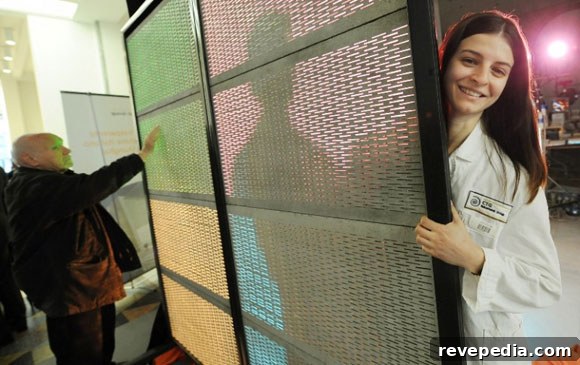
Transparent concrete, once considered a futuristic concept, is now a practical building material. The Italian company Italcementi Group introduced this material in a structure at the World Expo in Shanghai.
Each panel, measuring 19.7 x 39 x 2 inches, contains roughly 50 optical elements, producing an overall light transmission of about 20 percent. This level of translucency allows natural light to penetrate while preserving the strength and appearance of traditional concrete.
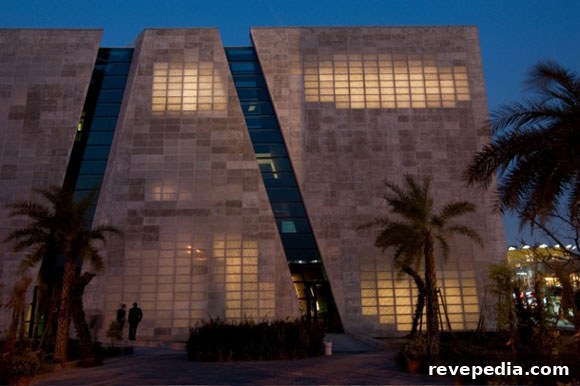
The product, called i.light, is still in a developmental phase and not yet commercially available. However, it is already being evaluated for its potential to reduce energy use by decreasing the need for artificial lighting in buildings. By integrating translucent concrete panels into facades or interior partitions, architects can increase daylighting without sacrificing structural performance.
Manufactured by embedding optical fibers or similar light-guiding elements within a concrete matrix, these panels combine the durability of conventional cement with controlled light transmission. The resulting material maintains the mass and thermal properties of concrete while introducing daylight into spaces that would otherwise require electric lighting during daytime hours.
Early applications focus on decorative façades, feature walls and interior partitions where diffused daylight and a distinct aesthetic are desirable. Because the panels transmit light diffusely rather than acting as transparent windows, they offer privacy while still brightening interior spaces. This makes them suitable for offices, public buildings, retail environments and other settings that benefit from energy-efficient daylighting solutions.
Before widespread commercial rollout, manufacturers will need to address production scalability, cost, long-term durability and integration with existing construction methods. Researchers and industry observers are also examining how these panels perform in different climates, how they affect building energy models, and which building codes will apply to their use.
As production techniques advance and costs decline, translucent concrete products like i.light could become a practical option for architects and builders seeking to improve natural light distribution and reduce lighting energy consumption while retaining the familiar look and structural properties of concrete.