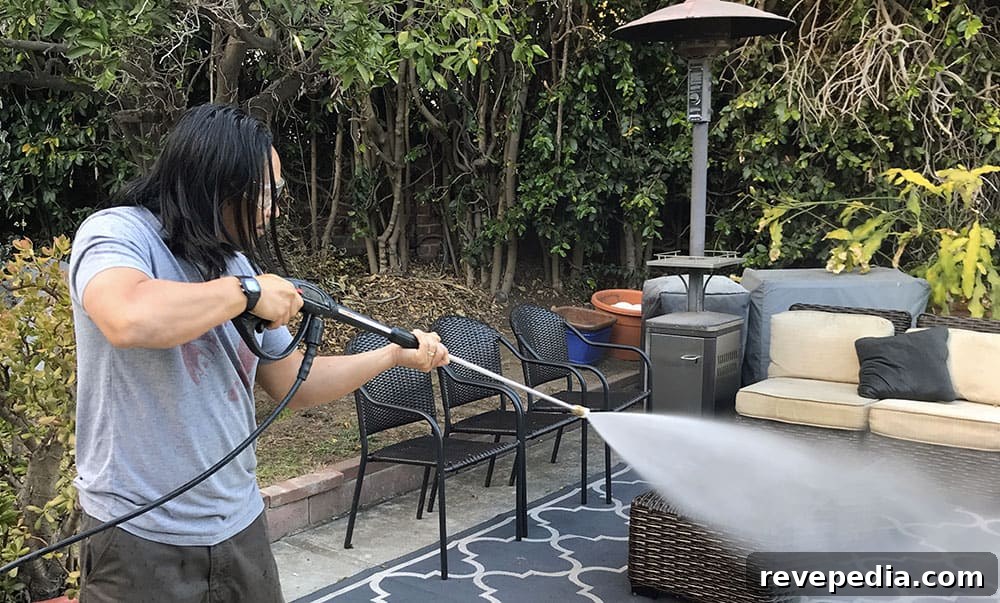
Pressure washers quickly become indispensable once you own one. Compact, affordable, and durable with proper care, they handle many cleaning tasks around the home more effectively than a hose or scrub brush.
We recently started using a Briggs & Stratton 3100 MAX gas-powered pressure washer. The timing was perfect as we were moving into a new house that needed a lot of exterior cleaning. Over the past month this unit has proven to be a vital tool for multiple projects, and here are the ways it made those jobs faster and more effective.
Cleaning the Exterior
In our previous home, constant freeway dust left a thin, stubborn film across outdoor surfaces. A regular hose and sprayer never removed it completely. With the pressure washer, large areas of dirt and grime came off quickly, restoring the walls to a much cleaner appearance. Seeing how thoroughly it cleaned convinced us of its value for exterior maintenance.
Before using a pressure washer, always wear indirect vented safety goggles to protect your eyes from kicked-up debris.
Our new house hadn’t been washed in years. When we used the pressure washer on the white exterior, layers of built-up dirt came away and the siding looked refreshed and bright again.
Cleaning Outdoor Furniture
We used the pressure washer across the patio and on outdoor furniture. Compared with a hose sprayer, the Briggs & Stratton unit cleaned more effectively while using water efficiently—about 2.5 gallons per minute. The machine includes four nozzle types, letting you choose the right spray pattern for each surface. We used the yellow nozzle for furniture and fabrics: it had enough force to remove grime but was gentle enough to avoid damage. It also restored the colors of a patio umbrella and outdoor rug.
Gas engines can be noisy, but Briggs & Stratton’s Quiet Sense technology reduces idle sound by about 40% when the trigger is released, making the machine noticeably quieter during use and breaks.
Cleaning the Garage Floor
Preparing our garage for an epoxy floor required removing years of oil and dirt. While a degreaser and scrubbing help, a pressure washer is the most efficient way to lift stubborn grime. The Briggs & Stratton model removed built-up contaminants that would have taken hours of manual scrubbing with a hose. A thoroughly cleaned concrete surface ensures better epoxy adhesion and a longer-lasting finish.
Washing Trucks
Between a Ford F-150 and a 1989 Toyota Land Cruiser, we regularly encounter mud and clay. A quick pressure-washer rinse before a full wash prevents clay from caking and drying on the paint. The unit excels at reaching undercarriages, wheel wells, and tight spots that a regular hose can’t clean effectively.
The 3100 MAX includes a built-in detergent tank, making it easy to apply soap or cleaning solution without constant refills or manual mixing. That feature speeds vehicle washing and other detergent-assisted cleaning tasks.
Planned Future Uses
We have several upcoming projects that will keep the pressure washer in regular use: cleaning an old shed inside and out, clearing dirt and cobwebs from storage closets, and maintaining the many paved areas around our pool and patio. Leaves, petals, and fruit can create a stubborn film near pools, and a pressure washer is a far easier and more effective way to clear those surfaces than sweeping.
If you’re considering a pressure washer, it’s a valuable investment for maintaining outdoor spaces and vehicles. The Briggs & Stratton 3100 MAX has been reliable and versatile for our needs.
This post is sponsored by Briggs & Stratton. All opinions are those of the author.