We’re launching a new series that profiles the workshops of friends, family, readers and fellow home improvement and tool bloggers. These Winning Workshop features are meant to spark ideas you can apply to your own workspace and to showcase clever ways to store and use tools that improve your project workflow.
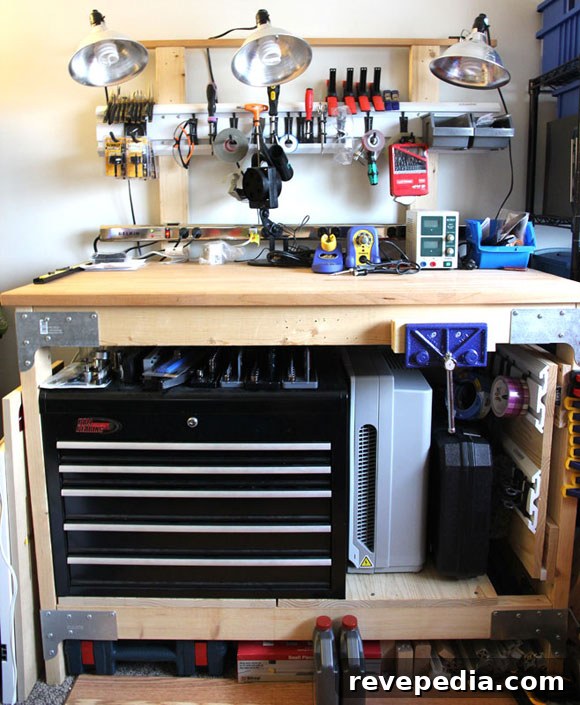
Our first Winning Workshop comes from Stuart Deutsch, the author of the tool blog ToolGuyd. We met Stuart at a DeWALT event last year and quickly learned how seriously he takes his tools.
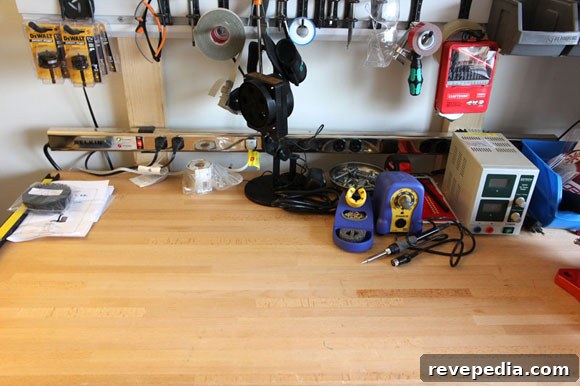
He agreed to share photos of his workshop and to describe, in his own words, how he set up the space and what motivates him. Stuart works from his apartment, so space is limited, but he’s made the most of the area and resources he has available.
More from Stuart:
I never really considered myself a DIYer until relatively recently. Before then I thought of myself more as a hobbyist. A few years ago, if you wanted a small wheeled robotics platform to experiment with, you built it yourself. If you wanted to improve a computer’s cooling or reduce noise, you drilled holes and soldered fan speed control circuits by hand.
My DIY inspiration comes largely from these hobbies and from occasional needs for custom solutions that can’t be bought. There’s also the thrill and satisfaction of creating something unique, creative, or useful. Some projects are also driven by necessity or the desire to save money—minor installations and small repairs pop up frequently.
The project I’m proudest of may sound simple: my first self-built computer. Around 2004 I needed a new desktop but wasn’t satisfied with offerings from major manufacturers. I learned to assemble a system from scratch and got it running. Influenced by modding pioneers like G-gnome and MNPCTech’s Bill Owen, I moved into case modding and learned new skills and techniques. What started as a practical solution saved money on repairs for my family and friends, and it expanded my metal- and plastic-working abilities.
I’m about to begin what I expect will be my toughest project yet: a display case for rocks, minerals and fossils. That project should help me improve joinery and fine woodworking skills through multiple iterations and plenty of practice experimenting with different joint types.
If I had to choose three tools I couldn’t live without, they’d be my computer with internet access, a 4–6mm ball hex driver set, and—this might be cheating—my Leatherman Wave. Even with a large library of reference books, I heavily rely on the internet for information; as they say, knowing is half the battle. I used to struggle with tiny 4, 5, and 6mm L-wrenches, but switching to T-handles, large L-handles and screwdriver-style handles made a big difference. Ergonomic ball hex drivers have been lifesavers on more occasions than I can remember. The Leatherman Wave is incredibly compact and combines many useful tools in a small package; if it’s not on me, it’s usually nearby.
My dream tool would be a multi-purpose cutting machine for wood, plastic and metal that creates no dust or debris at all, costing under $500. Many manufacturers market “ultimate” cutting machines, but those claims are often exaggerated. A more fanciful idea would be a MakerBot-style 3D printer capable of printing metal parts—aluminum, for example.
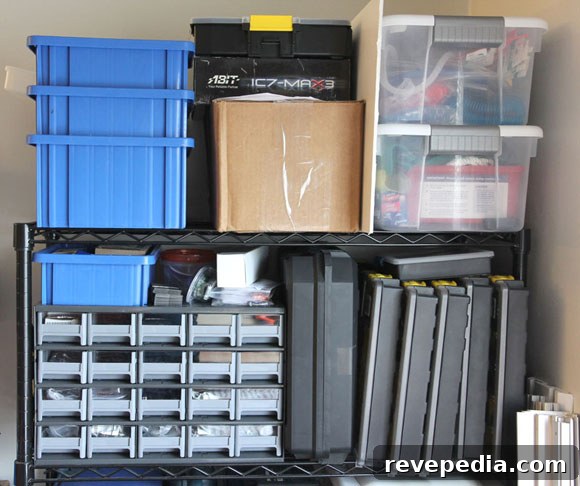
It’s hard to single out what I like most about my workshop, so I’ll list what needs improvement: more space, better lighting, improved dust and chip control, better organization, and—did I mention—more space? Living in an apartment makes space the biggest constraint. I’m conducting a large-scale cleanup, but there’s a limit to how much can fit into a finite workspace.
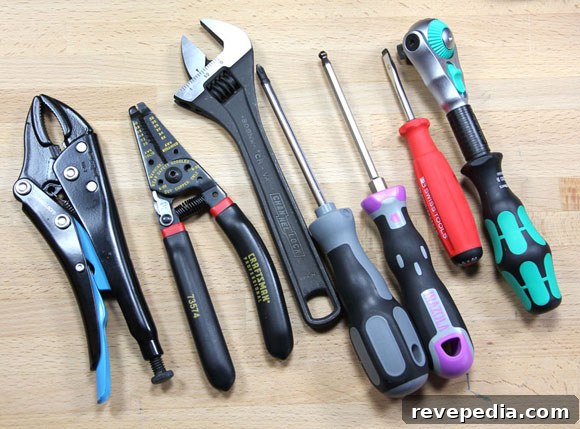
Favorite tools, from left to right in the photo: old Channellock locking pliers made by Grip-on; Craftsman Stride-made fine-gauge wire stripper; Channellock Irega-made adjustable wrench; Wiha 3K anti-cam-out Phillips screwdriver; Irazola 5mm ball hex driver purchased in England; PB Swiss slotted screwdriver; Wera Zyklop swivel-head ratchet. Not pictured is DeWALT’s 12V Max 1/4″ hex screwdriver, which is by far my favorite cordless driver.
We’d like to thank Stuart for sharing his workspace, his inspirations and his favorite tools. If you’re interested in tool reviews and industry news, visit ToolGuyd.com for more content.
We’re seeking more Winning Workshops—if you have an interesting space or unique tools to share, please contact us to be featured.