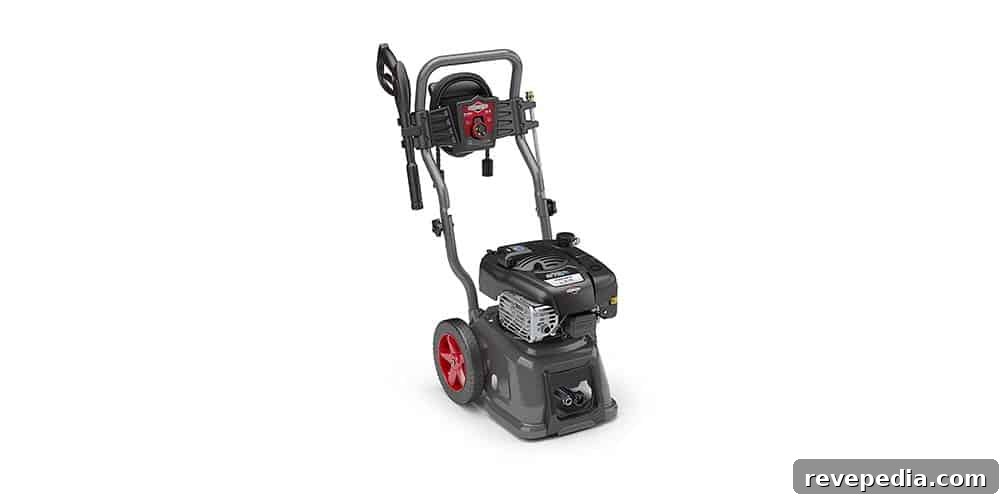
Properly winterizing gasoline-powered equipment is essential when you won’t be using it for an extended period. Storing a pressure washer without taking precautions can lead to moisture buildup inside the engine, damage to the pump from freezing temperatures, and difficult starting in the spring. If you plan to store your pressure washer for more than 30 days, follow these steps to protect it and help ensure it runs reliably when you need it again.
Add Fuel Stabilizer
Start by treating the fuel. Add a fuel stabilizer to the tank and run the engine for about two minutes so the stabilizer circulates throughout the fuel system and carburetor. This prevents the gasoline from breaking down and forming varnish or gums that can clog fuel passages while the machine is in storage. After circulation, shut off the engine.
Flush Out Detergent
Any detergent left inside the soap system can leave residue or cause blockages over time, so it’s important to clear it out. Run the pressure washer on the soap setting until the soap canister is empty. Then fill the detergent tank or use a garden hose to run fresh water through the system for roughly two minutes to ensure all soap residue is removed. Turn off the pressure washer, shut off the water supply, and squeeze the trigger on the spray gun to release trapped pressure and drain remaining water.
Remove and Dry Hoses
Disconnect all hoses—both high-pressure and garden hoses—and ensure they are drained completely. Wipe them down to remove dirt and moisture, then coil them neatly for storage. Storing dry hoses reduces the chance of freeze-related damage and helps prevent mildew and deterioration.
Protect the Pump with Pump Saver
To protect the pump during cold weather, treat it with a pump saver product designed for pressure washers. Pump saver displaces moisture, lubricates internal seals, and prevents mineral deposits and corrosion. Follow the manufacturer’s instructions carefully when adding the pump saver and wear appropriate eye protection. Using pump saver according to the directions will help maintain the pump’s seals and internal parts over winter.
By stabilizing the fuel, thoroughly flushing detergent, draining and storing hoses properly, and using a pump saver, you’ll minimize the risk of freeze damage and corrosion. These simple steps keep your pressure washer in good condition and make it easier to start and operate when spring arrives.