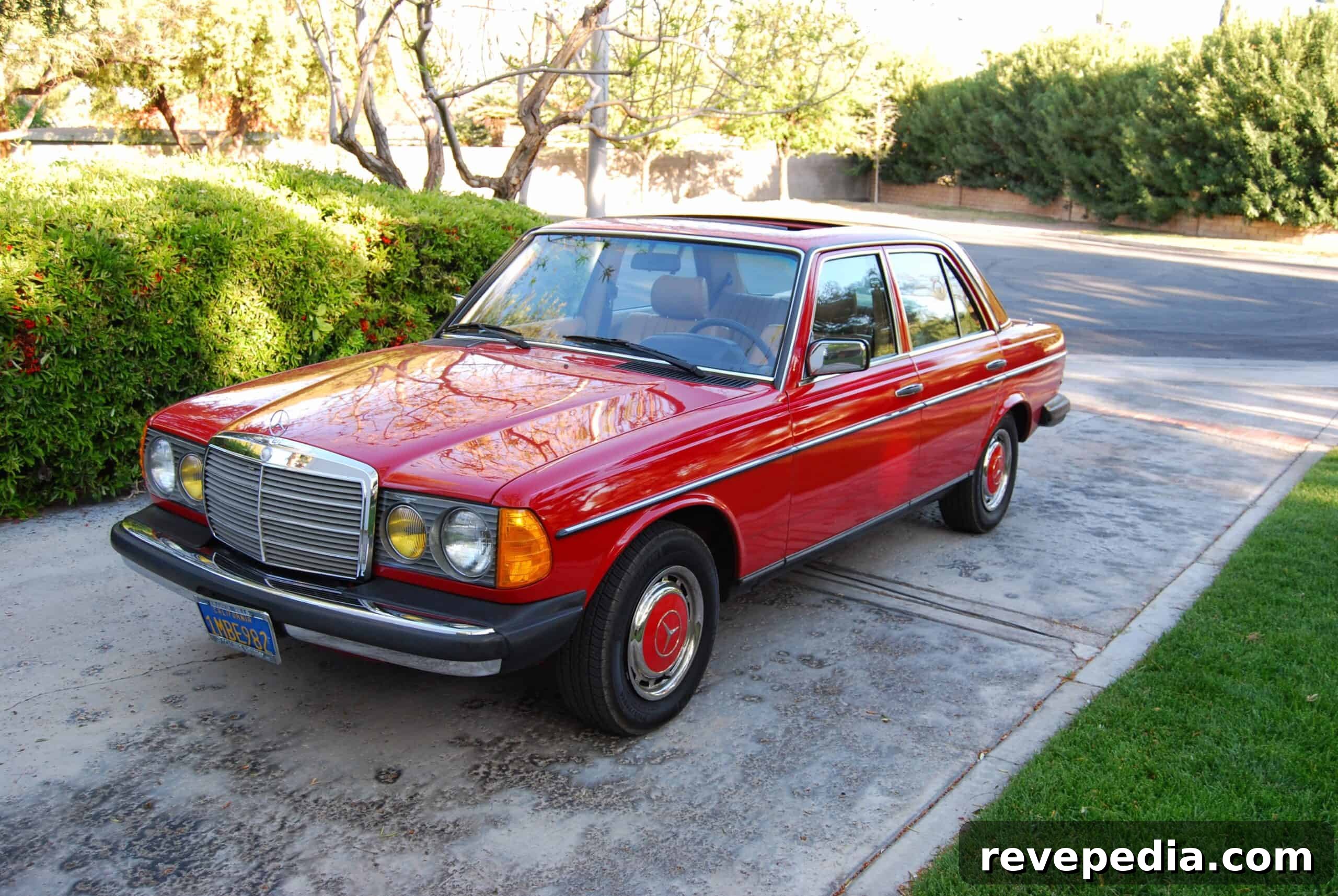
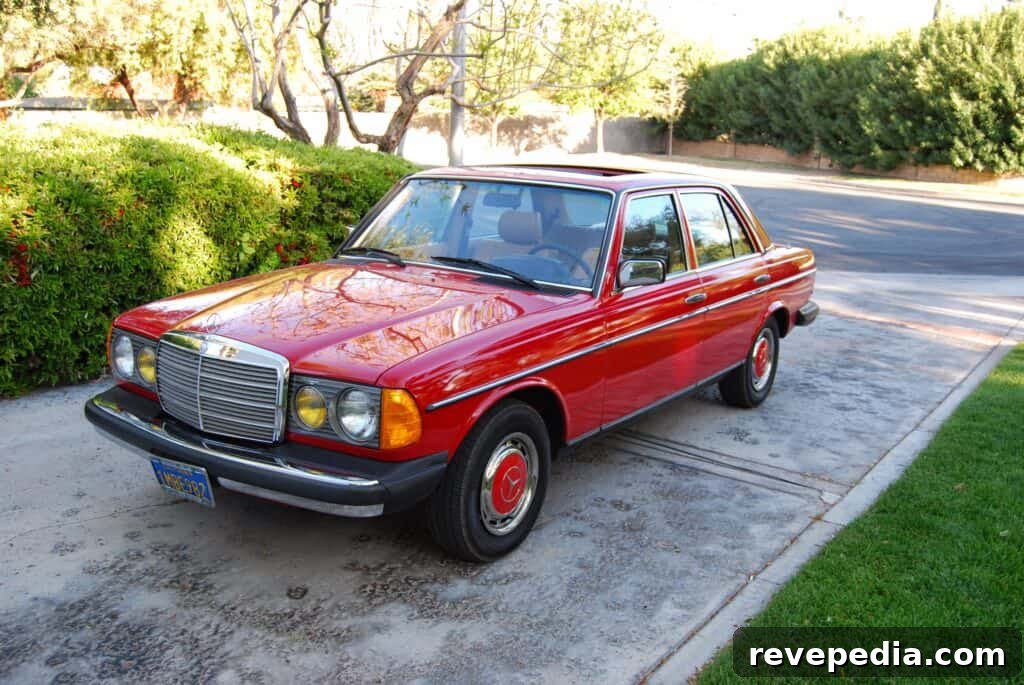
We’ve been very happy with the Xpel window film on our home windows — it’s been invaluable during Las Vegas’s brutal summers. The intense sun and UV exposure that ages a house interior also takes its toll on vehicle interiors and our skin, so we decided to protect our 1983 Mercedes-Benz 300D with automotive window tint.
Because we wanted to preserve the car’s original, classic appearance, we avoided dark tint. We liked how discreet the clear Xpel film looks on our home windows, so we chose the same unobtrusive approach for the Benz. We selected Xpel PRIME XR PLUS 70 (70% Visible Light Transmission) and had it applied to every window, including the windshield.
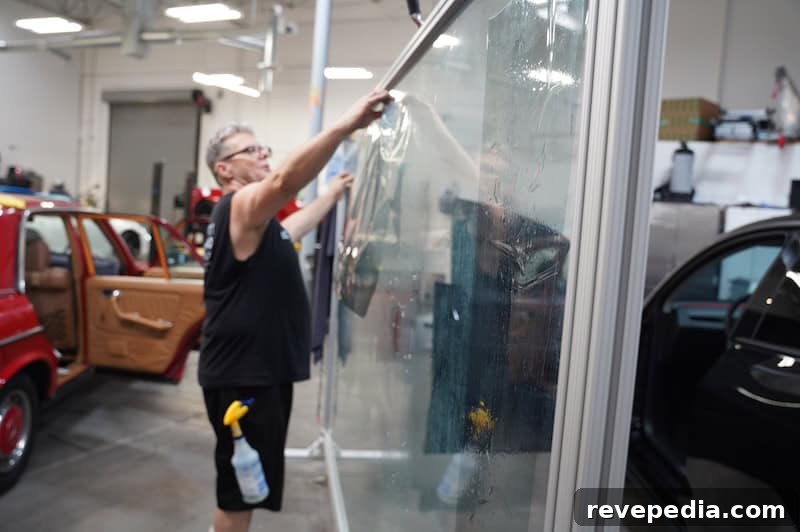
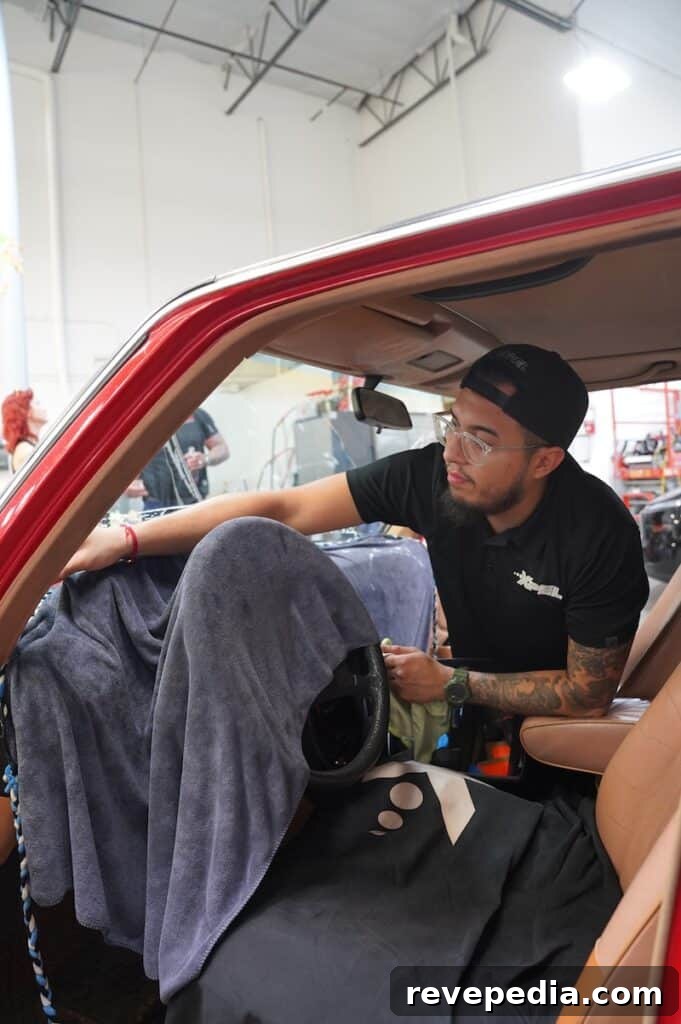
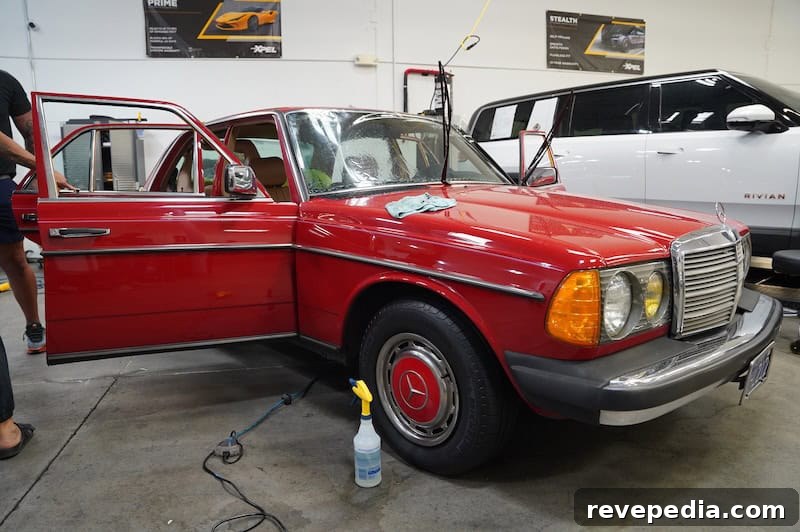
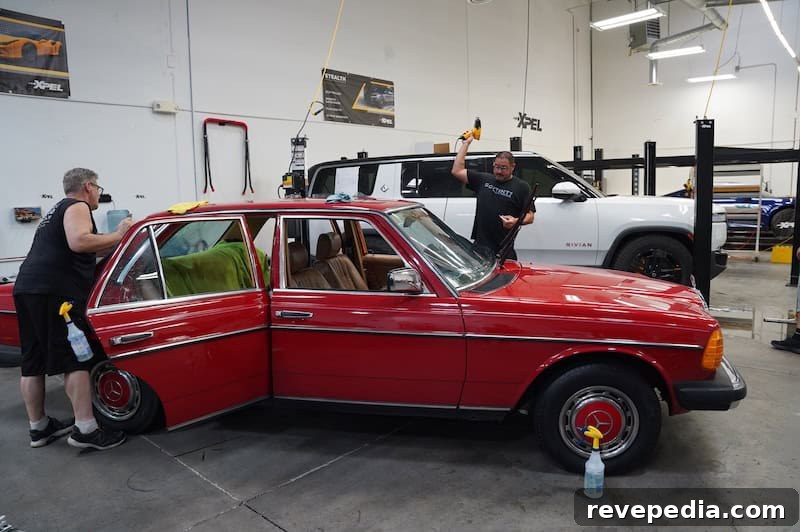
The installation took place at Xpel’s Las Vegas facility, where the technicians also work with local Porsche dealers. They have experience handling everything from modern 2026 911s to vintage ‘80s Mercedes, and that expertise showed from the moment we arrived. The team treated our car carefully and professionally, giving it meticulous attention throughout the process.
Why Ceramic Tint?
Xpel’s PRIME XR PLUS is a nano-ceramic tint. Unlike dyed or metalized films, ceramic tint blocks heat and UV using ceramic particles, which helps maintain optical clarity and long-term performance. For an older car like ours — built before factory UV protection became standard — adding this level of heat and UV rejection is essential to protect the dashboard, seats, and trim, and to reduce skin exposure to UV while driving.
Even with the lightest option (70 VLT), the change inside the cabin is significant. The film blocks up to 98% of infrared heat and 99% of UV rays, making the interior noticeably cooler in direct sun. That reduces the load on the air conditioning and eliminates the need to deploy a sunshade every time we park.
What impressed us most was how little changed visually. From the outside, the car maintains its original look: no dark appearance, no mirror-like reflection, and no color shift. From inside, visibility is clear—no haze, no distortion, no extra glare, even on the curved windshield. That combination of performance and clarity is the advantage of using a premium ceramic film and experienced installers.
Installation Details
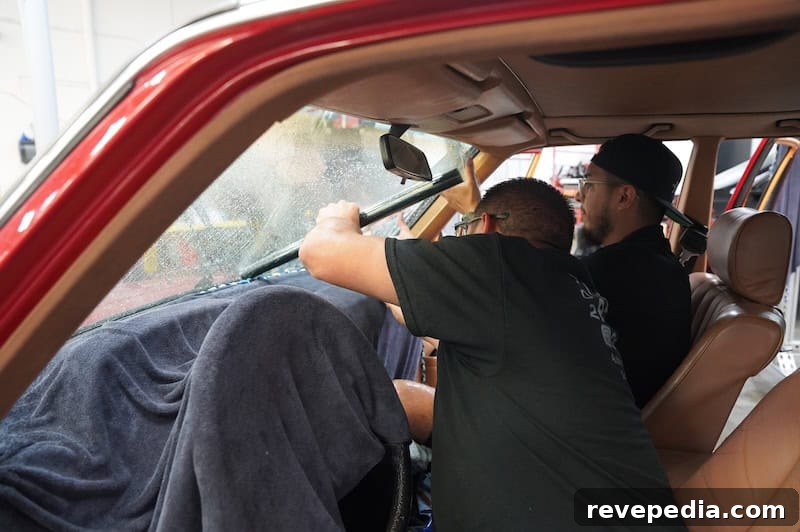
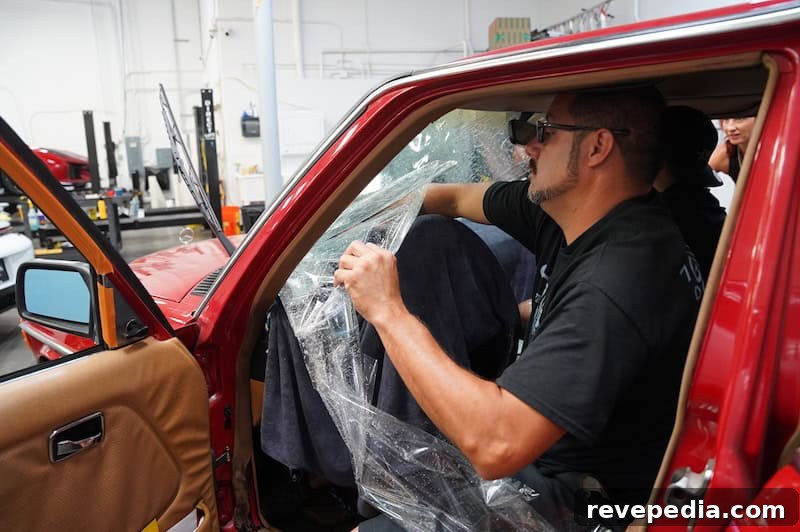
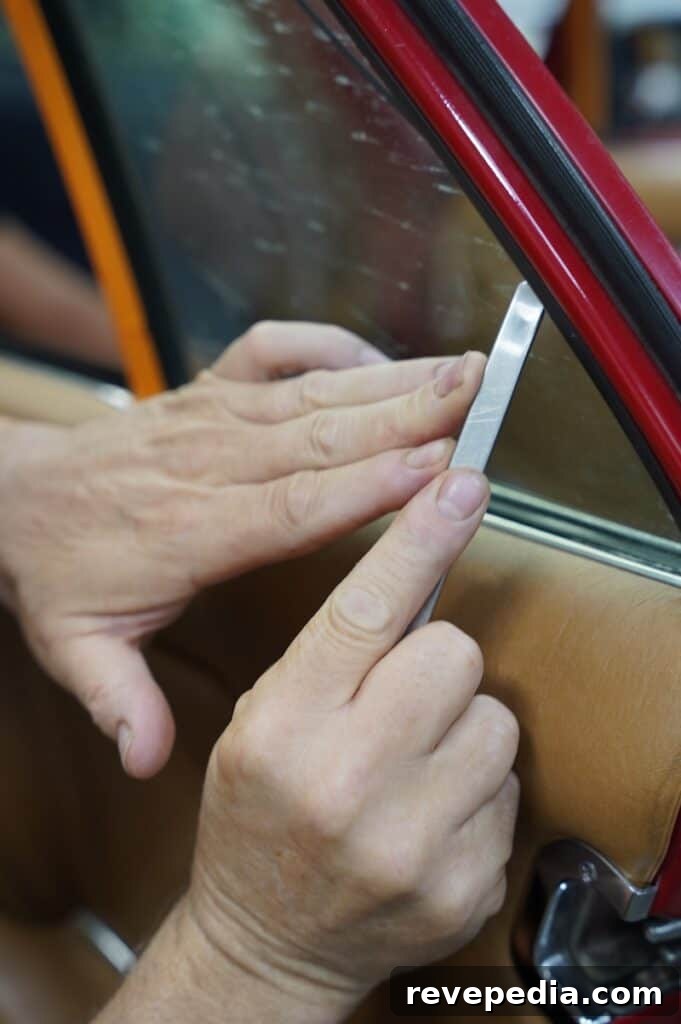
Working with a vintage car presents particular challenges. Older glass shapes, seals, and trim differ widely from modern vehicles. The Xpel Las Vegas crew took care with preparation, thoroughly cleaning and measuring each pane before applying film. The windshield required extra skill because of its curve; the installer used a heat gun and practiced technique to fit the film smoothly.
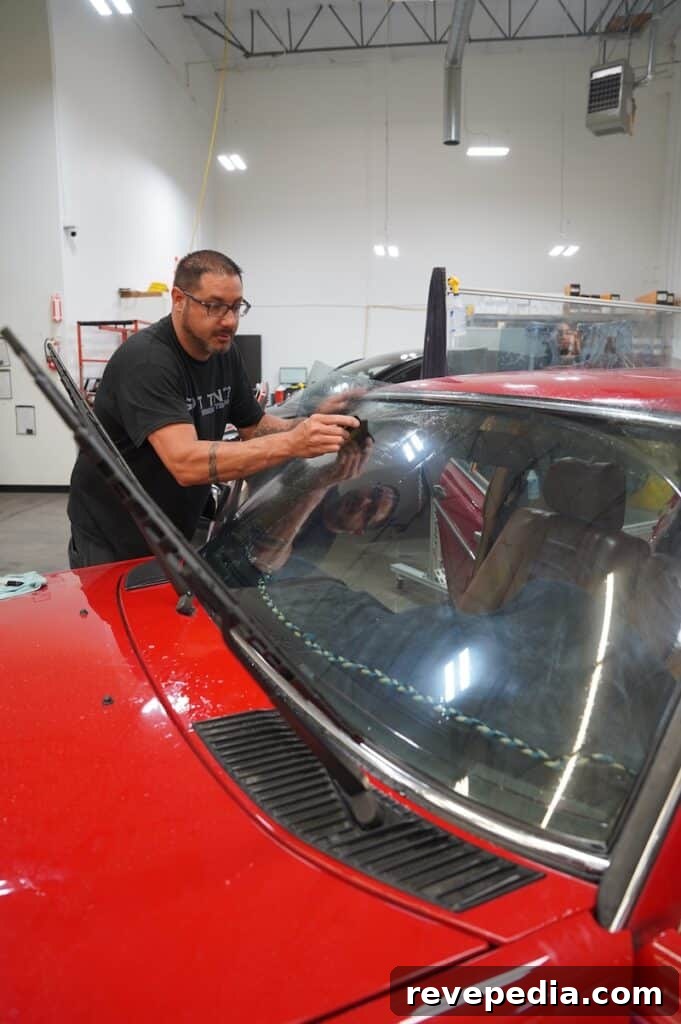
The finished result shows clean edges and nearly invisible seams. You need to look closely to notice the film. It didn’t bubble, peel, or streak, and the adhesive didn’t interfere with defroster lines or antennas. After a few days of curing in sunlight, the film settled and bonded perfectly to the glass.
Worth It for Any Vehicle
We’ve already recommended Xpel for residential use; their window film made a measurable difference in comfort and energy use at our Las Vegas home. Having PRIME XR PLUS installed on the Benz confirms the product’s value in cars, too. It’s not an inexpensive upgrade, but it pays dividends in comfort, interior preservation, and everyday enjoyment of the vehicle.
For owners of older cars, especially models without modern heat rejection or factory UV protection, ceramic tint is one of the most effective upgrades to preserve interior materials and improve driving comfort. If you choose to add tint, opting for a high-quality film and professional installation will deliver the best long-term results.
We’ll keep the classic lines and chrome trim of our diesel Benz intact, but thanks to Xpel we’ve brought the cabin comfort into the 21st century.