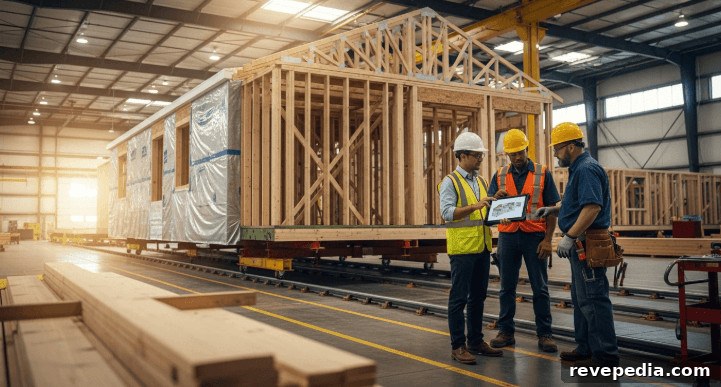
Factory-built housing has evolved significantly. Modern double-wide mobile homes are precision-engineered inside controlled facilities, transported in two sections, and assembled on a prepared site to meet federal HUD standards. Below is a clear, practical look at how these homes are designed, built, delivered, and installed—and why they are an increasingly viable option for affordable, high-quality housing.
Why Double-Wide Mobile Homes Deserve a Closer Look
Double-wide mobile homes have moved far beyond long-standing misconceptions. Today they are engineered housing solutions that address affordability pressures and extended construction timelines. Off-site factory construction changes how components are assembled, inspected, and delivered, offering tighter schedules and predictable quality.
Industry analyses show that factory-based construction can shorten project timelines by roughly 20% to 50% compared with traditional on-site building, and the global manufactured housing market is projected to grow rapidly in response to that efficiency. Standardized materials and sheltered production lines create consistency that outdoor job sites often fail to match during weather disruptions or scheduling delays.
At a Glance: Popular Double Wide Home Providers
| Company | Pros | Cons | Pricing |
| Home Nation | ZIP-based delivered price estimates, factory-direct model, searchable inventory | Final project cost depends on site work; ZIP code required for pricing | Enter ZIP for delivered price |
| Cavco Homes | Large national manufacturer, broad production network, detailed floor plans | No public pricing; dealer quotes required | Quote based |
| America’s Factory Built Homes | Multi-brand inventory, double-wide finder, some 3D tours | Regional focus; quote required | Quote based |
| Deer Valley Homebuilders | Emphasizes heavy-built construction and wide floor-plan selection | No public pricing; buys through local retailers | Quote based |
| Franklin Homes | Robust customization and premium layouts | Dealer availability varies by region | Quote based |
| Timber Creek Housing | Organized product series and family-oriented floor plans | Pricing varies by dealer | Quote based |
How These Companies Were Evaluated
To separate real value from marketing, the evaluation focused on manufacturers and dealers that publish technical specifications and floor plans, not only glossy renderings. Key indicators included verifiable floor plans, public specs, and pricing transparency where available.
Brands included in the review met these criteria:
- Active product or company pages rather than placeholder sites
- Evidence of genuine double-wide inventory or downloadable floor plans
- Relevance to manufacturing and construction processes
- Publicly visible specs such as width, square footage, bed and bath counts
- Pricing transparency where present
- Buyer tools like 3D tours, quote forms, or delivered-price calculators
What Is a Double-Wide Mobile Home?
A double-wide is a manufactured home produced in a factory and divided into two transportable sections. These halves are engineered to withstand highway transport and are permanently joined on a prepared pad at the final site.
The HUD Code, adopted in 1976, established federal standards for manufactured housing and separated modern HUD-coded homes from earlier, unregulated trailers. A distinguishing feature of HUD-coded units is that their steel chassis typically remain as a permanent part of the structure.
Home Type Comparison
| Home Type | Built Where | Code Standard | Transport Method | Site Assembly |
| Manufactured Double Wide | Factory | Federal HUD Code | Two chassis-based sections | Joined on site |
| Modular Home | Factory | State and local building codes | Multiple modules | Installed on permanent foundation |
| Site-Built Home | Job site | State and local building codes | Materials delivered separately | Built entirely on site |
How Double Wide Mobile Homes Are Built
Understanding the factory assembly sequence removes much of the mystery around off-site construction. Production lines operate on strict, sequenced schedules similar to automotive manufacturing: materials arrive at specific stations at precise times, minimizing waste and improving repeatability.
Factory workflows reduce material waste and landfill debris—some studies estimate significantly lower waste in prefab production versus field-built methods—and they help compress overall schedules because weather and subcontractor coordination are centralized and controlled.
Engineering Begins Before Construction
Structural engineers plan transport loads, lifting points, and mating surfaces long before raw materials reach the factory floor. A double-wide design must endure highway wind shear during delivery and concentrated stresses during crane lifts, so pre-engineering ensures components align and perform as intended.
Standardized plans let manufacturers buy lumber, wiring, and steel in bulk, lowering per-unit costs and improving quality control. Those efficiencies are central to scaling factory construction while keeping production consistent.
The Steel Chassis Comes First
Production begins with a heavy-duty steel chassis that includes main rails, outriggers, and cross members. The floor system—wooden joists with underbelly insulation—is assembled on that frame, creating a square, stable base for all subsequent stations. That rigidity protects finish materials like drywall and cabinetry during highway transport.
Walls, Roof, and Utilities Follow
Framing jigs help ensure exterior walls and interior partitions are square before attachment. Windows, exterior doors, and pre-engineered roof trusses are installed while the unit moves along the line. Licensed tradespeople then route plumbing, electrical, and HVAC into open framing in a coordinated workflow that reduces on-site trade conflicts.
Factory Construction Stages
| Stage | What Happens | Why It Matters |
| Chassis Fabrication | Steel frame built for each section | Provides structural support |
| Floor Assembly | Decking and insulation installed | Establishes precise dimensions early |
| Wall Framing | Interior and exterior walls assembled | Improves consistency and fit |
| Roof Framing | Trusses and roof systems installed | Designed for transport and final loads |
| MEP Rough In | Plumbing, electrical, HVAC rough-in | Reduces on-site labor and rework |
| Interior Finishes | Cabinets, flooring, drywall installed | Controlled environment improves quality |
| Exterior Finishes | Siding, roofing, windows added | More work completed before delivery |
The Hidden Advantage: Factory Quality Control
Indoor production removes moisture exposure for raw lumber and protects floor decking and drywall from rain-related damage common on job sites. Repetitive workflows and built-in inspection checkpoints catch small defects early, and pre-delivery testing can detect plumbing or electrical issues before walls are closed.
Sheltered manufacturing minimizes weather delays and supports reliable completion schedules. In short, factory teams excel at repeatable assemblies that reduce rework and hidden defects over time.
What Is Completed at the Factory?
Typically, each section of a double-wide leaves the factory about 80% to 90% finished: cabinets, countertops, interior paint, and many fixtures are already secured. Because so much is complete at delivery, the on-site phase is focused on foundations, set operations, and utility hookups rather than full construction.
Site crews handle foundation work, pier installation or slab preparation, placement and leveling of sections, mating the marriage line, and connecting utilities. A full site-prep plan usually covers trenching for utilities, grading, and driveway work in advance of delivery.
| Usually factory-complete | Usually site-complete |
| Framing and structural shell | Foundation preparation and grading |
| Many windows and exterior doors | Section set and mechanical leveling |
| Cabinets and interior fixtures | Marriage-line fastening and final visual finish |
| Rough plumbing and main wiring | External utility connections |
| Flooring and much interior trim | Exterior close-up details and skirting |
How Transportation and Installation Work
Each home half travels on specialized heavy-haul trucks with legal escorts and planned routes that account for bridge clearances, turning radii, and permits to minimize transit risk. On site, cranes or hydraulic equipment lift each section onto prepared footings. Installers then use shims and anchors to level and secure the structure precisely.
What Is the Marriage Line?
The marriage line is the central seam where crews bolt the two floor and roof systems together. Weatherproofing, insulation, and mechanical crossovers are sealed along this line to optimize thermal performance and prevent drafts. Interior finish teams blend drywall, flooring, and trim to conceal the seam so the assembled home feels like a single, continuous structure.
Research into installation practices and wind-performance testing highlights that proper anchoring and correct marriage-line sealing strongly influence storm resilience and long-term performance. Only after the marriage line is completed can crossover ductwork and other shared systems be fully activated.
Why Factory Built Homes Can Be More Consistent
Unlike site-built framing that sits exposed to weather for weeks, factory-built components stay dry and secure indoors, reducing the chance of hidden moisture damage or warped studs. Centralized materials and storage limit theft and weather-related spoilage, and coordinated trades inside the plant reduce scheduling gaps.
One persistent challenge remains: local zoning and permitting rules vary and can complicate siting manufactured homes, so buyers should research local regulations early in the planning process.
| Factor | Factory Built Double Wide | Typical Site Built Home |
| Weather Exposure | Low | High |
| Workflow Consistency | High | Varies |
| Material Storage | Protected indoors | Often exposed |
| Trade Coordination | Centralized | Multiple contractors |
| Construction Timeline | Faster | Longer |
Despite zoning and permitting hurdles in some jurisdictions, factory construction’s consistency and quality control remain major advantages for many buyers.
Popular Double Wide Mobile Home Manufacturers
To move from theory to purchase, compare manufacturer and dealer catalogs to review room dimensions, floor plans, and available upgrades. Below are profiles of representative companies that illustrate different approaches to factory-built housing across the U.S.
Home Nation
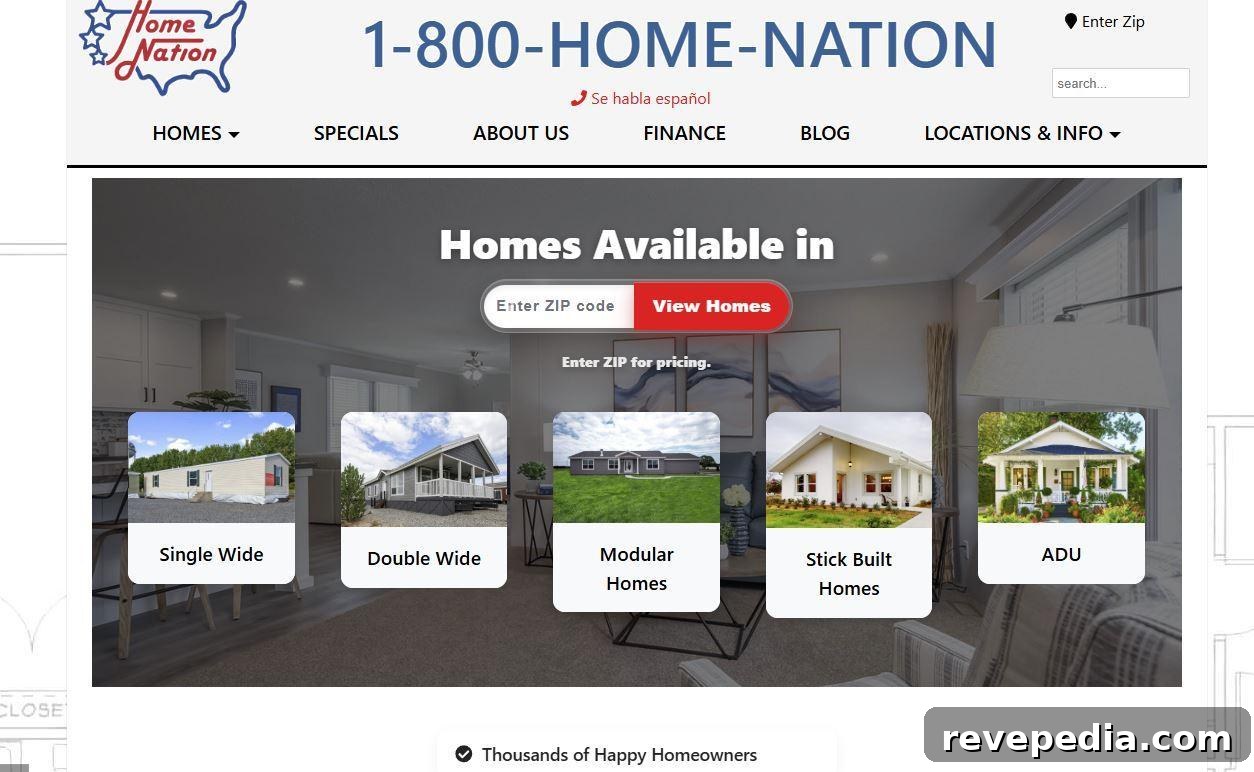
Home Nation acts as a dealer with a factory-direct retail model that improves pricing transparency. Its site allows filtering by width, manufacturer, and square footage and lets visitors enter a ZIP code to see a delivered price estimate on eligible models. The platform also explains installation steps, helping buyers better estimate the total project cost beyond the base home price.
| Home Nation snapshot | Details |
| Role in market | Dealer / factory-direct retail platform |
| Best for | Transparent pricing and initial budget mapping |
| Pricing model | Enter ZIP to see delivered price on eligible listings |
| Buyer tools | Search filters, model cards, some 3D tours, installation guidance |
| Helpful public specs | Beds, baths, square footage, width, and length on many listings |
| Installation visibility | Strong; pages explain common setup and finish items |
Cavco Homes
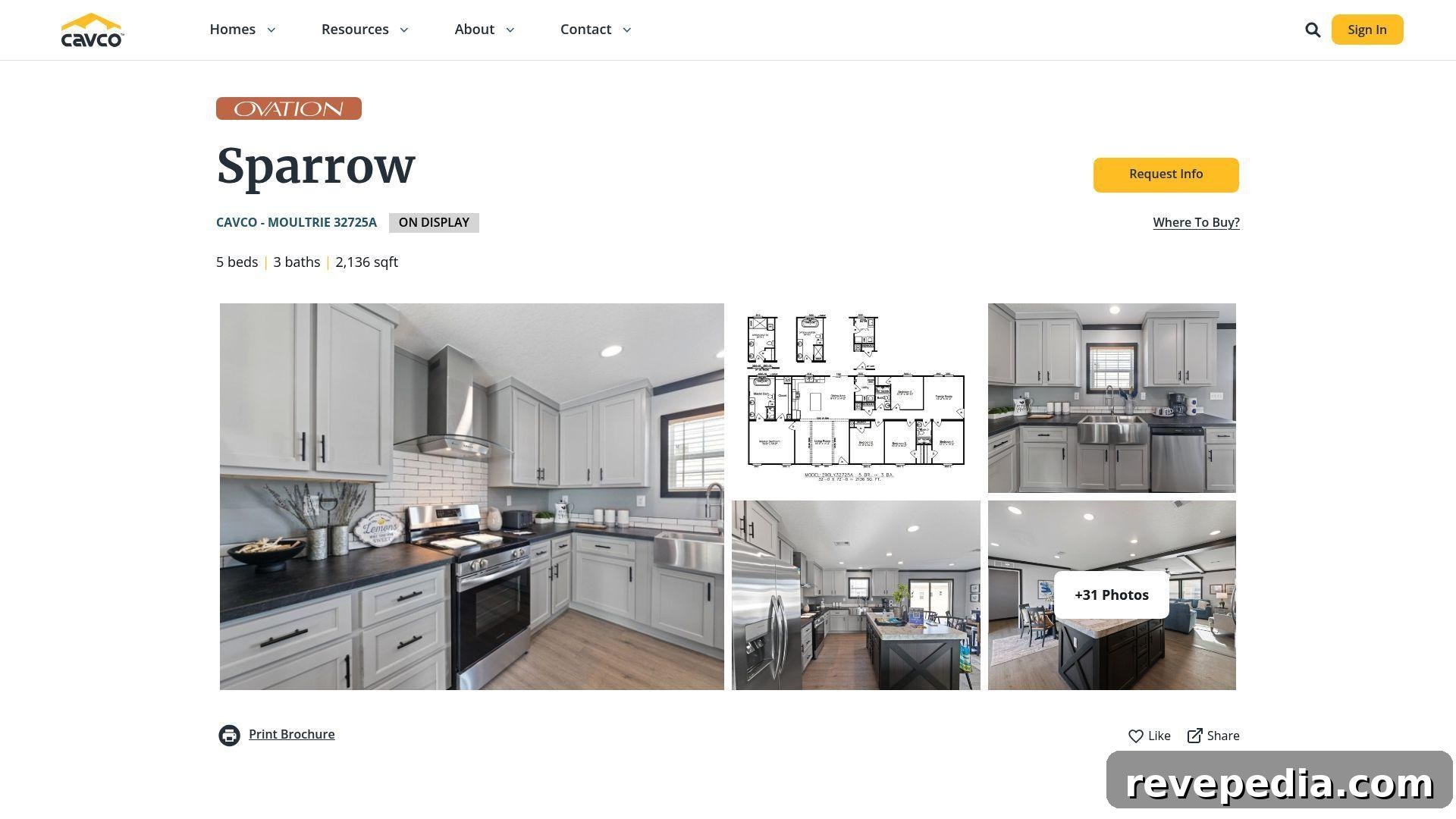
Cavco Homes demonstrates the industrial scale needed to deliver factory-built housing consistently across regions. With more than 30 U.S. facilities, the company offers named floor plans that simplify side-by-side comparisons. Price information is typically available only via dealer quotes, but Cavco serves as a clear example of standardized, repeatable production at scale.
| Cavco Homes snapshot | Details |
| Role in market | National manufacturer of manufactured and modular homes |
| Best for | Understanding scale and standardization in factory-built housing |
| Scale signal | 30+ U.S. building facilities |
| Product experience | Named floor plans and model-level browsing |
| Pricing model | Quote-based / dealer dependent |
| Reader takeaway | Clear example of industrial production; less pricing transparency |
America’s Factory Built Homes
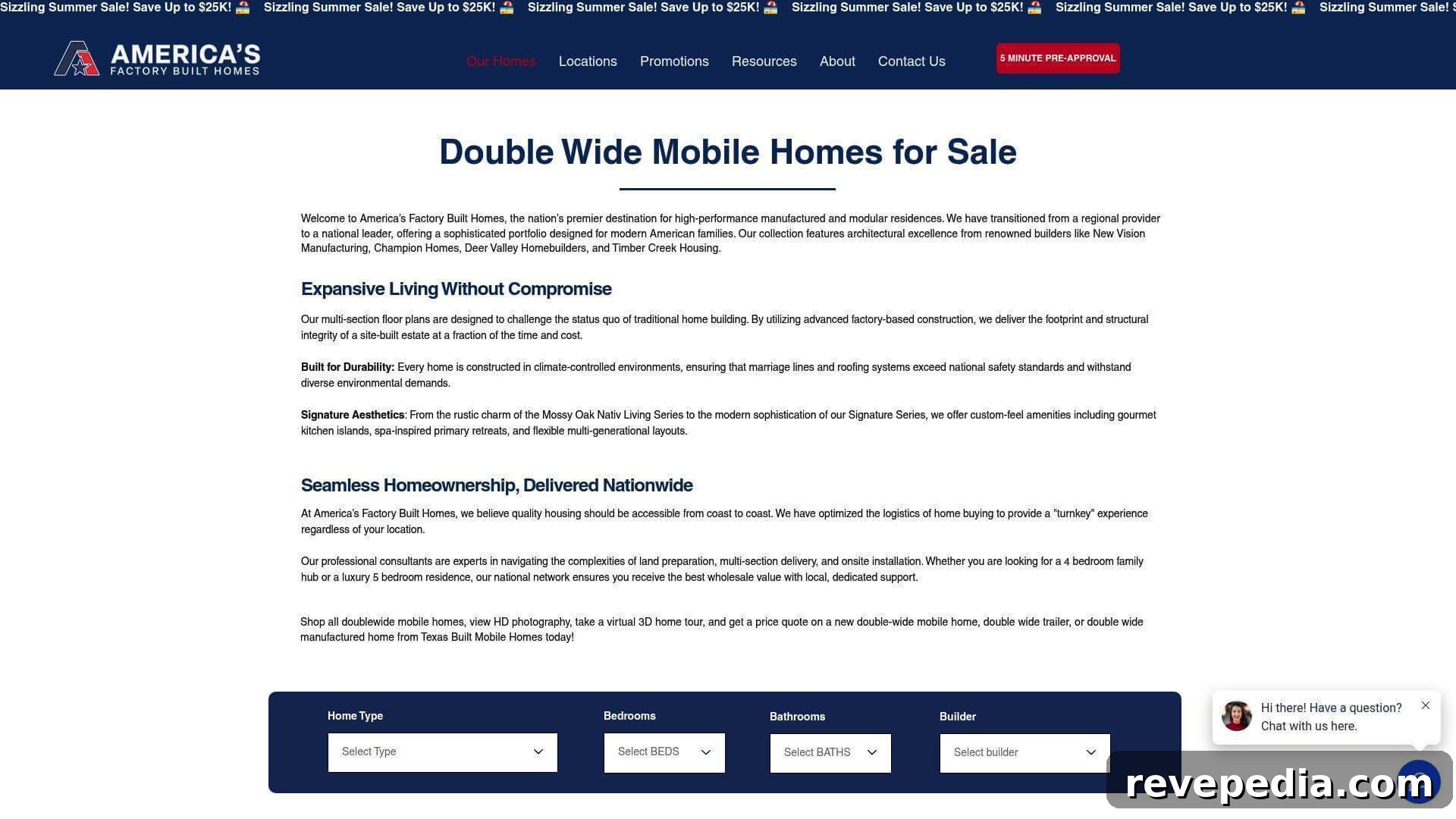
This regional dealership aggregates models from multiple manufacturers, simplifying comparison shopping across brands. Some listings include virtual 3D tours to preview layouts and finishes. Financials generally require a direct quote, reflecting the local dealer-based sales model that prevails in the industry.
| America’s Factory Built Homes snapshot | Details |
| Role in market | Regional dealer / multi-brand discovery platform |
| Best for | Comparing multiple double-wide brands in one place |
| Service pattern | Oklahoma-centered regional operation with wider reach |
| Buyer tools | Photos, model browsing, quote requests, and some 3D tours |
| Pricing model | Quote-based |
| Inventory style | Multi-manufacturer catalog |
Deer Valley Homebuilders
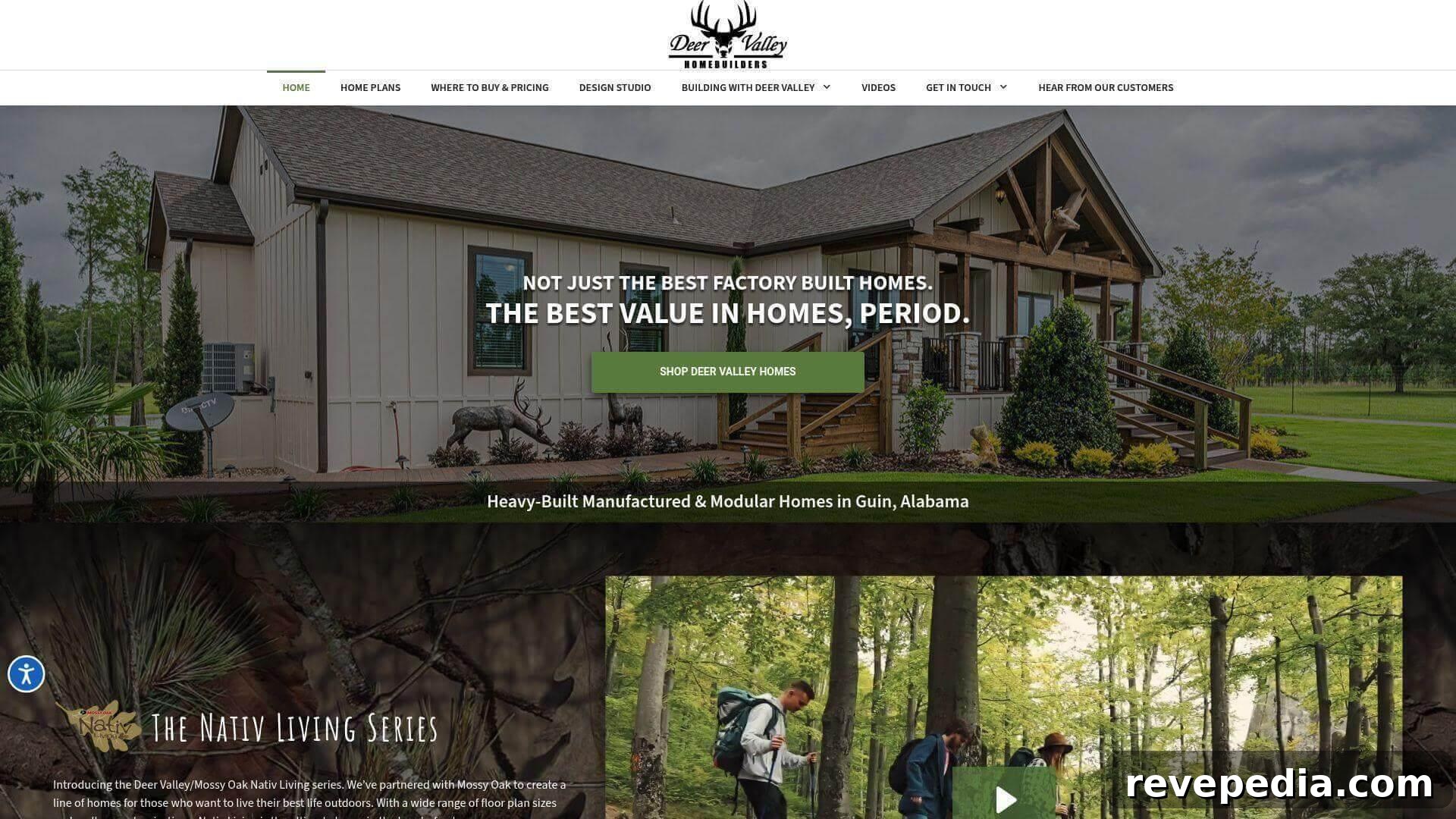
Deer Valley emphasizes heavier construction details—thicker materials and structural rigidity—across manufactured and modular lines. Its catalog includes many floor plans aimed at buyers who want a built-for-life feel similar to site-built homes. Purchases are completed through authorized local retailers rather than direct online checkout.
| Deer Valley snapshot | Details |
| Role in market | Manufacturer of manufactured and modular homes |
| Best for | Buyers prioritizing a stronger structural story |
| Differentiator | “Heavy Built” construction branding |
| Catalog signal | Wide floor-plan selection |
| Pricing model | Retailer quote required |
| Helpful public signals | Manufactured and modular offerings; floor-plan breadth |
Franklin Homes
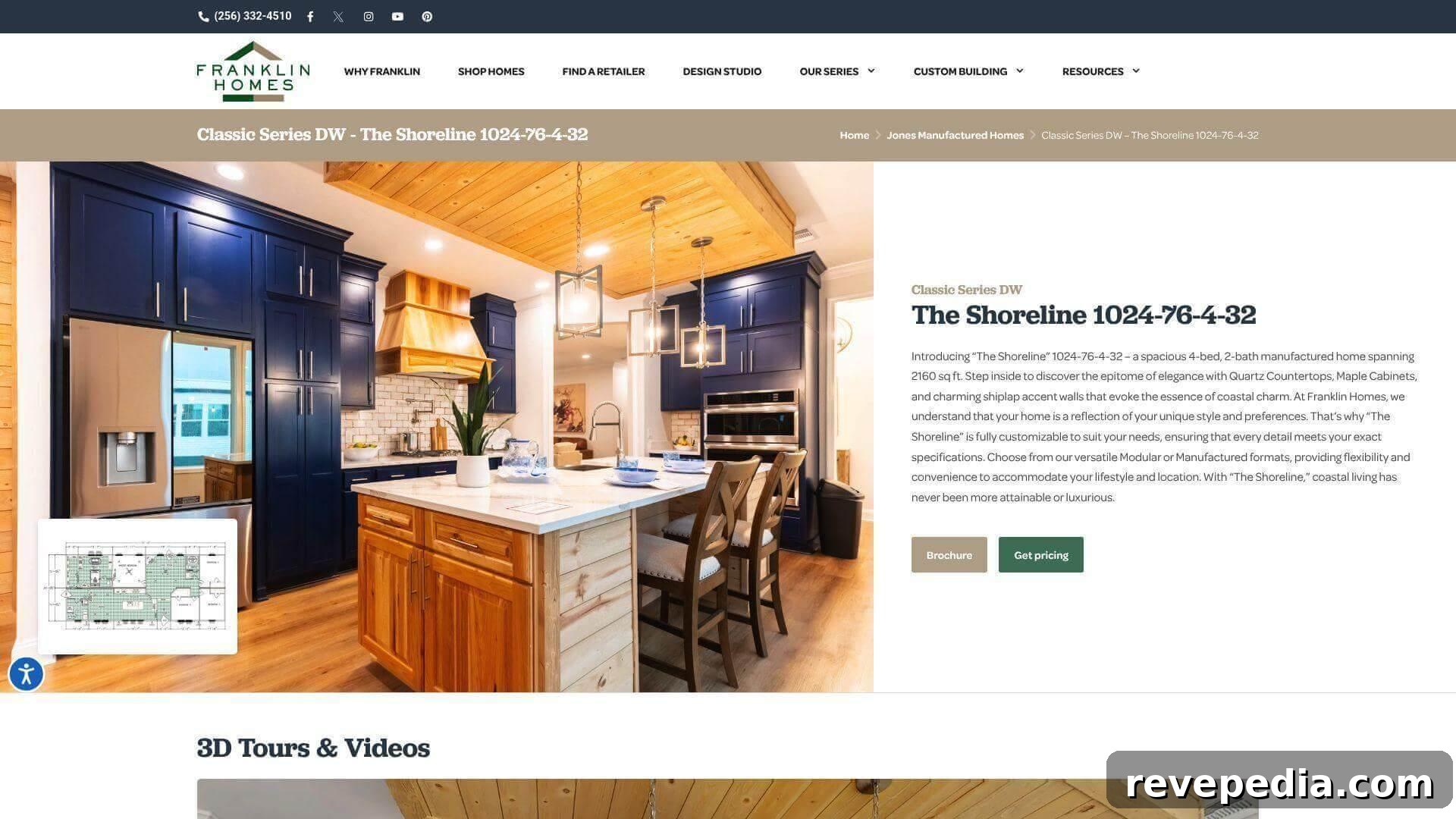
Franklin focuses on customization and larger floor plans—some exceeding 2,800 square feet—allowing buyers to modify layouts, exterior materials, and interior finishes. Final pricing is calculated by local dealers based on chosen options, illustrating that off-site construction can also support highly personalized homes.
| Franklin Homes snapshot | Details |
| Role in market | Manufacturer of manufactured and modular homes |
| Best for | Buyers who want customization and premium floor plans |
| Differentiator | Strong customization and design flexibility |
| Product style | Larger family-oriented layouts and tailored configurations |
| Pricing model | Dealer quote required |
| Reader takeaway | Example of factory-built housing with greater personalization |
Timber Creek Housing
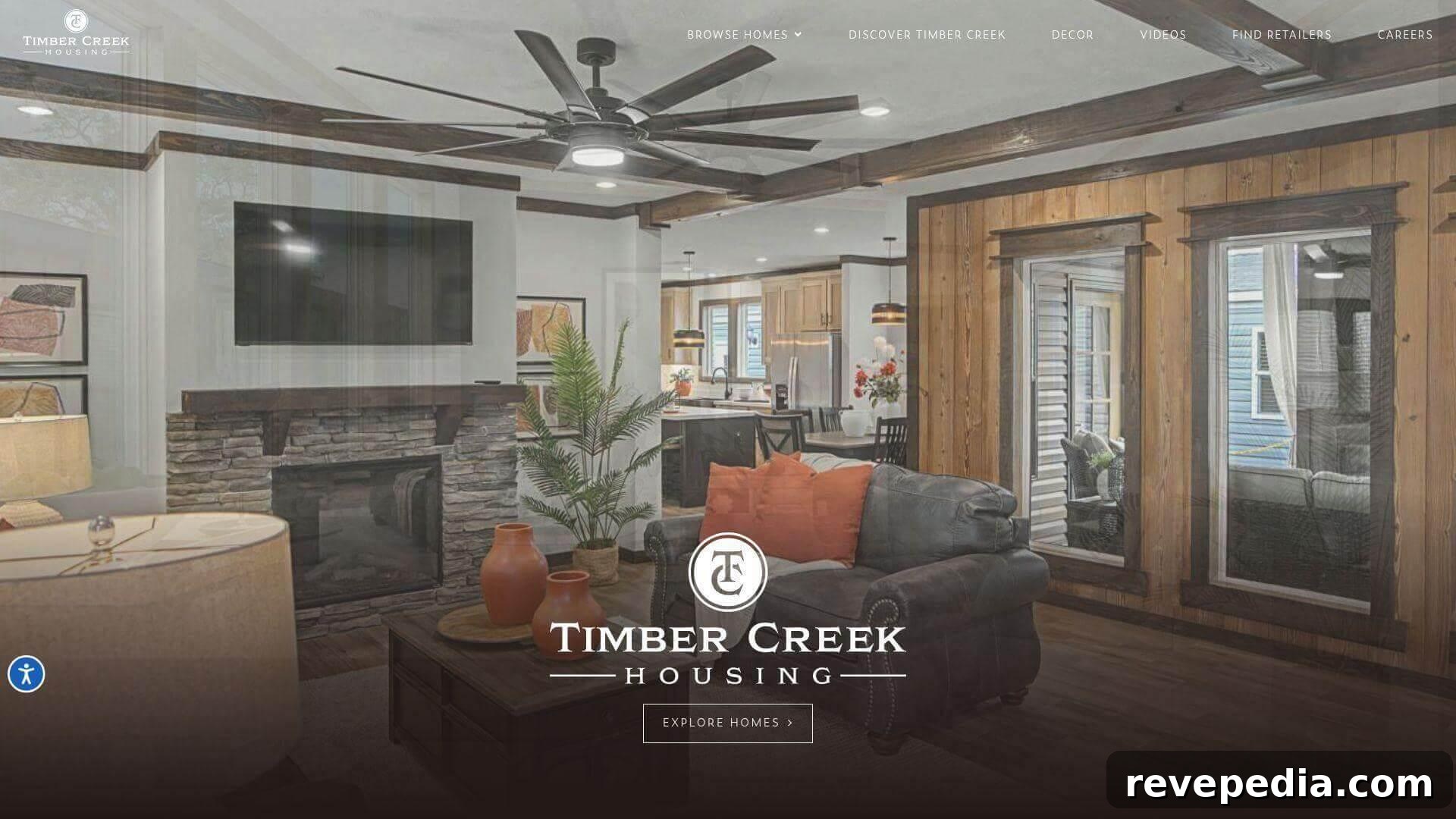
Timber Creek structures its offerings into clear product series, making it easier to compare plans. Designs emphasize open-concept living, large kitchen islands, and private primary suites—features that appeal to families intending to live in the home long-term. Buyers work with authorized retailers to finalize options and pricing.
| Timber Creek snapshot | Details |
| Role in market | Manufacturer selling through authorized retailers |
| Best for | Comparing homes across a series-based lineup |
| Differentiator | Named series and family-sized open-layout plans |
| Product style | Spacious layouts, large kitchens, lifestyle-oriented plans |
| Pricing model | Retailer quote required |
| Helpful public specs | Bedroom/bath counts, square footage, model-family organization |
Important Costs Buyers Often Overlook
The base sticker price rarely equals the final move-in cost. Land clearing, utility trenching, driveways, transport escorts, and foundation work can add tens of thousands of dollars to the budget. Zoning and permitting rules vary greatly by county and can limit where manufactured homes are allowed on private land. Financing often requires specialized loan products such as FHA or VA options depending on land and home status. Always price the full project—site work, permits, transport, and installation—before committing.
The Bottom Line
Factory assembly brings industrial discipline and climate-controlled precision to residential building. Double-wide manufactured homes can arrive largely finished, with plumbing, electrical, and much of the interior work already completed. The remaining variables are local: total project costs, transport logistics, foundation requirements, and installation quality.
If you’re evaluating options, start with actual double-wide listings and estimate the full project cost rather than focusing only on the base home price. That approach gives the clearest picture of budget and timeline and helps prevent surprises during delivery and installation.