
Every spring I get the same question in my inbox. Someone built a neighbor’s deck for $2,800, the neighbor mentioned it at work, and now three more people want pergolas. Do I need insurance for this?
Short answer: Yes — the moment you accept payment, your personal homeowners policy generally stops covering that activity. Small, handyman-scale liability coverage typically costs $30 to $60 per month. If the work becomes structural or you act more like a contractor, insurers usually price general liability as a percentage of revenue with a minimum premium around $1,600 a year. Those figures often surprise people, but they are usually far less than the cost of one serious accident or loss.
I’ve watched friends learn the hard way, so here’s the practical guidance I give, in the order the risks tend to matter.
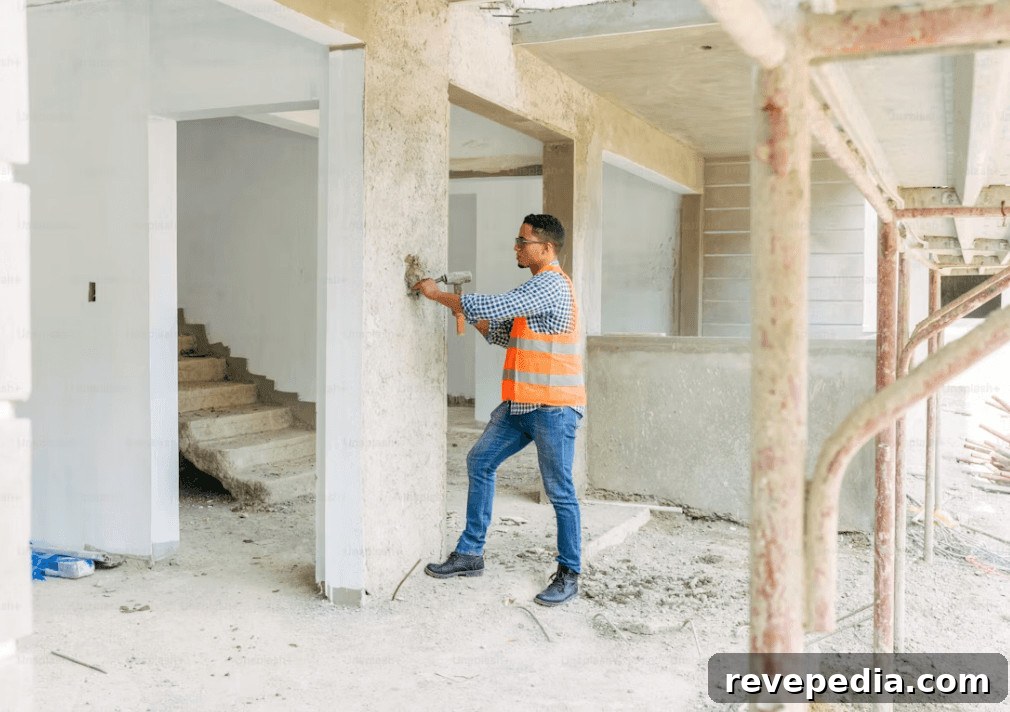
Image: Andy Quezada for Unsplash
Your homeowners policy stops helping the moment you get paid.
Helping a relative hang a gate as a favor is personal activity. Invoicing that relative turns the job into business activity, which most homeowners policies exclude. These policies are intended to protect your personal life and property, not commercial work done for pay.
The property limits for business equipment under a typical homeowners policy are surprisingly low. The Insurance Information Institute notes many standard policies offer only about $2,500 of coverage for business equipment kept at home and roughly $250 for business property away from the residence. If your tools ride in a truck, that $250 off-premises limit is especially important to notice.
Tools are often the first real loss.
Most side businesses begin with a tool purchase, not an insurance quote. That’s why the most common painful story is a stolen trailer or broken-into jobsite. Imagine losing $6,150 worth of tools — miter saw, impact drivers, nail guns, and a good jobsite radio — and finding out your homeowners policy only covers $250 of off-premises business property. That kind of loss quickly becomes a personal expense instead of an insured claim.
Coverage that protects tools and equipment while they’re away from a fixed business location is usually called an inland marine policy. Despite the historic name, it now primarily covers mobile tools and equipment. For a small operation, inland marine coverage typically runs around $800 per year — a reasonable price if you routinely carry a truckload of gear.
Your truck can change insurance categories before you notice.
This risk is frequently overlooked and is one of the most dangerous. A personal auto policy is priced for commuting and everyday errands, not for hauling framing lumber and a dump trailer to paid jobs multiple days a week. Many personal auto policies include business-use exclusions, and an insurer can deny a claim if commercial use is discovered during an accident investigation.
Commercial auto insurance for a pickup or van typically costs about $1,200 per year. Heavier equipment and trucks cost more; a dump truck can run $4,000 and up, which reflects the greater potential for damage. If your vehicle earns money or is used primarily for paid jobs, insure it as a commercial vehicle.
Liability insurance protects everything else.
Tools and vehicles are replaceable; the claim that follows you home is the one where someone is injured or property is severely damaged. That is why liability insurance is the central piece of protection.
A typical commercial general liability policy offers $1 million per occurrence and $2 million aggregate. That appears large until you compare it to litigation costs and potential settlement amounts. For relatively light, low-risk work, premiums for those limits are often $30 to $60 per month. When you move into full general contracting, insurers typically price liability at roughly 0.75% of annual revenue with a floor around $1,600. Roofing and other high-risk trades are more expensive — roofing often sits near 1% of revenue with a higher minimum — because insurers treat roof work as particularly hazardous.
Some people consider lowering limits to $500,000 to save money. The premium reduction is usually less than $100 per year, and the lower limits often disqualify you from most commercial or subcontracting work. In practice, keeping higher limits is usually the wiser choice.
Paying a friend to help can create an employer relationship.
Another common trap: paying a friend cash to help for a day can make you look like an employer rather than a homeowner doing a favor. If that friend is injured on the job, medical bills and claims can come back to you.
Workers’ compensation covers on-the-job injuries for employees and the state thresholds and requirements vary, so check the rules in your state before hiring help. Relatedly, if you hire a subcontractor who lacks insurance, many carriers will count that subcontractor’s payroll toward your payroll during an end-of-year audit, which can lead to unexpected premium adjustments. Always request and retain proof of insurance from anyone you hire — it’s free and takes one email.
You’ll know a side hustle has become a business the day someone asks for a certificate.
A certificate of insurance is a one-page document that proves your coverage is active and current. Clients, property managers, or homeowners associations commonly require it before work begins. Certificates cost nothing to issue and an insurance agent can usually provide one quickly.
That’s why it’s practical to arrange proper coverage before the work starts. The person who can email a certificate on a Friday afternoon wins the job; someone who needs to get quoted and bind new policies will lose the job while waiting.
My Rule of Thumb
If you’re building only for yourself, treat it as a personal project. The instant you accept payment for work on someone else’s property, treat the activity like a business. That means obtaining liability insurance, insuring your tools with an inland marine or equivalent policy, placing your truck on commercial auto coverage when it’s used for paid jobs, and keeping proof of insurance you can send in minutes.
At the low end, this protection often costs roughly a hundred dollars a month — less than a quality cordless tool kit and far less than the financial fallout from a major claim. Proper insurance is the difference between a profitable side business and the story about the year you lost your savings over a fence or deck.