

A knee-high garden wall is one of the most satisfying weekend projects you can tackle. Rent a plate compactor, haul gravel, stack a few courses, and step back to admire a neat, level bed. But once you go higher, the task moves from landscaping into structural engineering, especially on sloping blocks.
That boundary is easy to cross without realizing it, and in Queensland’s Moreton Bay region it is also defined by local building rules. When a wall exceeds the do-it-yourself range, the smart move is to consult retaining wall experts in Moreton Bay who can design to suit the site’s soil and drainage conditions. This guide clarifies where the line sits and explains the tools, soil types and drainage considerations that determine whether a modest wall will last.
What Height Can You Build Yourself in Queensland?
The key height is 1 metre (about 3.3 feet). The City of Moreton Bay requires building approval for retaining walls taller than 1 metre. Even lower walls can require approval in several situations:
- They sit within 1.5 metres (about 5 feet) of a building or another retaining wall.
- Heavy loads—such as a driveway, shed or slab—sit on the soil above the wall.
- The wall forms part of a swimming pool barrier.
- A fence on top makes the combined height exceed 2 metres.
The council also requires the entire structure, including footings and drainage, to lie within your property boundary. That rules out the common shortcut of pouring footings that creep onto a neighbour’s lot.
Which Tools Does a Low Garden Wall Really Need?
A sub-1-metre wall built from timber sleepers or interlocking blocks does not demand exotic equipment. Most tools are likely already in a well-stocked garage, and rentals cover the rest.
- Round-point shovel and trenching spade for digging the footing trench.
- 4-foot level and string line to keep each course straight and level.
- Rented plate compactor to compact the gravel base.
- Dead-blow hammer or rubber mallet for seating blocks without damage.
- Circular saw or masonry saw, depending on the wall material.
- Wheelbarrow, gloves, eye protection and knee pads for comfort and safety.
Cordless tools make the job far less arduous. A full day of cutting sleepers is easier without a cord across a wet yard, and battery-powered yard tools are increasingly effective. Keep a spare charged battery pack, since saw work drains power quickly in dense hardwood. Rent the compactor for a full day rather than a half-day: base preparation almost always takes longer than planned, and a rushed base is the most common cause of early failure.
How Do Moreton Bay Soils Change the Job?
Soil conditions across Moreton Bay vary and affect retaining wall design. Many inland suburbs, from Narangba to Morayfield, sit on reactive clay. Clay swells when wet and shrinks in dry weather, exerting cyclic pressure on a wall throughout the year.
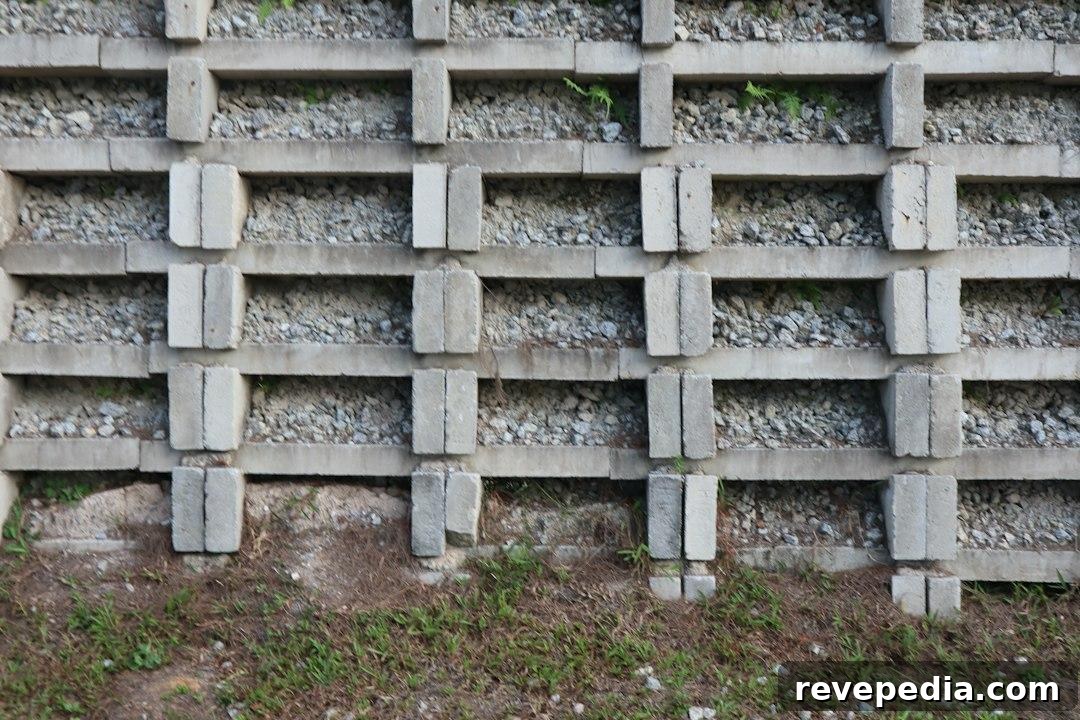
Coastal zones behave differently: sandy soils around Bribie Island and Deception Bay drain quickly but provide less bearing capacity for footings. Low-lying areas near the Caboolture River and Pine Rivers can flood during large storms, which greatly increases the load on a retaining structure.
Water is the main force that causes walls to fail. Saturated soil weighs much more than dry soil and exerts strong lateral pressure. Because of this, every retaining wall—even a short one—needs effective drainage measures:
- A free-draining gravel zone directly behind the wall to prevent water buildup.
- A slotted agricultural pipe at the base to collect and carry water to a safe discharge point.
- Weep holes or open joints so trapped water can escape instead of building pressure.
- Geotextile fabric to stop fine soils from clogging the gravel drainage zone.
What Signs Mean You Should Call an Engineer?
Some projects clearly exceed the DIY scope. If your plan includes any of the following, stop and seek professional design and certification:
- Multiple short tiers close together that effectively act as one tall wall for approval purposes.
- A retaining wall that supports a driveway, carport or other concentrated loads.
- A wall on a slope where existing signs of movement—cracks, leaning fences or persistently wet patches—indicate drainage issues.
These situations typically require an engineer’s design and a certifier’s sign-off. Planning walls at the same time as other landscape elements also avoids costly rework—drainage, paths and planting all depend on where walls are located.
Who Can Legally Build the Wall for You?
In Queensland, retaining wall work is regulated through the Queensland Building and Construction Commission. Walls that are low enough to avoid engineering certification under local rules may fall under a structural landscaping trade licence. Taller, engineered walls require a builder with the appropriate licence class and insurances.
Before signing any quote, ask straightforward questions:
- What licence number do you hold, and does it cover this wall height?
- Who will design the wall, and who handles council approvals?
- What drainage solution will be installed, and where will it discharge?
- Which material do you recommend for my soil type, and why?
Frequently Asked Questions
Is a low wall a fair DIY job in Moreton Bay?
Yes—provided it is under 1 metre, well clear of buildings and other walls, and does not support heavy loads. Even then, the wall requires a properly compacted base and reliable drainage.
What is the best material for a DIY retaining wall?
Interlocking concrete blocks are forgiving for beginners and perform well with drainage and a compacted base. Treated timber sleepers are cost-effective but can decay over time in wet, clay-rich soils. Concrete sleepers are very durable but heavy and difficult to handle without machinery or extra hands.
Why do retaining walls fail?
Poor drainage is the most common cause. Water accumulation behind a wall increases lateral pressure and eventually forces the wall outward. Inadequate footings on reactive clay also contribute to movement and failure.
Does a fence on top change the rules?
Yes. In Moreton Bay, a wall plus fence that together exceed 2 metres in height may need approval or a siting variation. Always check local council requirements before adding a fence to a retaining structure.