
The ceiling has been repainted and the roofer has left. Then another storm arrives and the stain reappears.
Before ordering another flat roof patch or assuming the entire roof must be replaced, take a step back to determine what the previous repair actually addressed. A visible patch may have covered a problem on the surface without resolving the path water takes into the building.

Prepare for the Next Inspection
Keep a record of when the leak appears. Note whether it occurs during a short downpour, after hours of steady rain, or during snowmelt. Observe whether the stain grows, shifts location, or reappears in a different room. These simple observations won’t give a full diagnosis, but they give an inspector useful clues that are far more informative than “it leaks sometimes.”
Photograph the ceiling, the stain, and any surrounding roof details you can capture safely. If repainting has already covered marks, look for older photos or records of earlier work; an image taken before repainting often reveals details now hidden by paint. Avoid climbing onto a wet roof to gather evidence — start with what you can document safely from indoors or from the ground.
Remember that the ceiling stain shows where water exited, not necessarily where it entered. Water can travel along roof decking, under membranes, or through insulation before dripping through the ceiling, so the roof entry point may be some distance from the visible mark.
Investigate Around the Flat Roof Patch
Examining a repaired spot is only one part of a thorough inspection. The contractor should check nearby seams, wall and parapet junctions, flashings, penetration points (such as vents and pipes), and the runoff path toward drains and scuppers. A patch without inspection of adjacent details can miss the real cause.
For example, sealing a small opening beside a roof outlet addresses one symptom but not the reason water was collecting there. A blocked outlet, trapped debris, or an insufficient slope toward the drain are separate issues that call for different repairs. Simply applying more sealant does not diagnose or fix these underlying problems.
Ask whether the patch material matched the existing roof membrane and whether surface preparation was adequate. Patches fail when the new material is incompatible with the membrane, when the substrate was dirty or damp at the time of repair, or when the patch edges were not properly sealed.
Effective flat roof leak repair depends on identifying the entry point, evaluating the surrounding assembly, and choosing a repair method suited to the existing membrane and roof details. Request that the inspector clearly separate confirmed findings from possible causes that require further investigation.
Decide What Needs Repair or Replacement
Instead of opening the conversation with “Do I need a new roof?”, start by asking “Which parts of the roof are still sound and worth keeping?” A well-maintained membrane around an isolated defect often supports a targeted repair rather than a full replacement.
On the other hand, wet insulation, rotted decking, widespread seam separation, or deterioration across multiple areas change the calculation. Those conditions should be demonstrated with evidence — moisture readings, core samples, or documented decking damage — rather than assumed from a single ceiling stain.
Request a written proposal that itemizes what will remain, what must be removed, and how the contractor will address concealed damage discovered during the work. A clear scope of work explains why a recommended repair is limited in scope or, conversely, why a larger job is necessary.
Treat EPDM and TPO as Complete Systems
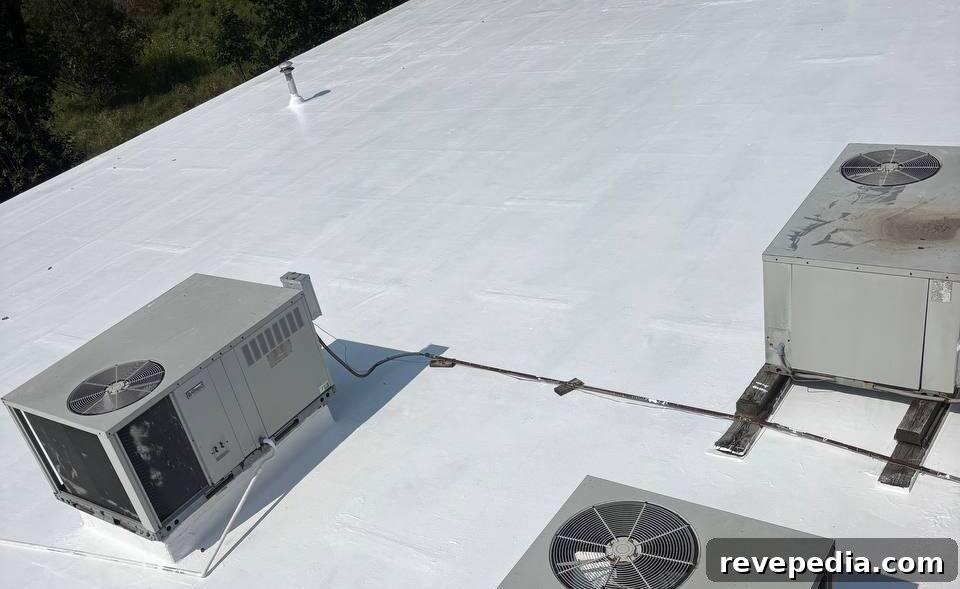
If a new membrane is proposed, recognize that product names like EPDM and TPO describe different materials and installation approaches. EPDM is a synthetic rubber membrane typically adhered or mechanically fastened; TPO is a thermoplastic membrane that relies on heat-welded seams. Each system requires the proper installation, flashing details, and repair techniques to perform as intended.
Ask how the proposed membrane will integrate with parapet walls, edge metal, pipe flashings, roof drains or scuppers, and any rooftop equipment. A familiar product name does not guarantee that transitions and terminations have been correctly designed and will be watertight over time.
Make the Next Visit Count
Before authorizing work, get clear answers to three essential questions:
- Why did the leak return after the last repair?
- Which specific findings support the proposed repairs or replacement?
- What inspections, tests, and documentation will be completed before the job is considered finished?
Keep the inspector’s answers together with the photographs and the written estimate. If you seek a second opinion, these records make it easier to compare alternative solutions and evaluate which contractor has identified the true cause of the leak.
A recurring leak calls for a deeper investigation of roof details and water pathways before committing to another patch. That careful approach helps you avoid paying repeatedly for repairs that address symptoms while leaving the root cause unresolved, and it increases the chance that the next repair will be the last one needed.