
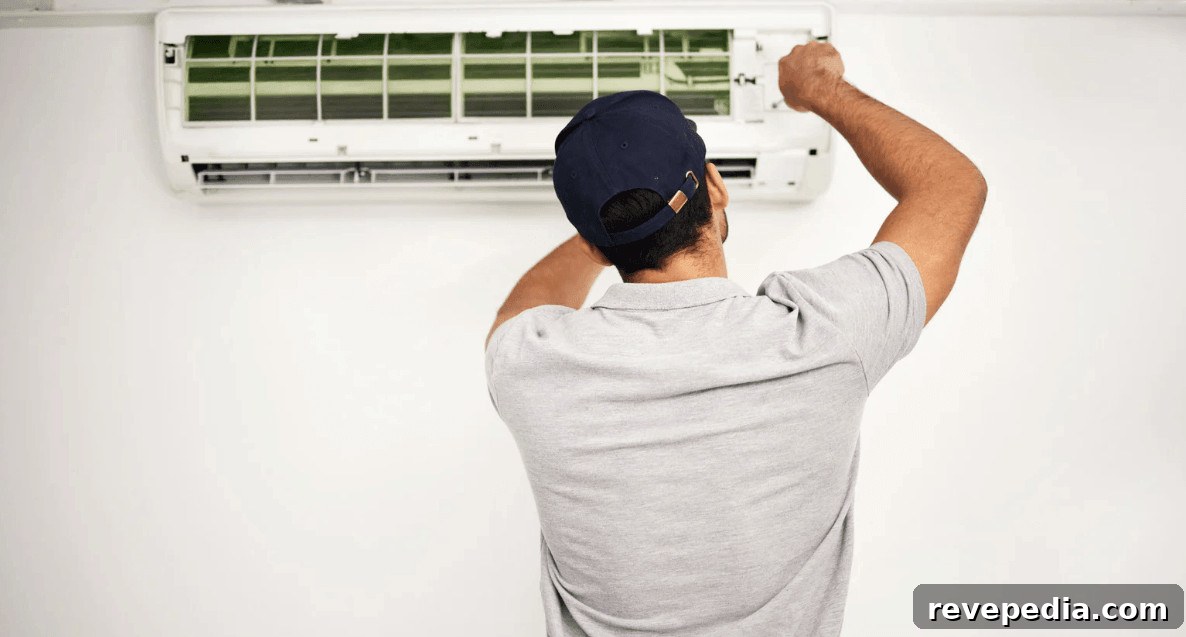
In a city like Austin, air conditioning does much more than provide brief comfort during a few hot weeks. Because systems run for long stretches of the year fighting high temperatures, wear and tear, energy efficiency, and system reliability become central considerations as equipment ages.
That makes the choice between repairing and replacing an air conditioner more complicated than the cost of a single repair estimate. The system’s age, service history, recent failures, operating costs, and the price of keeping it running for another Texas summer should all factor into the decision.

Image by senivpetro on Magnific
The Age Threshold That Changes the Math
Age is a helpful starting point but should not be the only criterion. Systems under ten years old often make economic sense to repair, especially when the fault is limited and the unit has a solid maintenance record. Once equipment reaches the 10–15 year range, however, recurring repairs, declining efficiency, and the rising cost or scarcity of replacement parts make replacement a more likely option.
Efficiency improvements in newer equipment also change the calculation. Modern air conditioners deliver more cooling per kilowatt hour than older models. In a hot climate where the AC runs frequently, the difference in operating costs between an old unit and a new, higher-efficiency model can become significant over a few seasons. Homeowners should weigh likely ongoing energy costs alongside any immediate repair bill.
The 5,000 Rule as a Starting Point
A common rule of thumb multiplies system age by the repair cost; if the product exceeds 5,000, replacement is often worth serious consideration. This heuristic is only a starting point. Warranty status, refrigerant type, availability and price of parts, the unit’s repair history, and overall condition can all shift the balance toward repair or replacement.
Local climate and total operating hours matter too. A twelve-year-old AC in Austin has likely logged many more service hours than a similarly aged unit in a cooler region, so age alone can understate cumulative wear in hot climates.
What the Repair Actually Tells You
Not every repair points to the same long-term prognosis. A single, minor fault on a relatively new unit is often routine maintenance. By contrast, a major component failure in a 15-year-old system suggests it is time to evaluate the rest of the system closely.
When scheduling service with a local HVAC contractor or Eco Air Conditioning in Austin, treat the immediate repair estimate as one piece of information. Review past service records to see whether failures are isolated or recurring. Ask the technician about the condition of other major components, whether parts are becoming hard or costly to source, and whether additional failures are likely in the near term.
Understanding whether a repair will sustain an otherwise healthy system or merely delay the next breakdown is more valuable than simply knowing the repair cost.
How Austin’s Climate Affects Replacement Timing
Central Texas summers often make timing critical. If an air conditioner fails in a heat wave, homeowners may have limited options and face higher prices or longer lead times for service and replacement. For borderline systems, planning a replacement during shoulder seasons—spring or fall—gives more time to compare models, confirm correct sizing, and schedule installation before extreme temperatures arrive.
Regular inspections are especially useful for aging equipment. While no technician can guarantee an older unit will survive another summer, early detection of worn components or reduced performance gives homeowners flexibility to plan a thoughtful replacement instead of reacting to a mid-summer emergency.
Understanding What Replacement Actually Delivers
Replacing the outdoor unit is only part of the solution. The condition of ductwork, attic insulation, and air sealing directly affects how well new HVAC equipment will perform. Leaky ducts or poor insulation can waste conditioned air and reduce the impact of a new, efficient system.
Proper equipment sizing is also essential. Oversized systems short-cycle: they cool quickly but run in short bursts, which can reduce humidity control and comfort. Accurate load calculations consider more than square footage; they include insulation levels, window types and orientation, shading, and the home’s overall thermal envelope.
The ENERGY STAR Framework for Replacement Decisions
ENERGY STAR provides clear efficiency benchmarks that help homeowners compare heating and cooling equipment. Choosing ENERGY STAR–rated units can lower operating costs over the life of the system, an especially important consideration in hot climates where the air conditioner runs heavily for months each year.
Efficiency alone, however, should not force a premature replacement. Homeowners must weigh the cost to repair and run an older unit versus the upfront cost and lifetime savings of new equipment. Calculating likely energy savings over several years helps create a fuller financial picture.
Look at the Whole Picture Before Deciding
There is no single age or repair amount that definitively mandates replacement. A ten-year-old unit with a minor issue and a good service history is a different decision than a fifteen-year-old system with multiple expensive repairs. In a hot climate like Austin’s, evaluate service history, compare repair costs to the overall condition and likely future expenses, and consider timing to avoid emergency decisions during extreme heat.
The objective is not to replace equipment simply because it is old, nor to keep repairing it just because it still runs. The goal is to understand current costs, anticipate likely future expenses, and choose the option that makes the most sense for the home’s comfort, energy use, and finances over the next several years.