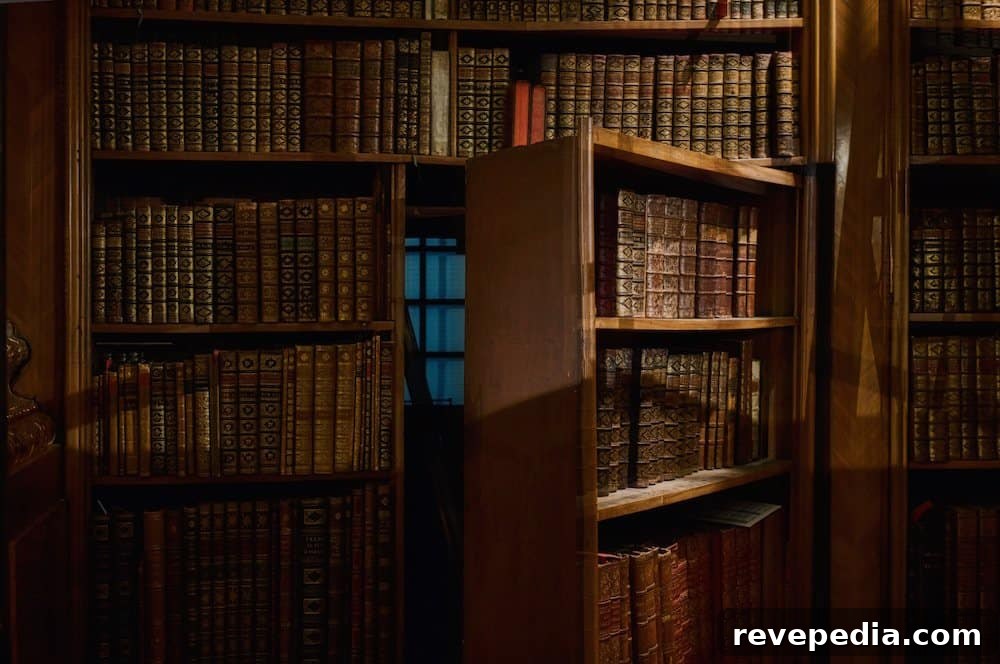
A secret door adds personality and mystery to a home, sparking curiosity and a sense of adventure. Whether it conceals a hidden passage, an underground room, a discreet elevator, or a turreted nook, a well-designed secret door transforms ordinary spaces into places of wonder.
Below are practical ideas and considerations to help you plan and build your own secret door.
Choosing a Design
Design options for secret doors are practically limitless. One of the most popular and timeless choices is a bookcase door. It doubles as storage and a disguise, making it ideal for creating a private library, a reading corner, or a study that feels tucked away from the rest of the house.
If you prefer something more understated, a flush cabinet door or a layered pantry door can blend into kitchen or dining room cabinetry so the entrance is nearly invisible. These designs work well when you want a seamless look without drawing attention to the doorway.
Custom designs are also an excellent option when you have a clear vision for style or function. Whichever route you choose, aim for a solution that complements your home’s aesthetic and meets practical needs—whether that’s extra storage, privacy, or a dramatic hidden space.
Deciding on a Location
Selecting the right location is crucial. Think about access, privacy, and the function of the hidden space. A secret door placed in a study or home office provides a private retreat and can help reduce distractions when you need to focus.
A master bedroom is another excellent candidate: a concealed entrance can create a secluded sanctuary for rest and relaxation. Secret doors also work well for home theaters, wine cellars, or storage rooms where discrete access adds convenience and intrigue.
Make sure there’s enough clearance for the door’s movement and any hardware or wiring you plan to use. Proper planning will prevent awkward gaps, interference with furniture, or problems with electrical components.
Creating Your Secret Door
Building a secret door is more achievable than many think. DIY kits are available if you prefer a guided approach, and with basic carpentry skills you can also craft a custom door. Measure carefully to ensure a precise fit and choose materials that match existing finishes.
Key components include sturdy hinges or pivot hardware, secure latches or locks, and handles that are either discreet or disguised. For bookcase doors, construct the shelving around the frame so it reads as functional furniture. For flush cabinet or pantry doors, create a seamless frame and matched trim so the opening blends with surrounding walls or cabinetry.
Consider soft-close hardware or concealed hinges for a high-end feel. If you plan to hide electrical elements like lighting, intercoms, or automatic openers, plan wiring runs and access panels in advance to simplify installation and future maintenance.
Where to Install a Secret Door
In our home, we imagine a secret door between the dining room and master bedroom. A flush cabinet or bookcase would disguise the entry and keep guests guessing, making it practical for entertaining without revealing the room’s purpose. That same approach can be adapted to many layouts and lifestyles.
When choosing the best room for a secret door, match the location to how you live. Home offices and libraries provide quiet workspaces. Bedrooms offer private retreats. Kitchens and dining areas can hide pantries or service rooms. Pocket doors are a related option—while not always hidden, they save space by retracting into a wall cavity and can create discreet transitions when designed thoughtfully.
Ultimately, the best placement balances aesthetics, convenience, and the level of secrecy you want. With thoughtful design and careful installation, a secret door adds charm and functionality without compromising the overall flow of your home.
The idea of a hidden doorway is undeniably exciting and adds a playful, surprising element to everyday life. Where would you place a secret door in your home? Share your ideas and preferences—creative placement can turn a simple doorway into a memorable feature.