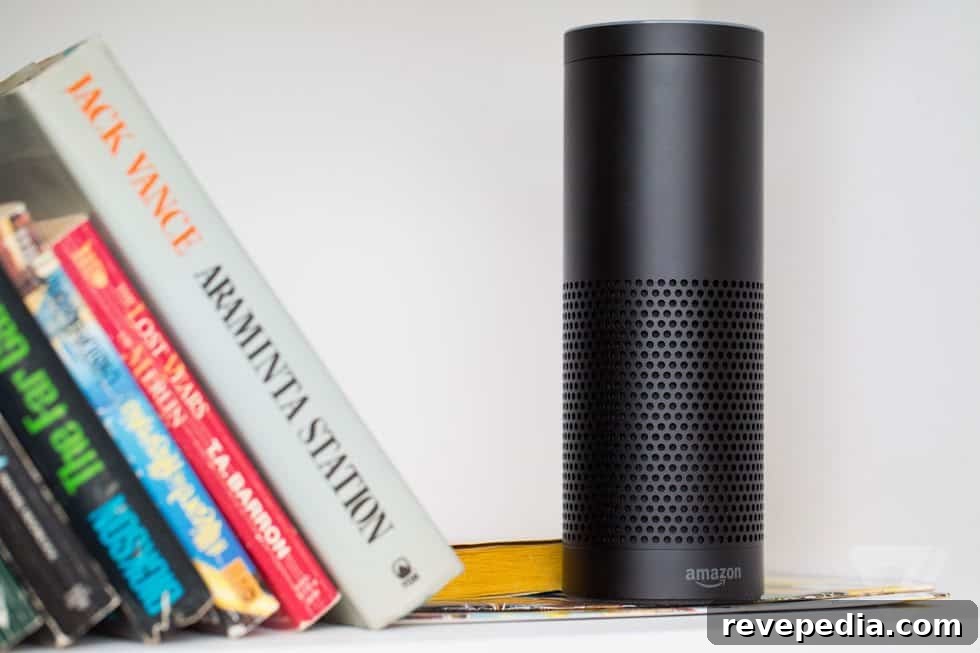
Home automation is rapidly gaining momentum, and another major tech company has stepped into the field: the Amazon Echo.
The Echo represents a clear glimpse of the smart home future from a large industry player. Where once whole-house voice control cost thousands, the Echo offers similar capabilities for around $180. The device responds to a wake word—“Alexa”—and serves as the voice interface to a connected home, able to turn off lights, adjust thermostats, and assist with everyday tasks.
In many homes, virtual assistants are already part of daily life. For example, some users have found Siri inconsistent due to network limitations or imperfect responses. If Alexa delivers more reliable voice recognition and better integrations, it could become a preferred option for hands-free home control.
Key features of the Amazon Echo include:
- Access to information, music, audiobooks, news, weather, traffic, sports, and more in real time
- Hands-free, voice-controlled operation for convenient, immediate interaction
- Far-field voice recognition that picks up commands from across the room
- Cloud connectivity so the device can receive updates and improve over time
- 360° omni-directional audio to deliver immersive sound throughout a room
- Compatibility with select smart home products such as Wink, Belkin WeMo, and Philips Hue to control lights and switches by voice
- Support for streaming services including Amazon Music, Prime Music, Pandora, iHeartRadio, TuneIn, and others
Early adopters have already started using the Echo, and initial reviews tend to be more positive than negative. While Amazon’s smartphone attempt struggled, success with the Echo could give the company a strong position in a growing smart home market that analysts expect to reach tens of billions of dollars.
If you own an Echo, feel free to share your experience in the comments—what works well, what could be improved, and which smart home integrations you rely on most.
Buy the Echo
Photo: The Verge