
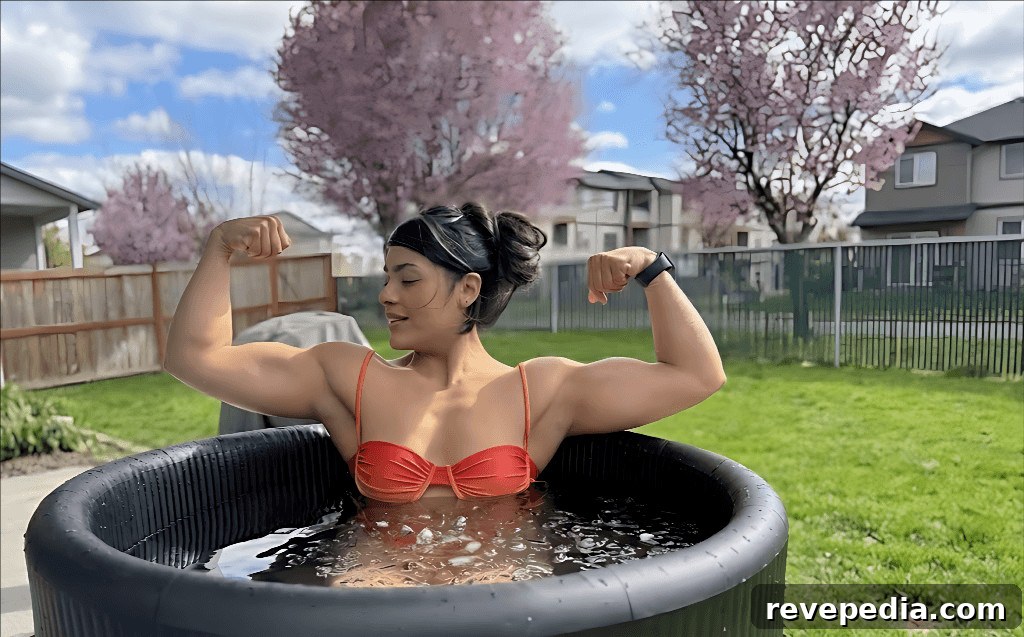
Buying a cold plunge tub is the easy part. Choosing the right location, maintaining cold water, and managing drainage and cleaning require more planning to ensure safety, convenience, and longevity.
A backyard, garage, or covered patio setup doesn’t need to be elaborate. You don’t need a custom-built recovery room, but there are practical details worth addressing before you fill the tub for the first time.
That Empty Corner Might Not Be the Best Spot
Cold plunge tubs can appear compact in product photos, but once filled they become very heavy. Water weighs roughly 8.34 pounds per gallon, so even a modest tub holds hundreds of pounds. Add the tub itself and a person, and the total load can be substantial.
Ground-level concrete is often the simplest option if the slab is in good condition and rated for the load. Raised decks, balconies, or older floors require a careful assessment of structural capacity by a qualified professional if you have any doubts.
Also plan how you’ll get in and out. A tub squeezed between a wall and storage shelves may fit on paper but leave you awkwardly positioned when entering or exiting. Provide enough clearance for a towel, a step or two, and unobstructed access to the drain for emptying and cleaning.
Consider drainage and runoff. Gravity-fed drains should not spill water toward the house, through a garage, or into landscaping areas that could suffer from excess moisture. Plan a safe route for used water that follows local codes and avoids creating slip or freeze hazards.
Ice Is Simple Until You’re Buying It Every Week
For occasional cold plunges, bags of ice work well: fill the tub, add ice until you reach the desired temperature, and you’re ready. But if the tub becomes part of a weekly or daily routine, relying on ice becomes time-consuming and costly.
A temperature-controlled chiller designed for cold plunge tubs is an investment many regular users choose. A chiller circulates and cools the water to a set temperature, maintaining consistency between sessions and eliminating frequent trips for ice.
Chillers add upfront cost and require an appropriate power supply, but for consistent users they provide convenience and better temperature control. If you only plunge occasionally, ice may remain the most practical option.
A Bigger Tub Isn’t Always a Better Tub
Bigger tubs sound appealing, especially for taller users who want to stretch out. However, larger tubs use more water, occupy more floor space, and can be harder to drain, clean, and move if needed.
Barrel-style or upright tubs are space-efficient choices for small garages or tight areas because you sit with knees bent and use less floor length. If you prefer to extend your legs, a longer tub may be more comfortable—just measure the entire area required, including clearance for ingress and egress.
Portable and inflatable models suit renters or people who want a temporary setup. They can be packed away, but you’ll still need a dry storage place and a plan for cleaning and drying between uses.
If you plan to use a chiller, verify hose sizes, fittings, and port locations before purchasing. Not every tub and chiller pair are compatible out of the box; mismatched fittings can add expense and complexity.
Think About Maintenance Before Your First Plunge
Cold water alone does not keep water sanitary. Sweat, skin oils, dirt, and outdoor debris can accumulate, so routine maintenance is essential to protect both your health and equipment.
A fitted cover helps reduce debris and heat gain, but it doesn’t replace proper water treatment. Showering before each session reduces contaminants. Regularly test the water chemistry, clean surfaces according to manufacturer instructions, and replace or backwash filters as recommended.
If your setup includes filtration, remember that filters trap particulate matter but do not sanitize. Use appropriate sanitizers or cleaning protocols to control microbes and algae, especially in outdoor tubs.
Outdoor tubs are affected by weather: strong sunlight warms water between sessions, while freezing temperatures can damage plumbing, fittings, and chillers that aren’t winterized. Protect equipment from the elements and follow winterization guidance where necessary.
Electrical safety is critical. Chillers require properly grounded outlets and, in many jurisdictions, a dedicated circuit. Outlets near water must be protected by ground-fault circuit interrupters (GFCIs). Avoid running extension cords across wet surfaces or using makeshift wiring arrangements; follow all electrical and installation instructions for safe operation.

Keep the First Few Sessions Simple
You don’t need near-freezing water to start. Research on cold-water immersion commonly uses temperatures between 50°F and 59°F (10°C to 15°C). Even at the warmer end of that range, stepping into cold water can be a shock if you’re not acclimated.
Begin with short sessions, enter the tub slowly, keep your head above water, and monitor your breathing. If you feel lightheaded, excessively short of breath, or unable to control your breathing, exit immediately. It’s safer to have someone nearby during early sessions rather than plunging alone.
People with cardiovascular issues, circulation problems, or other medical concerns should consult a healthcare professional before trying cold-water immersion. Progress gradually rather than turning your first week into a contest of endurance.
Make It Easy Enough to Use Regularly
A home cold plunge is valuable only if it fits your routine. Decide how often you expect to use the tub and how much maintenance you’re willing to perform. Simpler setups may be perfectly adequate for occasional users, while daily users may prefer equipment that minimizes work between sessions.
Consider the trade-offs: portability versus comfort, upfront equipment cost versus ongoing convenience, and the time you’ll spend on water treatment and cleaning. Well-chosen placement, proper electrical and plumbing arrangements, and straightforward maintenance will make regular use far more likely.
You don’t need an elaborate backyard renovation to start. With a suitable location, manageable equipment choices, and a bit of planning around drainage, temperature control, and sanitation, a practical and safe home cold plunge setup is within reach.