
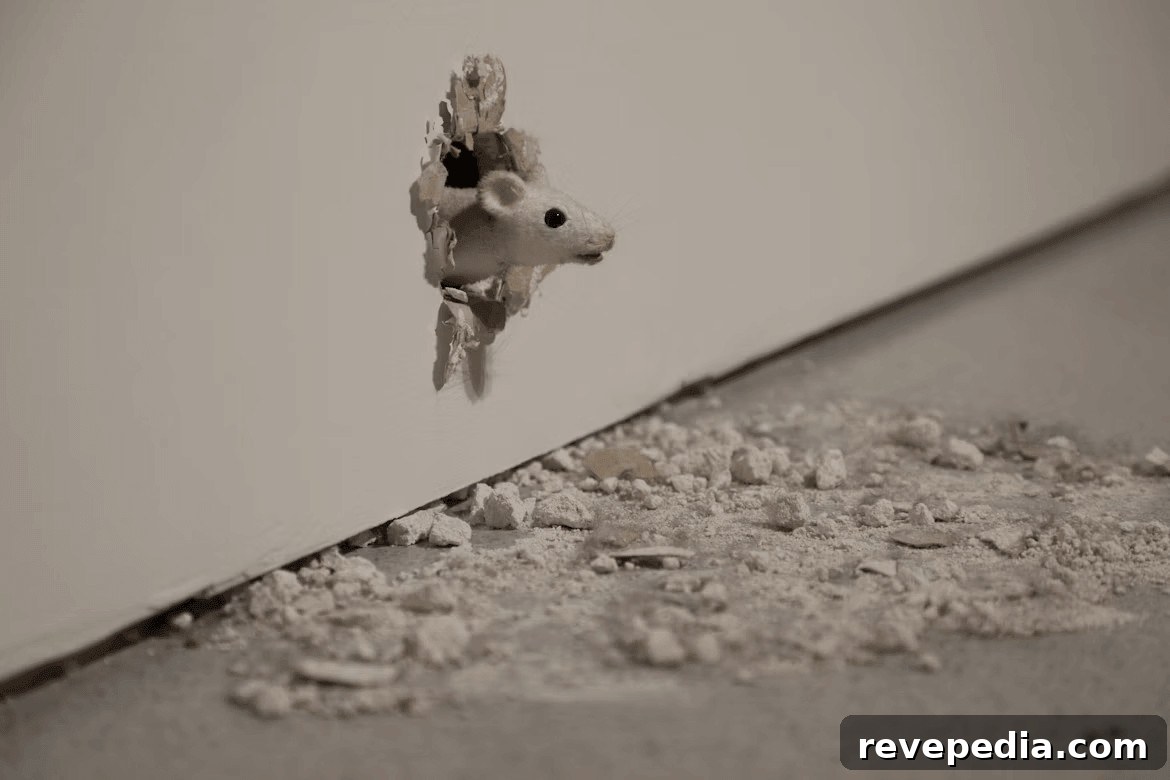
If you spend weekends on DIY projects—from building a pergola to reframing a garage wall—you already know that small details make or break a renovation. Mice in the walls fall into that same category. They exploit gaps, construction shortcuts, and sealing mistakes that often show up in unfinished or rushed remodels. For homeowners who take pride in doing projects correctly, understanding how mice enter walls and how common homeowner choices make infestations worse is as important as choosing the right lumber or caulk.
The frustrating reality is that most people don’t fail because they ignore the problem; they fail because they treat it like a quick fix instead of a structural and behavioral issue. A can of spray foam or a few glue traps feels like a reasonable weekend solution, but mice don’t respond to good intentions—only to gaps, food access, and nesting opportunities. If those root conditions aren’t addressed in the correct order, the same mice or their offspring will return within weeks.
Before reviewing specific mistakes, it helps to diagnose how mice are actually entering your home. Many homeowners assume the problem is a single hole near the foundation, but in practice multiple access points usually work together. Utility penetrations, roofline gaps, door sweeps, and foundation cracks can all give mice entry. Skipping a thorough inspection is often the first misstep because it leads directly to reactive measures instead of a deliberate plan.
Mistake 1: Placing Poison or Rodenticide Inside Wall Cavities
One of the most damaging mistakes is placing poison bait inside wall cavities. The logic seems simple: set bait, wait for mice to die. In practice, poisoned mice frequently die inside the wall, producing a lingering odor that can last for weeks and sometimes requires cutting into drywall to remove the carcass. What began as a pest problem quickly becomes a renovation problem.
A better approach is to limit rodenticide use to controlled, accessible areas such as attics, crawlspaces, or exterior bait stations, and to treat it only as a supplement to exclusion work rather than the primary solution. Using traps in accessible interior locations allows for confirmed removal and immediate disposal, avoiding the hidden-carcass issue. Pairing trapping with professional monitoring also reduces the risk of secondary poisoning to pets, since wall cavities are impossible to supervise once bait is placed inside them.
Mistake 2: Sealing Entry Points Before Removing Mice
Some homeowners overcorrect by sealing every visible opening after learning that gaps need attention. If mice are already inside the wall system, sealing the exterior can trap them, creating the same odor and drywall-cutting outcome that poisoned carcasses cause. The order of operations matters more than the specific materials.
Confirming a space is unoccupied—typically through several days of undisturbed traps or monitored bait—should come before permanent sealing. Once you’re confident the wall is clear, exclusion work can proceed safely from the outside in, addressing the largest gaps first and finishing with the small, easy-to-overlook spaces like ¼ inch gaps around utility pipes. Reversing that sequence is one of the most avoidable and costly errors homeowners make.
Mistake 3: Relying on Repellents or Ineffective Traps Without Fixing Root Causes
Ultrasonic devices and essential oil sprays are popular because they feel low-effort and non-toxic, but evidence for long-term effectiveness is weak. Mice quickly habituate to sound and scent deterrents, and any short-term avoidance usually doesn’t translate into a lasting solution. Homeowners who rely solely on these products often find themselves back at square one within a month, having spent money without addressing why mice were attracted in the first place.
A more effective trapping strategy uses multiple traps placed along walls, near suspected nesting areas, and close to food sources rather than a couple of traps in an open room. Mechanical snap traps and multi-catch traps generally outperform glue boards in both humane outcomes and capture rates. Crucially, trapping must be paired with sanitation changes—sealing pet food containers, cleaning up crumbs, and removing other food sources—because accessible food is often the real reason mice choose a particular wall or area.
Mistake 4: Using Sealant Materials Mice Can Chew Through
One underestimated mistake involves choosing the wrong sealing materials. Standard caulk, expanding foam, and many plastic meshes are no match for a mouse’s continuously growing front teeth. Homeowners often feel secure after filling a gap with foam only to find fresh gnaw marks days later. This type of material-selection error shows up across many renovation contexts and deserves careful attention before exclusion work begins.
Materials that hold up include stainless steel wool combined with caulk, copper mesh, and galvanized hardware cloth, all of which resist chewing far better than foam or plastic. For larger openings, sheet metal flashing provides a permanent barrier mice cannot compromise. Regular inspection for droppings and gnaw marks is one of the most reliable early-warning tools available to homeowners and makes exclusion work far more effective when done early.
Why Attention to Detail Makes the Difference
The data behind mouse infestations explains why these mistakes carry high stakes. A small population can multiply rapidly, structural gaps most homeowners would overlook are sufficient for entry, and the health risks tied to rodent exposure are not trivial. Taken together, these facts show why timing and technique matter far more than effort alone. A homeowner who seals gaps in the wrong order, uses poor materials, or depends on repellents instead of a real trapping strategy isn’t just wasting a weekend—they’re giving a fast-breeding population more time to establish itself inside the structure.
| Statistic | Figure |
| Mice reproduction rate | Six mice can breed into 60 in just 90 days |
| Minimum gap size mice can enter | Openings as small as ¼ inch |
| Vertical jumping ability | Up to 12 inches from the floor onto a flat surface |
| Hantavirus Pulmonary Syndrome fatality rate | Approximately 38% |
| U.S. homes facing rodent issues annually | 40% |
Treating mouse exclusion with the same discipline applied to any serious home improvement project—using the correct sequence, the right materials, and thorough inspection—keeps walls mouse-free for the long term and prevents a minor nuisance from turning into a major renovation headache.