A damaged sewer line is one of the more stressful repairs a homeowner can face. For years, fixing one typically meant digging a trench across a lawn, driveway, patio, or garden to reach the broken pipe.
Today, trenchless methods often allow sewer repairs or replacements through small access points, minimizing digging and preserving surrounding property. That can mean less disruption, lower restoration costs, and a faster return to normal for many homeowners.
However, “trenchless” refers to a range of techniques, and it is not automatically the best option for every situation. The right approach depends on the condition and material of the existing pipe, the type and extent of damage, accessibility, soil conditions, and findings from a diagnostic camera inspection.
Homeowners in Southern California can consult reputable local plumbing and diagnostic services for assessments and repair options. The overview below explains trenchless methods, how professionals diagnose sewer problems, when trenchless may not be appropriate, and what to consider when hiring a contractor.
What Is Trenchless Sewer Repair and How It Works
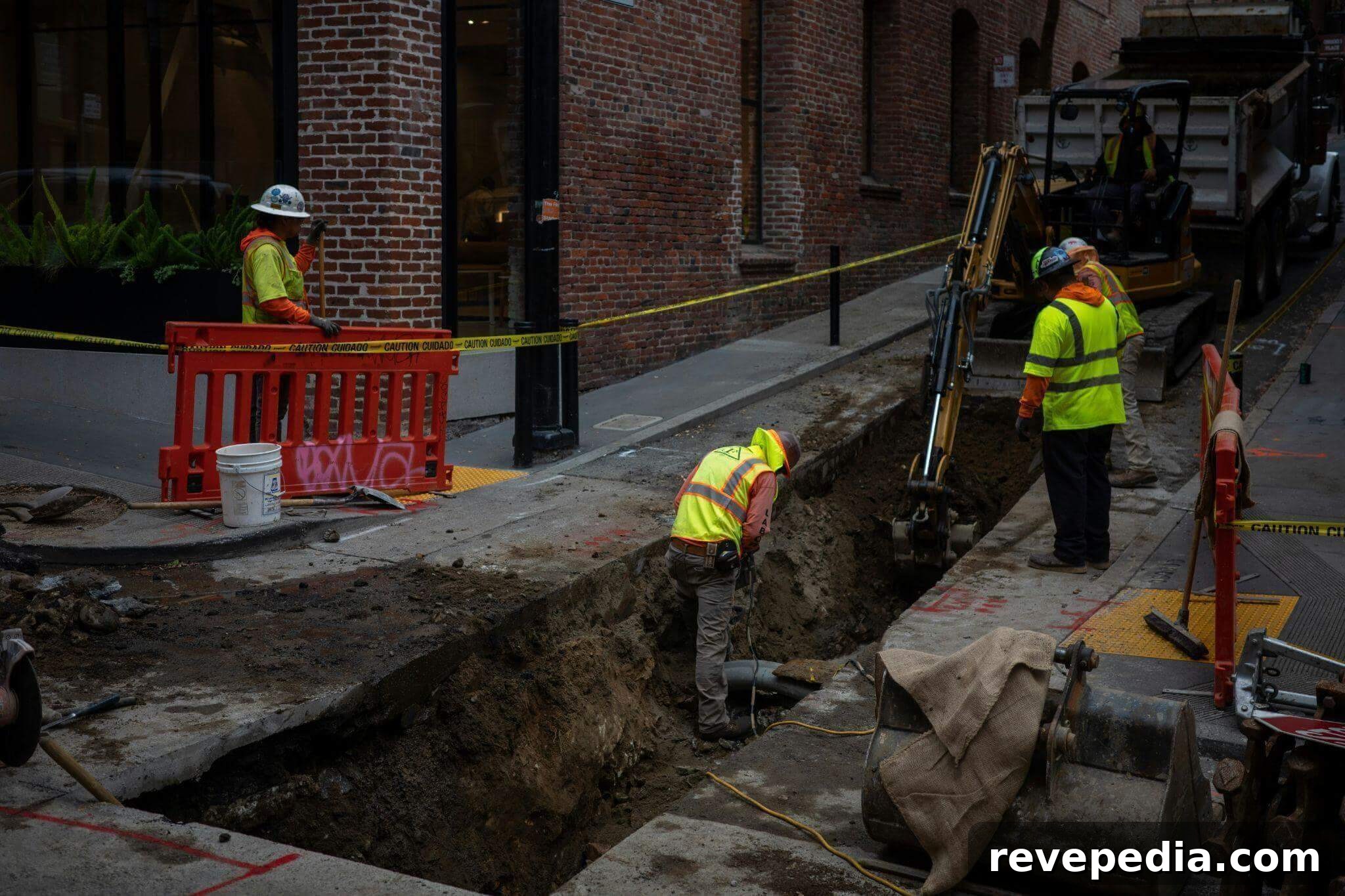
Trenchless sewer repair refers to techniques that fix or replace underground sewer pipes without excavating a continuous trench along the damaged run. Instead, technicians access the line through one or two small entry points and use specialized equipment to perform the work underground.
The main advantage is reduced digging and property disturbance. Traditional excavation can require removing sections of lawn, concrete, and landscaping. Trenchless methods frequently avoid much of that disruption, but suitability varies by technique and pipe condition.
Cured-in-Place Pipe Lining (CIPP)
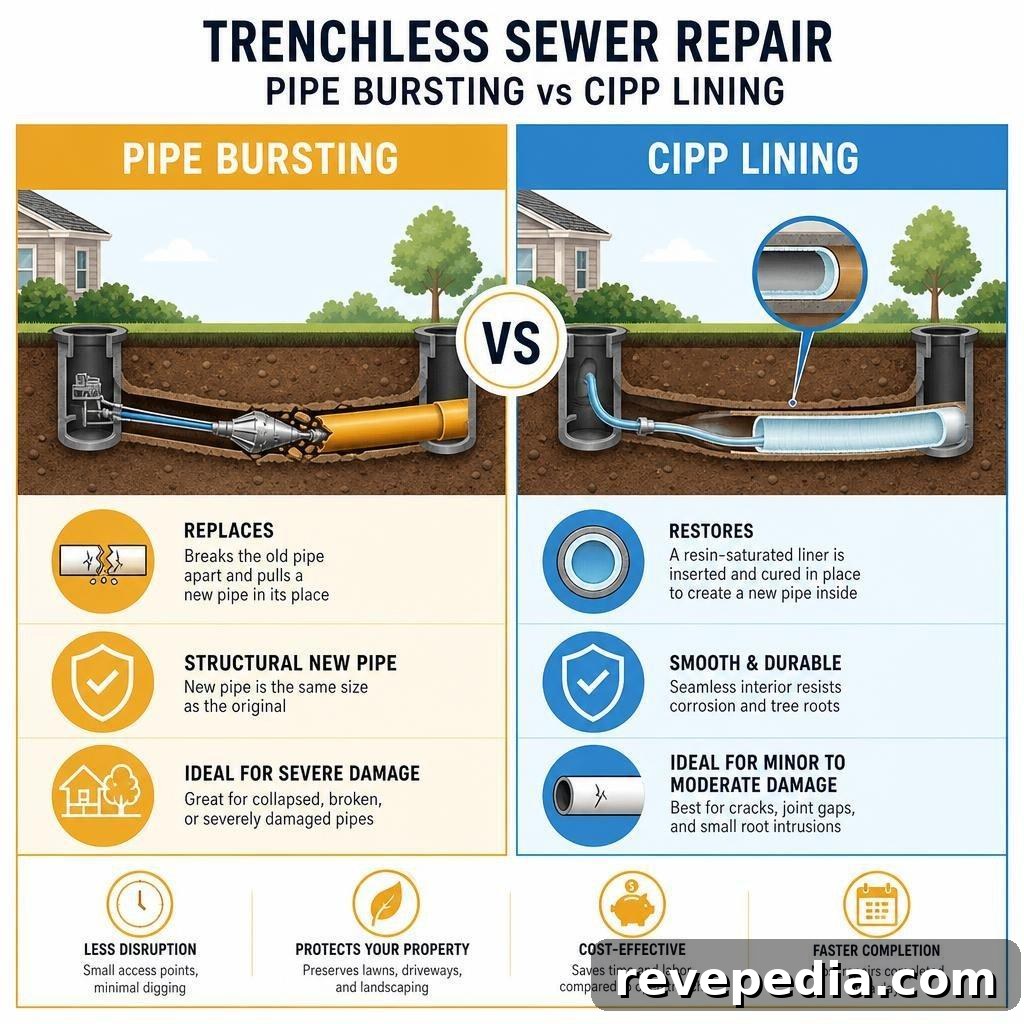
CIPP, commonly called pipe lining, installs a new pipe surface inside an existing pipe. A flexible liner saturated with resin is inserted, positioned over the damaged area, expanded against the host pipe, and cured using heat, steam, hot water, or UV light. When cured, the liner forms a smooth, durable interior.
CIPP works well for cracked pipes, minor joint separation, small root intrusions, corrosion, and general deterioration where the existing pipe still provides structural support. It does reduce the internal diameter slightly, so homeowners should confirm that flow capacity will remain adequate.
Pipe Bursting
Pipe bursting replaces a damaged pipe by breaking the old line outward and pulling a new pipe into place behind a bursting head. Access is needed at both ends of the affected section, but a full trench along the entire run is usually unnecessary.
This method is suited to pipes that are too compromised for lining but still accessible for bursting equipment. High-density polyethylene (HDPE) is commonly used for the replacement pipe because it resists corrosion and root intrusion.
Slip Lining and Spin Casting
Slip lining inserts a smaller pipe inside the existing one, reducing internal diameter, and is best for relatively straight sections that can still carry the required flow. Spin casting applies a sprayed or spun lining material to the interior surface and can reinforce deteriorated infrastructure. These methods are less common for typical residential laterals but can be appropriate in specific situations.
Signs Your Sewer Line Needs Professional Inspection
Sewer problems often begin with subtle warning signs rather than dramatic failures. Addressing these early increases repair options and reduces the risk of secondary damage.
Common red flags include:
- Whole-house backups: Multiple fixtures backing up simultaneously, especially at the lowest level, may indicate a main sewer issue.
- Frequent slow drains: Repeated slowdown after clearing can suggest deeper obstruction, root intrusion, or structural issues.
- Gurgling sounds: Gurgling toilets or bubbling sinks often signal trapped air and impaired flow.
- Sewage odors: Persistent indoor or outdoor sewer smells warrant investigation.
- Wet or sunken yard areas: Soggy soil, unusually lush patches of grass, or depressions can point to underground leaks.
These signs do not necessarily mean collapse, but they justify a professional inspection when persistent or recurring.
Diagnostic Camera Inspections
A video camera inspection is the standard diagnostic tool. A small camera is sent through the sewer lateral so a technician can evaluate cracks, root intrusion, corrosion, joint separation, sagging sections, buildup, and collapsed areas. The footage helps determine whether trenchless repair is feasible and which method is most appropriate.
When Trenchless Is Not Feasible
Trenchless methods are not always suitable. Situations that may require open excavation include fully collapsed sections that cannot support a liner or allow equipment passage; severe misalignment from soil movement; extremely deteriorated materials that cannot host a liner; major soil instability that needs correcting; and complex layouts with bends or connections that impede trenchless equipment.
Trenchless vs. Traditional Excavation: Practical Differences
Key practical differences include property disruption, timeline, landscape impact, equipment and labor needs, restoration cost, and feasibility. Trenchless repair usually minimizes surface damage and speeds completion, while traditional excavation can access nearly any damaged section but often requires time-consuming restoration of landscaping, hardscape, irrigation, and concrete.
| Factor | Trenchless Repair | Traditional Excavation |
| Property Disruption | Limited to small access points | Full trench may be needed |
| Typical Timeline | Often faster for many residential projects | Longer due to digging and restoration |
| Restoration Cost | Usually lower | Can be substantial for landscaping and hardscapes |
Cost, Value, and When to Replace
Trenchless approaches are not always cheaper. Specialized materials and equipment can raise the plumbing portion of the bill. The most relevant comparison is total project cost, including restoration expenses associated with traditional excavation. Trenchless often reduces post-repair restoration costs and labor for backfilling, but homeowners should compare full estimates.
Deciding between repair and replacement depends on system condition, age, material, frequency of past repairs, extent of root intrusion, and remaining service life. A localized defect in an otherwise sound pipe may be a repair candidate; multiple deteriorated sections or persistent issues often point to replacement.
Property and Environmental Benefits
Less excavation preserves mature trees, gardens, irrigation systems, driveways, patios, and other established features. Reduced soil disturbance and lower use of heavy machinery can also lessen environmental impact, although the overall effect depends on method and materials used.
Choosing a Contractor
Select a contractor with the right licenses, insurance, and experience diagnosing pipe conditions and performing the chosen trenchless methods. Important items include a camera inspection before final recommendations, a clear written scope of work, knowledge of local permit requirements, and appropriate liability and workers’ compensation coverage.
Ask to see inspection footage and request a written estimate that details materials, warranties, restoration responsibilities, and circumstances that could change the final price. Be wary of firm quotes before inspection, absence of camera diagnostics for recurring issues, pressure to approve work immediately, or an unusually low estimate with little detail.
Conclusion
Trenchless sewer repair expands homeowners’ options by often avoiding extensive excavation and surface restoration. When matched to the right pipe condition and performed by a qualified contractor following a proper camera inspection, trenchless solutions can provide lasting results with less disruption. The best outcome combines accurate diagnosis, an appropriate method, a clear scope and price, and verification that the contractor meets local licensing and permit requirements.