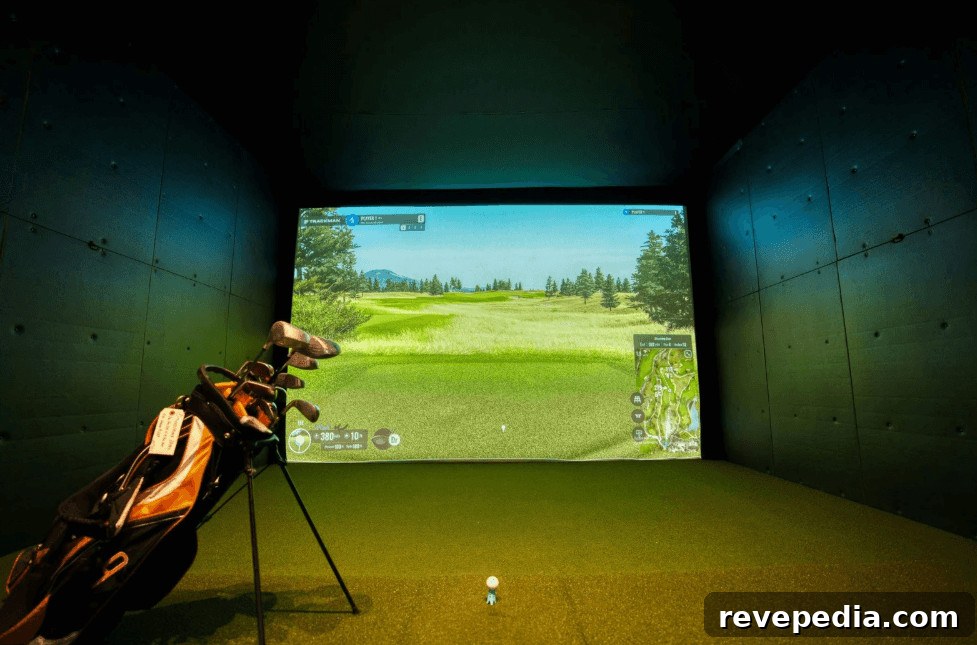
Most golfers underestimate how much the best indoor golf simulators have progressed in the last five years. What were once bulky, costly systems with questionable ball data are now reliable training tools used by touring professionals and serious amateurs alike.
That said, challenges remain: significant hardware costs, minimum ceiling heights, and periodic calibration can trip up even diligent buyers. After reviewing dozens of simulator brands, installation approaches, and customer feedback across residential and commercial settings, this guide highlights the top indoor golf simulators and service providers worth considering.
How these recommendations were selected
Each selection is based on publicly available information, including customer reviews, technical documentation, ratings from independent review directories, and details published on official company pages. Only companies with verifiable installations and a track record in golf simulation technology were included.
- Foresight Sports – Best for professional golf performance analysis and residential simulator systems
- Friendly Golfer – Best for home golf simulator equipment research and reviews
- SoundCheck – Best for golf simulator installation and smart home integration
- LaunchPad Golf – Best for year-round golf entertainment and virtual course experiences
- Red Stakes Golf – Best for simulator systems and technology
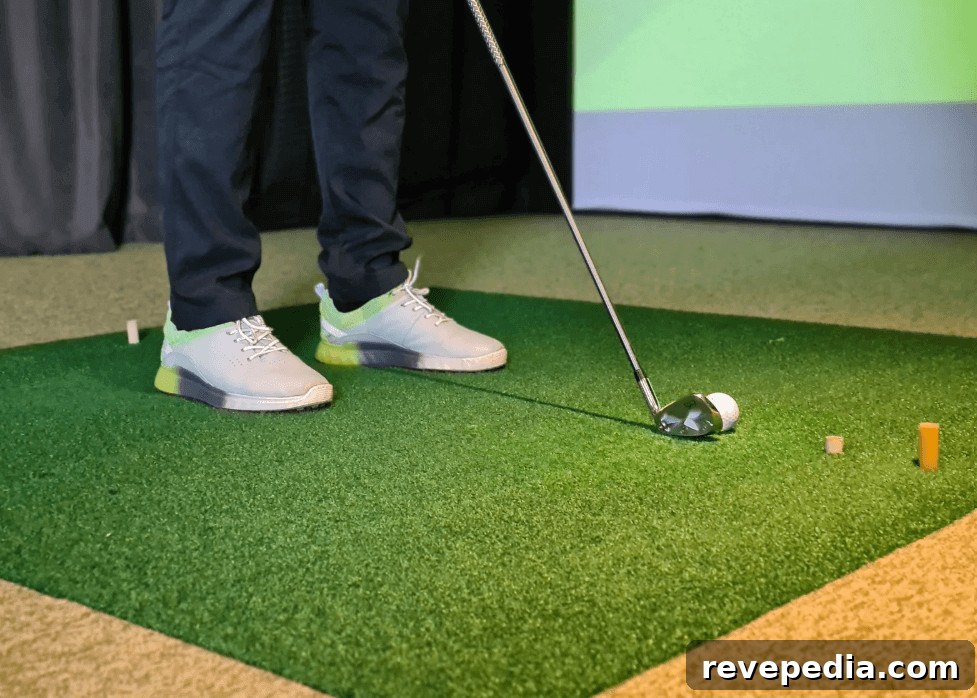
Why indoor golf simulators are worth the investment
Choosing the wrong simulator costs more than money—it costs time, practice quality, and motivation when the numbers from your setup don’t align with trusted outdoor launch monitors. Quality hardware requires a meaningful upfront investment, and space constraints such as low ceilings or narrow rooms can rule out many options before price even becomes a factor.
Do the research and match system capabilities to your goals. A well-configured simulator captures spin rate, carry distance, club path, and launch angle with enough precision to meaningfully improve practice. The right software library keeps sessions varied with realistic courses and game modes, increasing long-term usage and training value.
Indoor golf simulator comparison
Note: table data was compiled from review platforms and company information available publicly.
| Company Name | Team Size | Headquartered In |
| Foresight Sports | 172 | San Diego, California |
| SoundCheck | – | Southfield, Michigan |
| LaunchPad Golf | 32 | Okotoks, Alberta, Canada |
| Red Stakes Golf | – | Brighton, Michigan |
| Friendly Golfer | – | – |
- Foresight Sports – Best for professional golf performance analysis and residential simulator systems
Products and technology
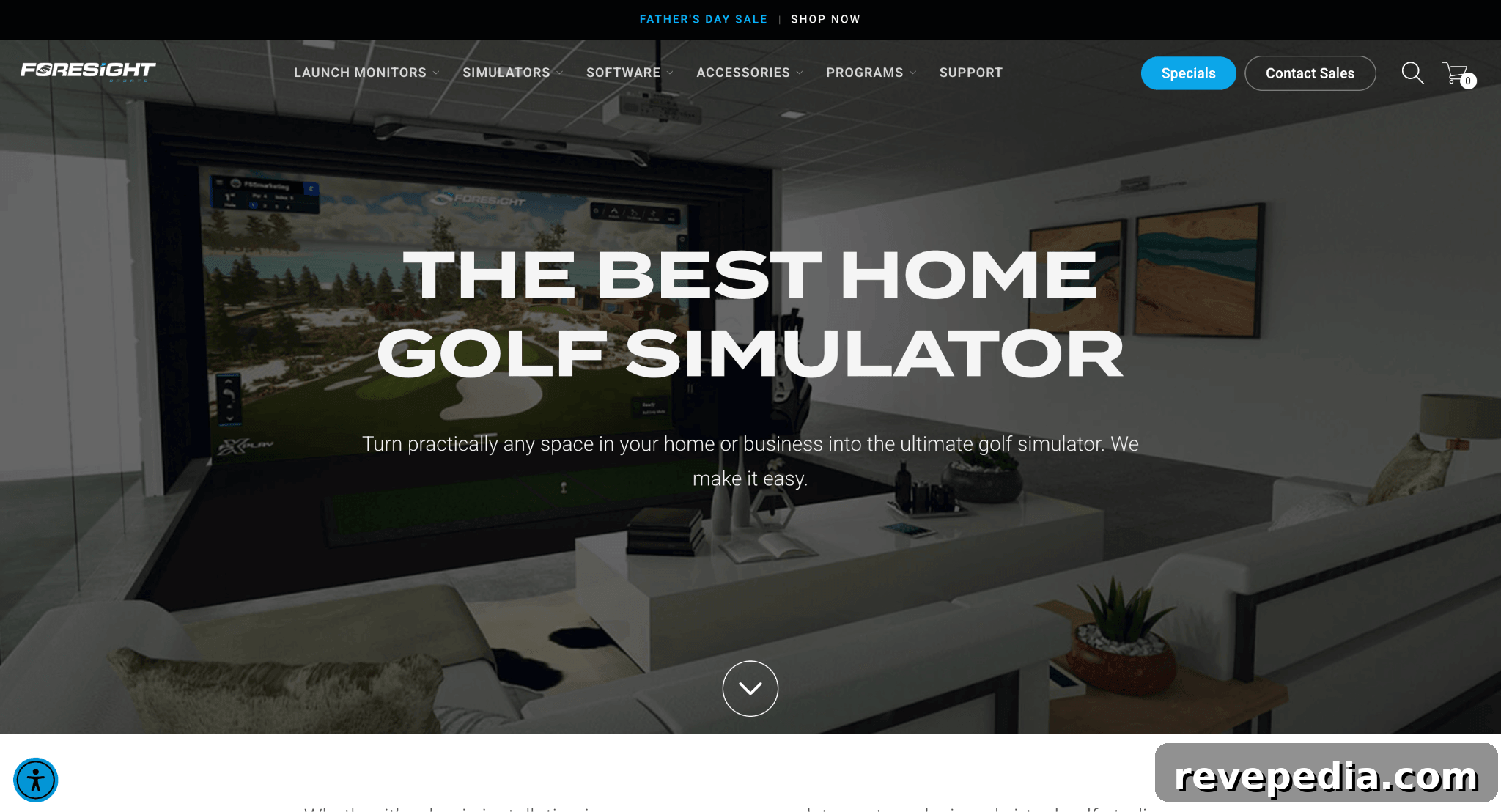
Foresight Sports designs launch monitors, simulators, and performance analysis software. With design and assembly based in San Diego since 2009, the company helped set accuracy standards with early camera-based launch monitors. Their residential and commercial simulator systems are widely used across retail locations, driving ranges, and private installations.
Why Foresight stands out
Foresight bridges consumer-level accessibility and professional-grade accuracy. Their multi-camera systems and analysis software are repeatedly chosen by players who prioritize ball speed precision and reliable spin tracking. Professional adoption and consistent positive reviews underline their reputation among dedicated golfers and facilities.
- Friendly Golfer – Best for home golf simulator equipment research and reviews
Products and focus
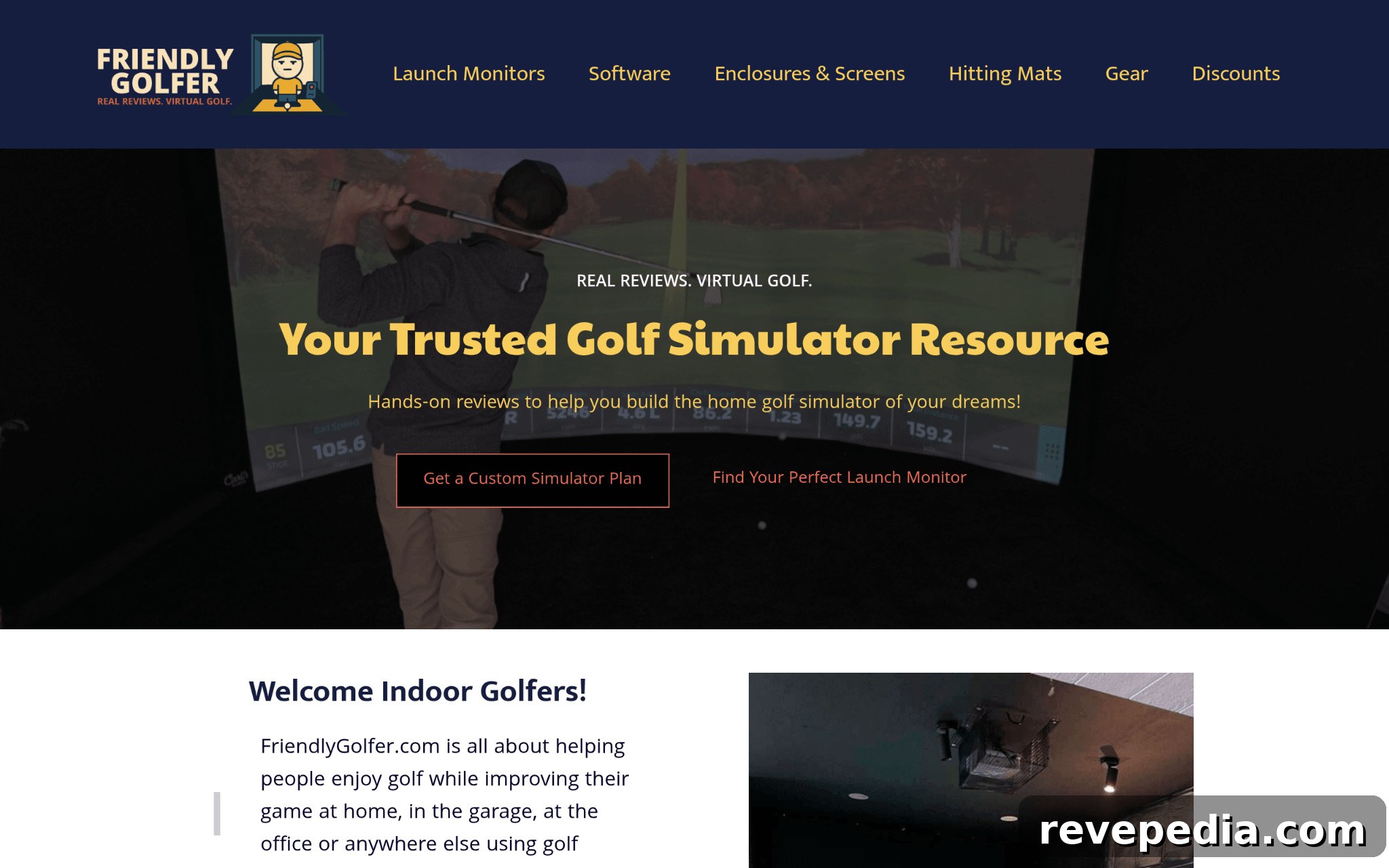
Friendly Golfer operates as a dedicated review and education resource for home simulators and launch monitors. It covers the full stack—launch monitors, projection hardware, enclosures, hitting surfaces, and simulation software—aiming to be a comprehensive source for golfers planning a home setup.
Why Friendly Golfer stands out
The site fills a research gap by concentrating solely on simulators. That focused editorial approach produces detailed comparisons and buying guidance that general golf sites rarely provide, making it a useful resource for homeowners and builders seeking clarity before purchase.
- SoundCheck – Best for golf simulator installation and smart home systems
Products and services
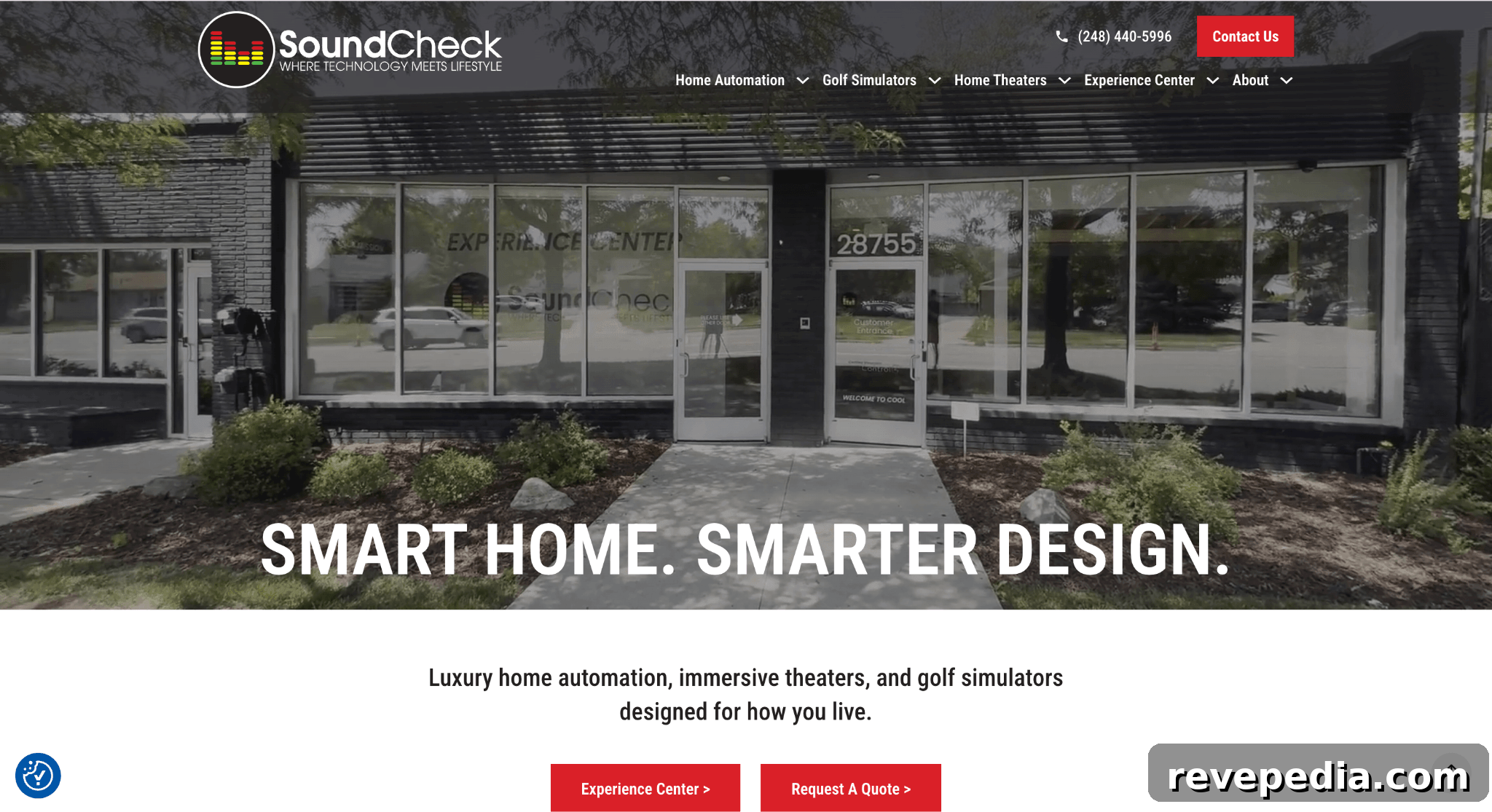
SoundCheck is a Michigan-based installer that builds custom simulator rooms and integrates them with smart home systems—audio, video, lighting, climate control, and security. As a certified dealer for major simulator brands, they handle wiring, calibration, and acoustics for turnkey installations.
Why SoundCheck stands out
Their advantage is practical installation expertise. Many buyers struggle to get hardware calibrated and optimized in less-than-ideal rooms; SoundCheck specializes in delivering systems that perform reliably from day one, minimizing setup headaches and long calibration cycles.
- LaunchPad Golf – Best for year-round golf entertainment and virtual course experiences
Products and experiences
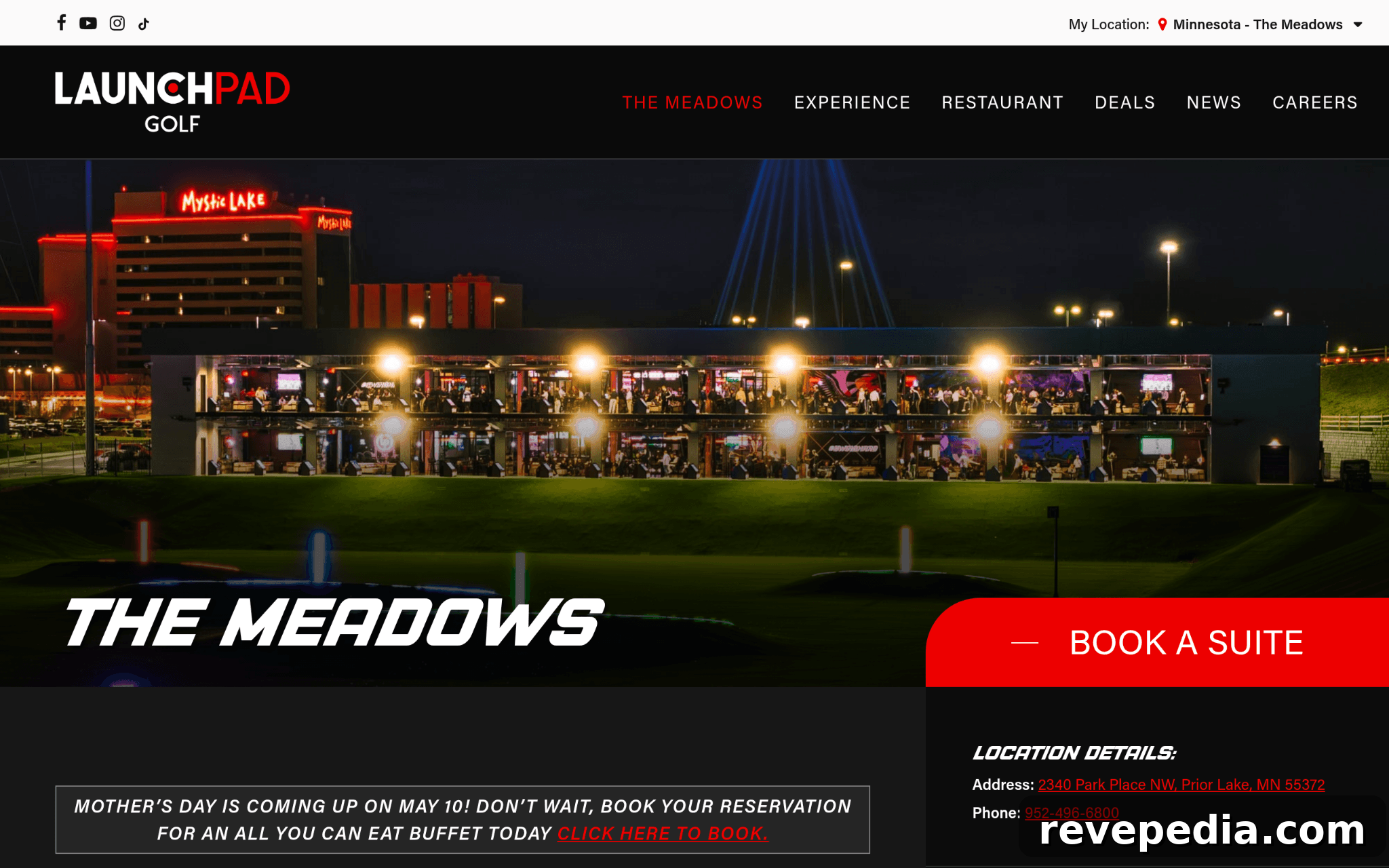
LaunchPad operates indoor golf entertainment venues using radar-based ball tracking and large simulation bays. Their facilities pair accurate tracking with virtual courses, game modes, and hospitality—food and beverage—making them ideal for social play, events, and casual practice without the expense of a private installation.
Why LaunchPad stands out
LaunchPad democratizes access to professional-grade tracking by offering it in an entertainment setting. Golfers gain reliable ball data and variety without the barriers of cost and space associated with private simulators, and many venues see repeat visits from players drawn by the combined social and data-driven experience.
- Red Stakes Golf – Best for simulator systems and technology

Products and platform
Red Stakes Golf develops simulator hardware and software with roots in earlier camera-based consumer systems. Their product lineup includes compact and professional models with proprietary cameras for club and ball tracking and an online platform that supports competitive play, leaderboards, and tournaments.
Why Red Stakes stands out
Red Stakes focuses on improving accuracy at accessible price points while also fostering an online community. Years of iterative development and a substantial user base demonstrate a practical approach to refining both hardware and software for consistent performance.
Evaluation framework: how each pick was assessed
Compiling a shortlist required systematic research and verification. The process included broad data collection, screening for verifiable installations, cross-referencing brand claims with user reports, and checking industry recognition.
Data collection
Brands were identified via industry directories, review aggregators, specialist forums, and manufacturer pages. In-depth reviews and case studies from trusted golf technology publications provided context where company claims required independent confirmation.
Screening and selection
Companies without verifiable real-world installations or with inconsistent review patterns were excluded. The shortlist retained brands with sufficient independent evidence of performance and customer satisfaction.
Accuracy verification
Claimed accuracy metrics, course libraries, and installation results were cross-checked against third-party reviews and verified buyer feedback. Discrepancies were noted and influenced final evaluations.
Industry standing
Awards, editorial mentions, and adoption by professional or commercial facilities were considered. Multiple independent signals of reputation improved a brand’s standing in the final recommendations.
Real-world evidence
Final checks focused on documented installations, case studies across different room sizes, and verified user reviews tied to specific hardware and software configurations. Brands demonstrating consistent results across residential and commercial contexts scored highest.
How to choose the right indoor golf simulator
Matching a simulator to your needs requires more than choosing the flashiest specs. Consider these practical factors before committing:
- Experience in golf simulation: Prefer companies and installers with a track record specific to golf. General AV installers may lack the calibration expertise necessary for accurate swing and ball-tracking data.
- Complete system features: Review the entire equipment stack: launch monitor accuracy, screen and enclosure quality, software course library, the data captured per swing, and system responsiveness.
- Pricing and total cost: Compare hardware price, installation, software licensing, and ongoing maintenance. Costs range from a few thousand dollars for entry-level setups to six figures for professional-grade installations.
- Measurable results: Ensure the system tracks key metrics—spin rate, carry distance, club path, and launch angle—so you can monitor improvement over time.
- Licensing and standards: Confirm that course licenses and hardware certifications are included. Unlicensed content or uncertified hardware can limit long-term usability and upgrades.
Conclusion
The indoor golf simulator market offers more options than ever, bridging the gap between casual entertainment and serious performance training. The companies covered here represent a range of strengths—from rigorous launch monitor engineering and focused editorial guidance to professional installation and social entertainment venues.
The common thread is clear: companies dedicated to golf simulation deliver better outcomes than generalists treating simulators as a side service. As technology advances, the difference between entry-level and pro-grade systems will continue to narrow, making it easier for golfers at every level to find a simulator that fits their space, budget, and training goals.