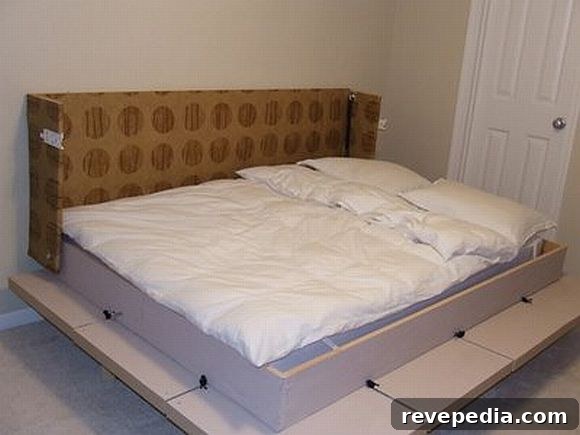
If your home is short on space, a Murphy bed is an excellent way to maximize limited square footage while still getting a comfortable night’s sleep.
Murphy beds come in several approaches to suit different skill levels and budgets. Some homeowners choose a preassembled kit, which reduces the project to installing the bed’s hardware and securing it to the wall. Others prefer a full DIY build, constructing the cabinet and mechanism themselves before mounting it. For those looking for an economical solution, the Moddi-style Murphy bed uses parts from common hardware stores or IKEA and can be built for roughly $275 for a twin-size model.
Before building or installing a Murphy bed, measure and evaluate the room carefully to determine the best placement. When folded up, the bed frees floor space, but you’ll still want an area that doesn’t require moving furniture every night. Choosing a spot with clear access makes daily use much easier and keeps the room flexible for different activities.
Proper mounting is essential for safety and durability. Locate studs in the wall where the bed will attach, and aim to fasten the frame to at least three studs for maximum support. Using quality hardware and confirming secure attachment will prevent strain on a single fastener and reduce long-term wear on the wall.
Murphy beds are a smart space-saving strategy for studios, guest rooms, home offices, and compact apartments. Beyond the bed itself, think about complementary solutions to maximize usable space: built-in shelving, fold-down desks, multipurpose furniture, and vertical storage can all work together to make a small room feel larger and more functional.
Do you use a Murphy bed or other space-saving solutions in a small home? What techniques have you found most effective for getting the most from limited square footage?
Photo courtesy of Apartment 528