

The heating may be on and the room feels generally comfortable, yet the chair beside a particular window remains unused because it feels noticeably colder. It’s tempting to blame the old glass, but replacing a window is a significant expense and a chilly spot alone doesn’t prove it’s necessary.
Often the issue is something relatively minor—a worn strip of weatherstripping, a failing latch, or a sash that no longer closes squarely. Sometimes the window really does need replacing. The key is diagnosing what has gone wrong, because each cause requires a different solution and different costs.
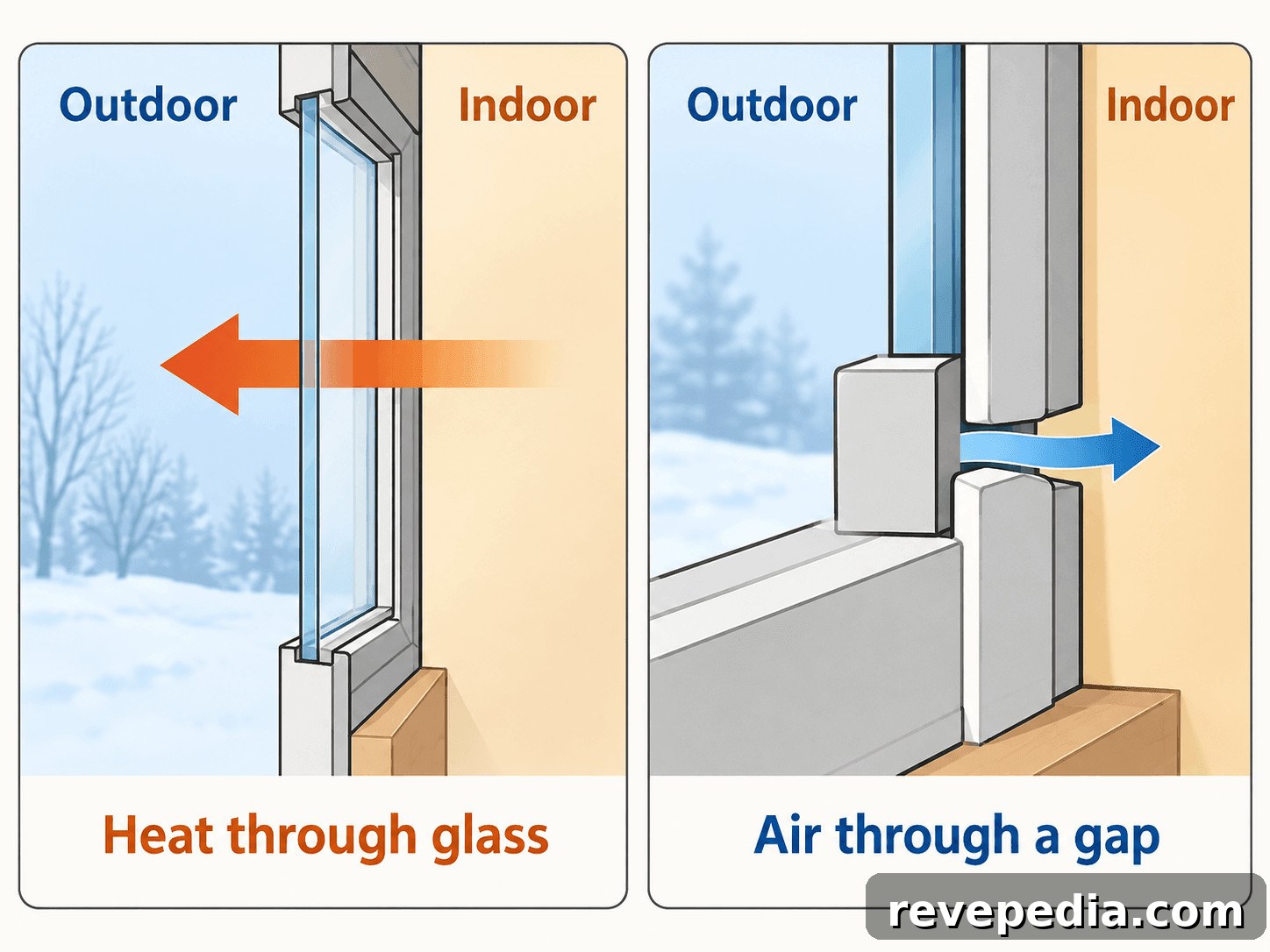
A cold window and a leaking window need different repairs
Even when a window is closed tightly, heat moves through both the glass and the frame. On a cold night the inner surface of the glass can feel much colder than the surrounding wall. Sealing gaps around the window won’t improve the insulating value of the glass itself; the glass and frame each have separate roles in how much warmth is retained.
A draft is outside air moving through an opening. These gaps can occur around the moving parts of the window or where the frame meets the wall. If the window is otherwise structurally sound, closing those gaps with appropriate materials can be all that’s needed to stop the draft and restore comfort.
Weatherstripping is designed to seal the edges that move when you open and close a window. Caulk is intended for fixed joints and where the frame meets the wall. They are not interchangeable: caulking a moving joint can create new problems, and sealing over frame drainage holes can trap moisture and cause rot. Use the right product in the right place.
If a window is hard to latch, don’t immediately cover the frame with thicker weatherstripping. The moving part of the window—the sash—must meet the frame correctly for the latch to work. A thicker strip might mask the poor fit while making the window harder to close and potentially causing more wear on the hardware.
When you can’t find an obvious gap
Some issues are easy to see: torn or missing weatherstripping, visibly warped frames, or cracked glass. Others are subtler—a window that looks fine yet the area around it is noticeably cooler than the rest of the room. In those cases, a diagnostic tool such as a thermal camera can reveal where temperature differences are coming from and whether they are localized to the frame, the glass, or extend into the surrounding wall.
You don’t always need a dedicated thermal camera to do a quick check. Smartphone-compatible thermal attachments or a contractor’s camera can show surface temperature differences and help you compare the window to the adjacent wall. When taking an image, include some of the surrounding wall to provide context; a close-up of the glass alone makes it harder to judge whether the window is truly the cold spot.
For example, a narrow cool band down one side of the frame points toward a gap or damaged seal at that edge. A larger cool patch above the window could indicate an insulation or framing issue in the wall rather than the window itself. Thermal images don’t prove the exact cause and they cannot see behind the surface, but they help narrow down where to look next.
Bear in mind that reflective glass and direct sunlight can mislead a thermal reading. Glass reflects heat from nearby surfaces, and sun-warmed panes will show different temperatures. The most useful checks are done with the room at normal temperature, the window shaded from direct sun, and a clear contrast between indoor and outdoor temperatures.
If you’re only concerned about a single problem window, buying a camera may be overkill. Thermal imaging is also commonly available through home energy assessments, so it’s worth asking a professional inspector to include it if you schedule an energy audit.
A repair can be more than a fresh seal
A worn seal or a failing handle does not necessarily render a window useless. Depending on the window’s design and condition, many repairs are straightforward: adjusting or replacing hardware, reseating the sash, or swapping out a damaged component while leaving a sound frame in place. These repairs are usually quicker and cheaper than full replacement.
There is also a middle ground if the problem lies with the glass but the frame remains solid. Some windows allow the insulated glass unit to be removed and replaced without taking out the entire frame. When the frame is in good condition and you like the existing style, ask whether glass-only replacement is an option—it can restore thermal performance at a fraction of the cost of a full replacement.
Before authorizing any work, verify the source of the cold. Long curtains can obscure heating vents, and drafts from nearby doors or gaps in floorboards can be mistaken for window leaks. If the whole room remains cold while the rest of the house heats up, the issue may be the heating system or wall insulation rather than the window.
When replacing the window makes sense
There are clear cases where replacement is the better choice: a severely deteriorated frame, persistent operation problems that remain after sensible repairs, or multiple components failing at once. Replacement also makes sense when the glass performs poorly—single-pane glass or broken seals in insulated units—and the available repairs won’t provide the comfort you need.
Installation quality matters as much as the window itself. A new unit must be properly sized and correctly sealed within the wall opening. If the surrounding wall or frame requires repair, that work should be included in the quote rather than left as an unresolved issue concealed by new trim or finishes.
Ask any installer to clearly outline what the proposed work will address: sealing gaps, replacing the glass unit, repairing or rebuilding a damaged frame, or a full window swap are different jobs with different costs and benefits. A detailed, problem-focused quote helps you decide whether the expense is justified.
Check the problem before you replace the window
Feeling cold near a window does not automatically mean you need a new one. Start with simple diagnostics: check for drafts, evaluate the condition of weatherstripping, inspect hardware for looseness or damage, and look for obvious structural problems. If the cause remains unclear, a targeted inspection—using a thermal camera, a contractor’s eye, or both—can narrow down the real source of heat loss.
Once you know where the problem originates, you can choose the most cost-effective solution: a minor repair, a glass unit replacement, a new screen, or full window replacement. Taking that step saves money and avoids discarding windows that still have useful life left.