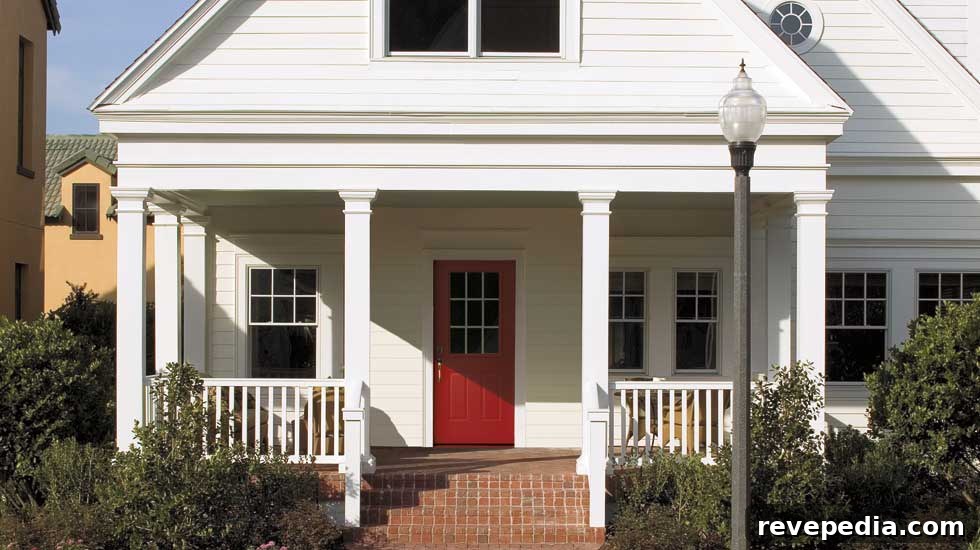
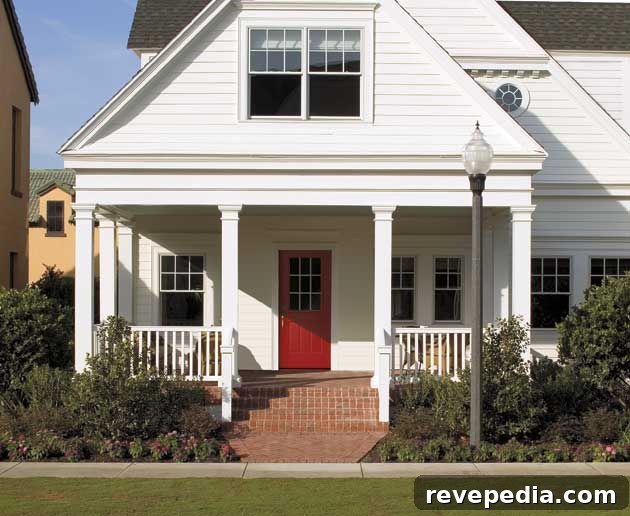
Window and door styles come in many variations. Knowing the correct terminology while shopping helps you find the exact look and performance you need for your home.
Pella offers a practical guide to selecting window and door styles that complement your home’s architecture while providing the functionality you expect.
Choose windows and doors that look good from both the interior and the exterior of your home.
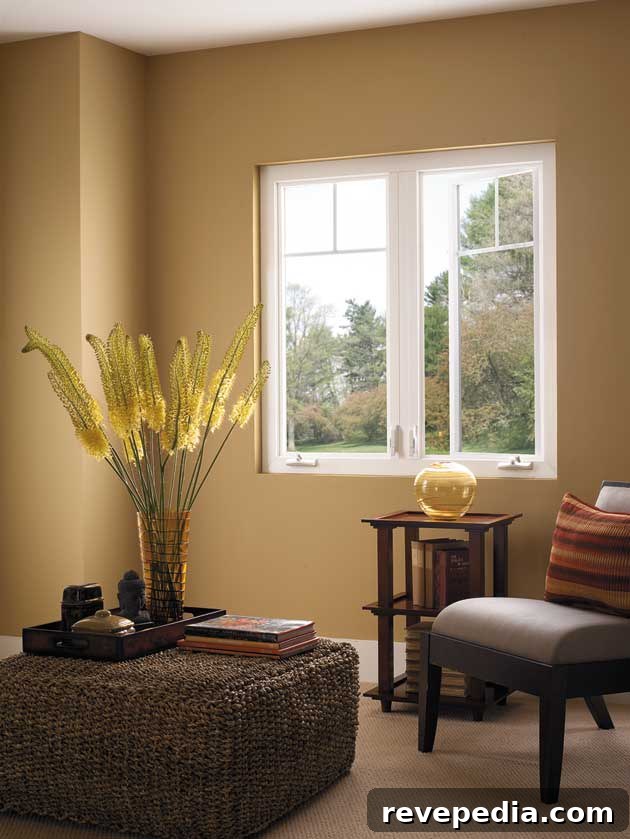
Window Styles
- Awning — Hinged at the top and opening outward from the bottom, awning windows press the sash against the frame, which typically reduces air leakage. Their design helps shed water away from the opening. Awning windows are commonly installed above fixed windows or doors as transoms, or high in garages to provide ventilation while maintaining privacy. They suit openings that are wider than they are tall.
- Bay and bow — A bay window usually features a large central window flanked by double-hung or casement windows angled at 30 or 45 degrees, though all panes can be fixed, operable, or a mix. A bow window uses four or more equal-sized windows—often casements—to create a smooth, arcing projection. Both styles expand sightlines, bring in abundant light, and visually enlarge a room. Adding a window seat is a popular enhancement for bay and bow installations.
- Casement — A versatile style used across many architectural designs, casement windows have a single sash hinged on the left or right and open outward with a crank. Also called “crank-out” windows, they typically offer better ventilation than double-hung units and often have lower air leakage. Casements look best when slightly taller than wide. Because they swing outward, they may not be ideal next to decks or porches where clearance is limited.
- Double-hung — Double-hung windows contain two sashes within a single frame; both sashes slide vertically, allowing opening from the bottom up or the top down. They are visually appealing when roughly twice as tall as wide and when each sash forms an equal-sized square. This style is commonly used in traditional homes, such as Victorians and Colonials.
- Single-hung — Similar in appearance to double-hung windows, single-hung units differ in that only the bottom sash moves. The ventilation opening can be adjusted from a small area up to half the window height, offering a simpler, lower-maintenance alternative.
- Sliding — Also called gliders or sliders, sliding windows move horizontally from side to side. They create a sleek, contemporary profile and are ideal for locations like over a kitchen sink or other tight spaces. Sliders are also common in multi-family buildings and apartments and are available as single-sliding (one movable sash) or double-sliding units.
- Fixed — Fixed windows do not open and are often chosen as accents or paired with venting windows. Circular, hexagonal, or other shaped fixed windows can accentuate views or add architectural interest. Fixed units are frequently combined with venting windows or arranged in window walls topped with smaller fixed transoms.
- Transom — Typically used with other windows, transoms can be fixed or venting and are installed above primary windows or doors. They increase light, can create the impression of taller windows, and may improve airflow if operable. Transoms come in square, rectangular, half-circle, elliptical, and other shapes.
- Window wall — Also called combination windows, window walls use multiple sizes, shapes, and styles to maximize light and ventilation. They can make small rooms feel larger and may extend from floor to ceiling or wall to wall, incorporating any mix of fixed and operable units.
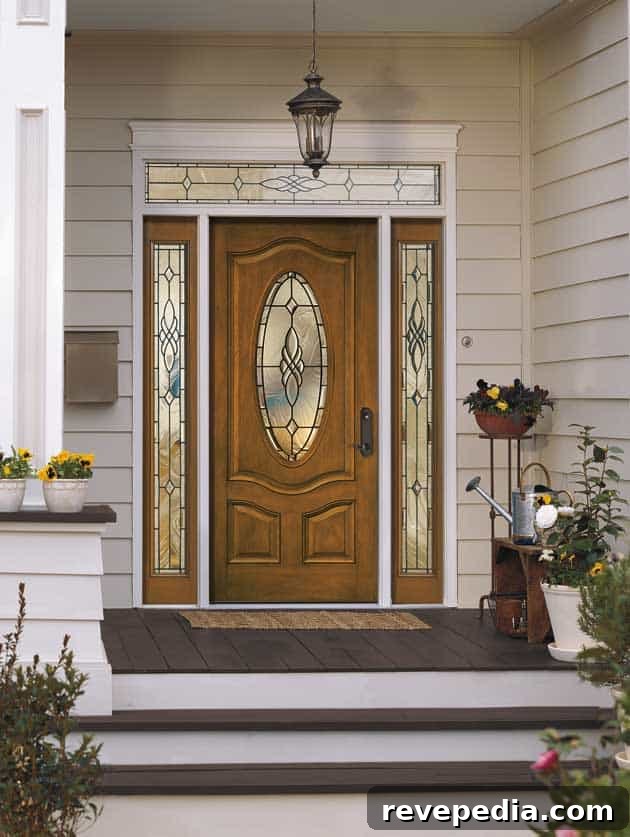
Entry Door Styles
Decorative Glass Options
- Each decorative glass collection combines distinct glass styles, textures, and caming—the decorative metal used to join glass pieces into a design.
- A wide range of decorative glass options lets natural light in while adding style and elegance to different architectural homes.
- Exclusive decorative glass designs are sealed within insulating glass units to provide both aesthetic appeal and energy efficiency.
- Textured glass allows light to pass through while maintaining privacy.
- Entry doors, sidelights, and transoms are available with clear insulating glass or Low-E insulating glass filled with argon for improved energy performance.
Grille Styles
- For a classic divided-light appearance, choose from permanent or removable grille options and standard grille patterns. Custom patterns are also available to match your design preferences.
Caming Styles
- Caming comes in a range of finishes—from black to copper to satin nickel—so you can add the decorative metal detailing that complements your entry door design.
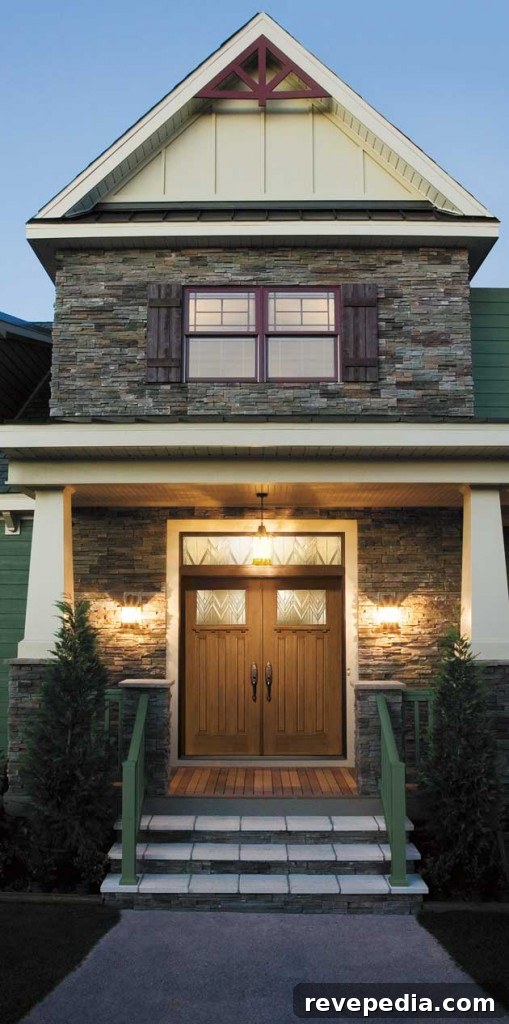
Transom
- A transom is a fixed window above an entry door that adds light and enhances views. Transoms can be fitted with decorative glass or grilles to coordinate with the entry door.
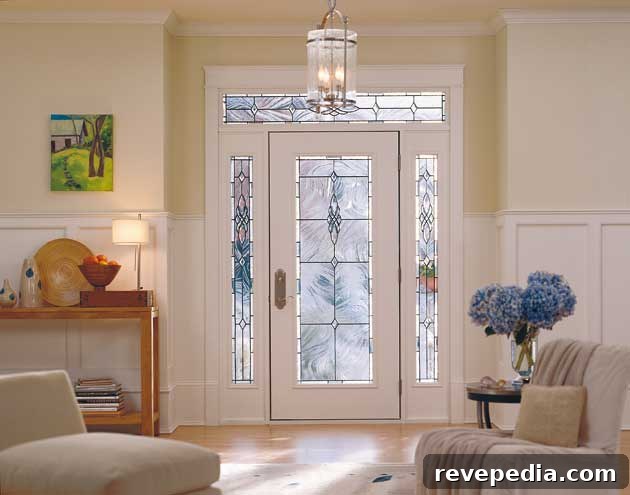
Sidelight
- Sidelights are fixed windows placed beside an entry door to increase light and visibility. Matching sidelights can be ordered with decorative glass or grille patterns to complement the door.
Clavos and Hinge Straps
- Authentic decorative hardware, including clavos and hinge straps, can create an Old-World or rustic appearance for an entry door.
Speakeasy
- A speakeasy is a small “door within a door” that adds historic charm and allows you to screen visitors before opening the main door. It can be specified with or without grilles on certain architecturally styled entry doors.
Photos courtesy of Pella Windows and Doors.